The fastest way to add calories without forcing another meal is to drink them. We have built and tested eleven high-calorie shakes in our kitchen, ranging from a 434-calorie post-workout shake to a 3,807-calorie Warrior Shake made without protein powder. Every recipe below links to its full step-by-step version, and the comparison table shows the real tested calories, not rounded marketing numbers, so you can pick the exact rung that fits your daily target.
This article is for informational purposes. A sustained calorie surplus changes your body composition, so if you are managing a medical condition or planning a large surplus, review your plan with a registered dietitian first.
Every Shake Compared (Tested Values)
We list actual calories from our tested nutrition cards. Some differ from the recipe name: our “2,000 calorie” shake really delivers 2,468, and the Warrior Shake lands at 3,807. You are choosing based on what is in the glass, not the title.
| Shake | Tested calories | Protein | Prep | Best for |
|---|---|---|---|---|
| 500 Calorie Protein Shake | 434-527 | 34-48g | 5-10 min | Post-workout, 5 variations |
| 600 Calorie Protein Shake | 548 | 25g | 5 min | Creamy meal replacement |
| 800 Calorie Smoothie | 748-973 | 15-82g | 5 min | 8 variations, incl. vegan |
| 1,000 Calorie Shake, No Protein Powder | 1,007 | 39g | 5 min | Whole-food gainer |
| 1,000 Calorie Vegan Protein Shake | 1,023 | 38g | 5 min | Vegan, no banana |
| Oreo Shake (recipe below) | 1,061 | 25g | 5 min | Dessert-style bulk |
| Peanut Butter Rice Krispie Shake (recipe below) | 1,426 | 53g | 5 min | High protein + high calorie |
| 2,000 Calorie Shake | 2,468 | 128g | 5 min | Serious bulking days |
| 2,000 Calorie Vegan Smoothie | 2,076 | 78g | 5 min | Vegan bulking |
| 3,000 Calorie Shake | 3,020 | 144g | 5 min | Maximum protein per glass |
| 4,000 Calorie Warrior Shake | 3,807 | 81g | 5 min | No protein powder, hardgainers |
How We Tested These Shakes
Every shake on this list was developed, blended, and measured in our kitchen in Wayne, New Jersey. Nutrition values come from the tested recipe cards on each linked page, calculated per serving from the exact gram and cup measurements we used. The 3,000 and 4,000 calorie recipes were also filmed for our YouTube channel, where the 3,000-calorie version has been made by well over a million viewers. When a shake underdelivered or overdelivered on its target calories in testing, we report the measured number.
Under 1,000 Calories: Shakes That Add Without Overwhelming
1. 500 Calorie Protein Shake (434-527 cal, 34-48g protein)
See the full recipe: 500-Calorie Protein Shake Recipes
Five variations built around whey, milk, fruit, and nuts, one for each weekday. The pomegranate version is the protein leader at 48g for 434 calories, which is the best protein-per-calorie ratio on this entire list. If your goal is lean gain rather than maximum bulk, start here. Budget note from our testing: all five variations shop from one grocery bag, no superfoods.
Get the 5 recipes with the shopping list
2. 600 Calorie Protein Shake (548 cal, 25g protein)
See the full recipe: Creamy 600 Calorie Protein Shake Recipe
A creamy meal replacement that tastes like a milkshake: full-fat milk, frozen mango and strawberries, whey, peanut butter, and two kinds of nuts for crunch. The frozen fruit does the thickening, so there is no ice cream in it. In our testing the trick is the unthawed strawberries; they keep the texture thick without watering it down.
3. 800 Calorie Smoothie (748-973 cal, 8 variations)
See the full recipe: 800-Calorie Smoothie Recipes | 5 Smoothie Options
Our most flexible entry: eight tested variations covering vegan (820 cal), no-banana, curd-based, and protein-powder versions. The almond butter variation hits 82g of protein, the highest of the eight. There is a video for the vegan version on the page. If you have an ingredient restriction, this is the page where you will find your version.
Pick from the 8 variations
Around 1,000 Calories: The Meal-in-a-Glass Tier
4. 1,000 Calorie Shake Without Protein Powder (1,007 cal, 39g protein)
See the full recipe: 4000 Calorie Shake Recipe Without Protein Powder (Warrior Shake)
Six whole-food ingredients: milk, banana, strawberries, oats, peanut butter, and almonds. No powder, and it still lands 39g of protein. This is our most-reviewed shake at 4.3 stars, and the page breaks down the calorie and protein contribution of every single ingredient so you can swap things without losing the 1,000-calorie target. The strawberries are there on purpose: they cut the banana sweetness so you can finish the glass.
Get the full recipe with the ingredient math
5. 1,000 Calorie Vegan Protein Shake (1,023 cal, 38g protein)
See the full recipe: 1000 Calorie Vegan Protein Shake
Coconut milk does the heavy lifting here, which is why this one hits 1,023 calories with no banana at all. Strawberries, blueberries, apple, oats, chia, and flax round it out with vegan protein powder. In our testing this is the pick for people who dislike sweet drinks; it is the least sweet shake on this list.
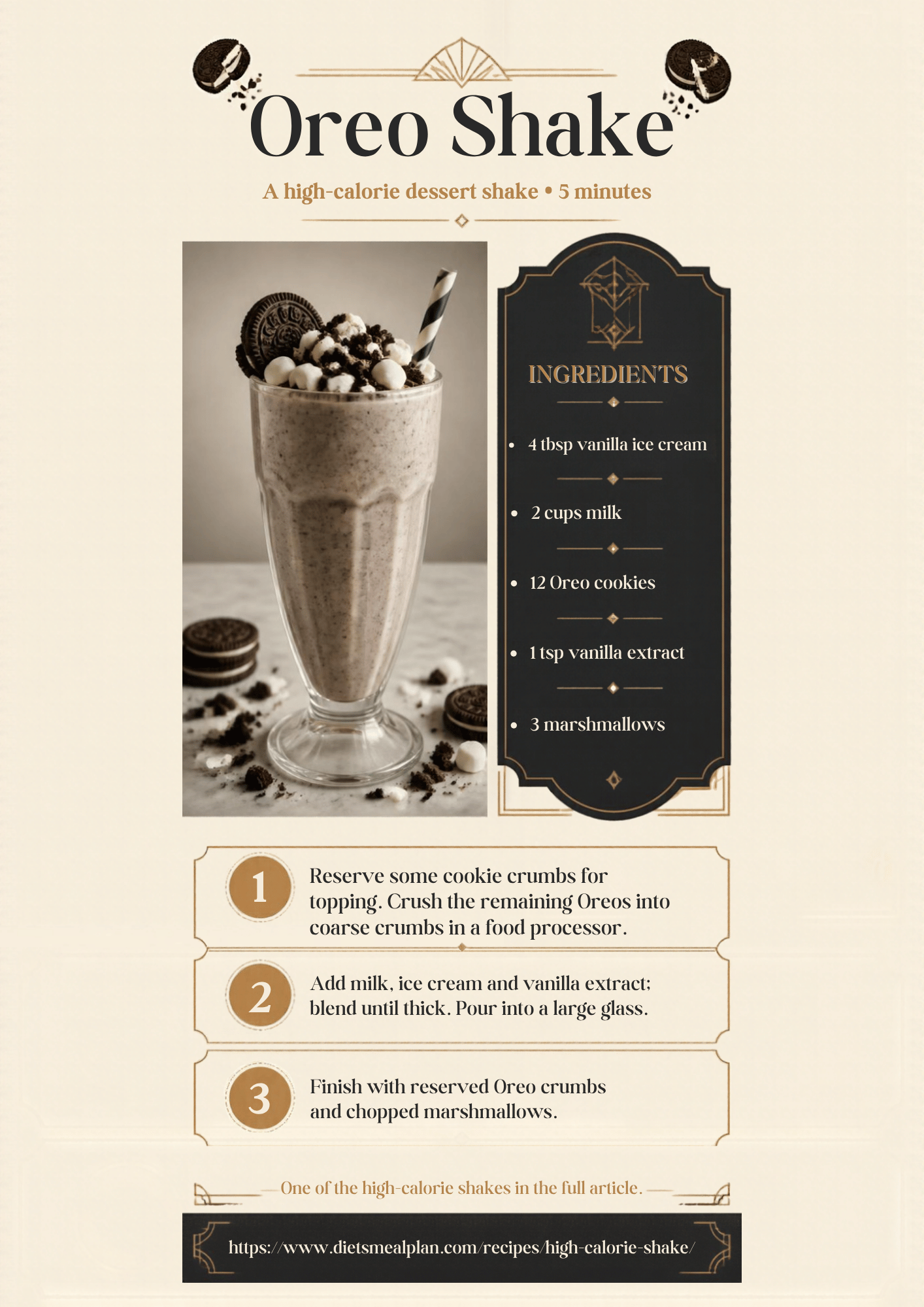
6. Oreo Shake (1,061 cal, 25g protein)
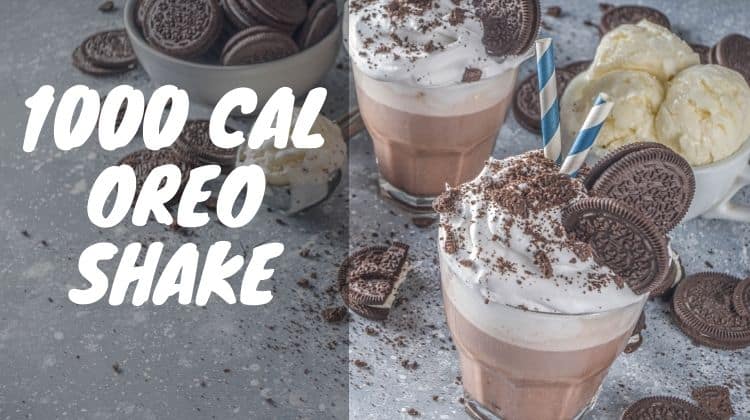
The dessert option. Twelve Oreos, vanilla ice cream, milk, vanilla extract, and marshmallows.
Nutrition (1 serving): 1,061 calories, 152g carbs, 41g fat, 25g protein
Ingredients: 4 tbsp. vanilla ice cream, 2 cups milk, 12 Oreo cookies, 1 tsp. vanilla extract, 3 marshmallows
Method (5 min): Crush the Oreos into coarse crumbs in a food processor. Add milk, ice cream, and vanilla extract, and blend thick. Pour into a large glass and top with the remaining Oreos and chopped marshmallows.
From our kitchen: crumble half an Oreo over the top after pouring. It costs nothing and makes the glass look like the photo.
7. Peanut Butter Rice Krispie Shake (1,426 cal, 53g protein)
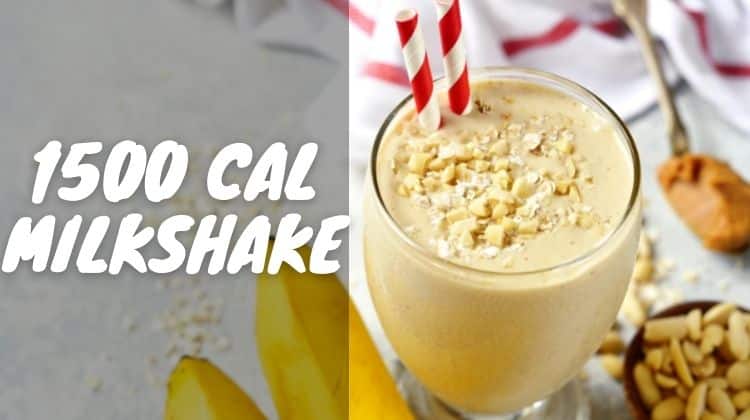
The strongest calorie-to-protein combination we make without going into the 2,000-plus tier. Rice Krispies are the unusual ingredient, and they work: carbs for the surplus, crunch in the texture.
Nutrition (1 serving): 1,426 calories, 166g carbs, 69g fat, 53g protein
Ingredients: 1 1/2 tbsp. peanut butter, 1 scoop whey protein, 1.7 oz. Rice Krispies, 1 cup blueberries, 1 small banana, 1 cup coconut milk, 1 1/5 cups oats
Method (5 min): Add everything to the blender and blend until smooth. Thin with milk or water to taste.
From our kitchen: this one thickens as it sits. If you split it into two servings, stir in a splash of milk before the second one.
2,000 Calories and Up: The Bulking Tier
Do not drink these in one sitting. Split each into two or three servings across the day; a single glass from any of them is already a full meal.
8. 2,000 Calorie Shake (tested at 2,468 cal, 128g protein)
Two scoops of whey, two cups of steel-cut oats, two bananas, berries, peanut butter, and honey. Our tested card puts it at 2,468 calories, well above its name, with 128g of protein. This is the shake for a day when you missed two meals and still have a surplus to hit.
9. 2,000 Calorie Vegan Smoothie (2,076 cal, 78g protein)
See the full recipe: 2000 Calorie Vegan Smoothie
Five bananas, twelve soaked dates, almond milk, peanut butter, walnuts, chia, and vegan protein powder. Rated 4.7 stars, with a step-by-step photo for every ingredient on the page. Soak the dates for 2 to 3 hours first; unsoaked dates leave gritty pieces the blender cannot fix.
10. 3,000 Calorie Shake (3,020 cal, 144g protein)
The shake our YouTube viewers have made more than a million times, and the highest-protein drink we have ever built: 144g. Condensed milk and banana milk are the two ingredients that separate it from every other recipe on this list. Watch the video on the page before making it; the mixing order matters for texture.
Get the recipe and watch the video
11. 4,000 Calorie Warrior Shake (tested at 3,807 cal, 81g protein)
No protein powder, no mass gainer. A full cup of peanut butter, heavy cream, coconut oil, dried apricots, almonds, and banana, rated 4.7 stars across 11 reviews. This is the ceiling of what we can build from whole foods, and it is strictly a split-into-three-servings drink. Make it fresh daily; the banana oxidizes and the shake browns within hours.
Get the recipe and watch the video
How to Pick Your Shake
Match the shake to your surplus, not your ambition. A sustainable weight-gain surplus is roughly 300 to 500 calories above maintenance, which means most people need the 500 to 1,000 tier, not the Warrior Shake. Use our BMR calculator to find maintenance, add your surplus, and subtract what you already eat. The gap is your shake size. Hardgainers who genuinely cannot eat enough are the audience for the 2,000-plus tier, ideally split across the day. For whole-day eating instead of drinking, see our 3,000 calorie meal plan and foods to gain weight list.
FAQ
How many calories should a weight gain shake have?
Enough to cover the gap between what you eat and your target surplus, usually 500 to 1,000 calories for most people. A surplus of 300 to 500 calories per day above maintenance supports gradual weight gain of about 0.5 to 1 lb per week. Bigger shakes make sense only when your daily target is very high and meals cannot cover it.
Can I drink a 2,000 or 3,000 calorie shake in one sitting?
We do not recommend it. Split anything above 1,500 calories into two or three servings across the day. A single sitting of that size is hard on digestion and most people cannot finish it anyway.
How do I make a high-calorie shake without protein powder?
Build it from calorie-dense whole foods: peanut butter, oats, whole milk or coconut milk, banana, dates, and nuts. Our 1,000 calorie no-powder shake reaches 39g protein this way, and the 4,000 calorie Warrior Shake reaches 81g.
Are high-calorie shakes safe for weight gain?
For most healthy adults, yes, when used inside a planned surplus. They become a problem when stacked on top of an already sufficient diet or used to force rapid gain. If you have diabetes, kidney issues, or a history of disordered eating, plan any surplus with a registered dietitian.
What is the difference between a shake and a smoothie?
Shakes are built on milk or ice cream and skew creamy; smoothies are built on fruit or vegetables and skew fresh. Full breakdown in our guide on the difference between a smoothie and a shake.
Medical Disclaimer: Educational only. Consult a qualified healthcare provider before dietary changes.