Medical Disclaimer: This article is for informational purposes only and is not a substitute for professional medical advice, diagnosis, or treatment.
Always consult a registered dietitian, physician, or qualified healthcare provider before making significant changes to your diet, especially if you have a medical condition, take medication, are pregnant or nursing, or are managing a chronic illness.
If you are underweight or trying to gain weight for a medical reason, work with a clinician. Individual results may vary.
An 800 calorie smoothie is a weight-gain tool. It packs the calories of a small meal into a drinkable format, which is useful if you struggle to hit your daily energy target from solid food or if you are training hard and need surplus calories for hypertrophy.
The five recipes below each land near 800 calories using calorie-dense staples such as peanut butter, oats, whole milk, banana, dates, and optional protein powder. Prep time is 5 minutes per shake.
Jump to a Recipe
Why 800 Calories in a Single Drink Makes Sense for Weight Gain
Slater et al. (2019, PMID 31482093) reviewed dietary approaches for hypertrophy and concluded that a modest energy surplus (roughly 300 to 500 kcal above maintenance) combined with 1.6 to 2.2 g/kg protein is a reasonable framework for muscle gain in trained individuals.
If you are eating three meals plus one 800 calorie shake, you can hit that surplus without forcing extra bites at every meal, which is where most under-eaters stall.
These are not everyday smoothies for the average person. If you are not underweight and not training for size, one of these on top of a normal diet will land squarely in fat-gain territory. Match calories to your actual goal.
Comparison Table
| Recipe | Calories | Protein | Prep time | Best for |
|---|---|---|---|---|
| Vegan Peanut Butter Oat | 820 kcal | 21 g | 5 min | Plant-based mass gain |
| Date Almond Muscle Builder | 798 kcal | 15 g | 5 min | No protein powder needed |
| Curd Chia Peanut Butter | 748 kcal | 27 g | 10 min | Gut-friendly gainer |
| Chocolate Spinach Protein | 891 kcal | 51 g | 5 min | Post-training, high protein |
| Nutella Blueberry Protein | 795 kcal | 42 g | 5 min | Dessert-flavored gainer |
The Recipes
1. Vegan Peanut Butter Oat Smoothie (820 calories)
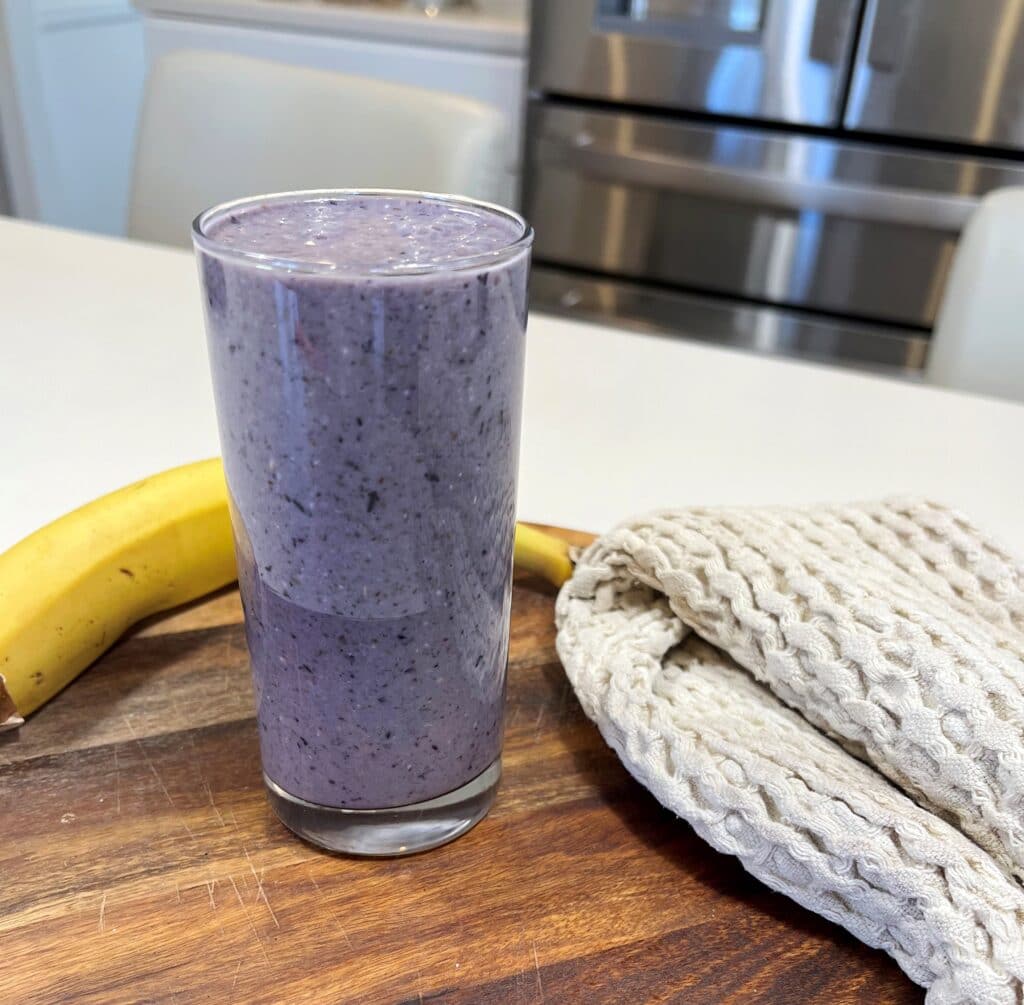
A dense plant-based mass gainer built on almond milk, peanut butter, oats, banana, and flax. No protein powder required.
Ingredients
- 2 cups unsweetened almond milk
- 2 tbsp peanut butter
- 1 1/2 ripe bananas
- 5 tbsp ground flaxseed
- 1 cup blueberries
- 5 tbsp rolled oats
Instructions
- Add almond milk to blender first.
- Add remaining ingredients on top.
- Blend on high for 60 seconds until smooth.
- For a cold version, freeze sliced banana 30 minutes before blending.
Nutrition (1 serving): 820 kcal, 21 g protein, 117 g carbs, 37 g fat.
2. Date Almond Muscle Builder (798 calories, no protein powder)
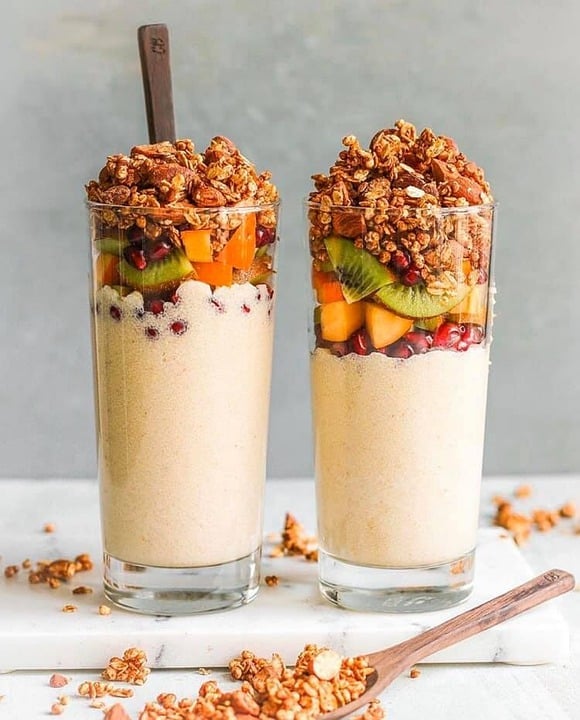
Dates and honey provide fast carbs; almonds and cashews add fats; skim milk powder brings protein without needing a scoop of whey.
Ingredients
- 2 medium bananas
- 1 oz raw cashews
- 2 tbsp honey
- 10 raw almonds
- 10 pitted dates
- 2/5 cup skim milk powder
- 1 cup water
Instructions
- Soak dates in warm water for 5 minutes to soften.
- Add all ingredients to blender.
- Blend on high for 60 to 90 seconds until fully smooth.
Nutrition (1 serving): 798 kcal, 15 g protein, 158 g carbs, 20 g fat.
3. Curd Chia Peanut Butter Smoothie (748 calories)
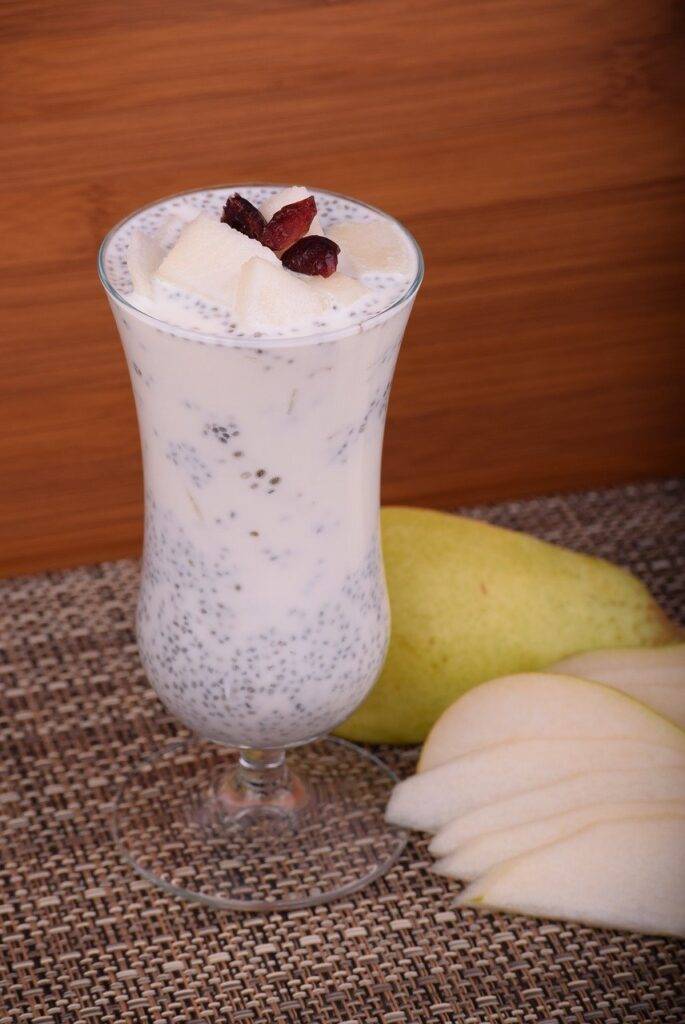
Full-fat curd (or plain whole-milk yogurt) delivers protein plus probiotics. Chia adds omega-3s and thickens the drink.
Ingredients
- 1 4/5 cups plain full-fat curd (or whole milk yogurt)
- 1 tbsp chia seeds (soaked 10 min in water)
- 2 large bananas
- 2 tbsp peanut butter
- 1 cup water
Instructions
- Soak chia seeds in 3 tbsp water for 10 minutes.
- Blend curd, banana, peanut butter, and water for 45 seconds.
- Pour into a glass, stir in the soaked chia by hand.
Nutrition (1 serving): 748 kcal, 27 g protein, 95 g carbs, 34 g fat.
4. Chocolate Spinach Protein Smoothie (891 calories, 51 g protein)
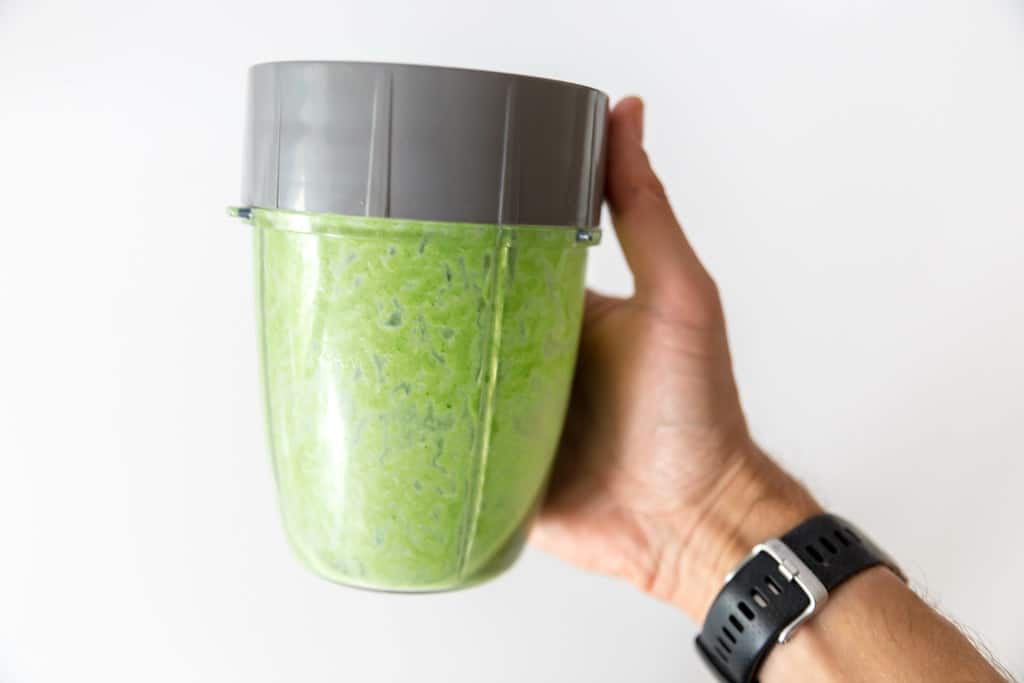
A big-training-day gainer. Whey plus Greek yogurt push protein past 50 g; spinach adds micronutrients that get lost in the chocolate.
Ingredients
- 1 scoop whey protein powder
- 1 cup plant-based milk
- 1 large banana
- 1/3 cup dark chocolate granola
- 2 tbsp chocolate syrup
- 2 tbsp plain Greek yogurt
- 1 cup baby spinach
- 1/2 cup rolled oats
- 1 tbsp peanut butter
- 4 ice cubes
Instructions
- Add milk first, then everything else.
- Blend on high for 60 to 90 seconds.
- Add another splash of milk if too thick.
Nutrition (1 serving): 891 kcal, 51 g protein, 129 g carbs, 23 g fat.
5. Nutella Blueberry Protein Smoothie (795 calories, 42 g protein)
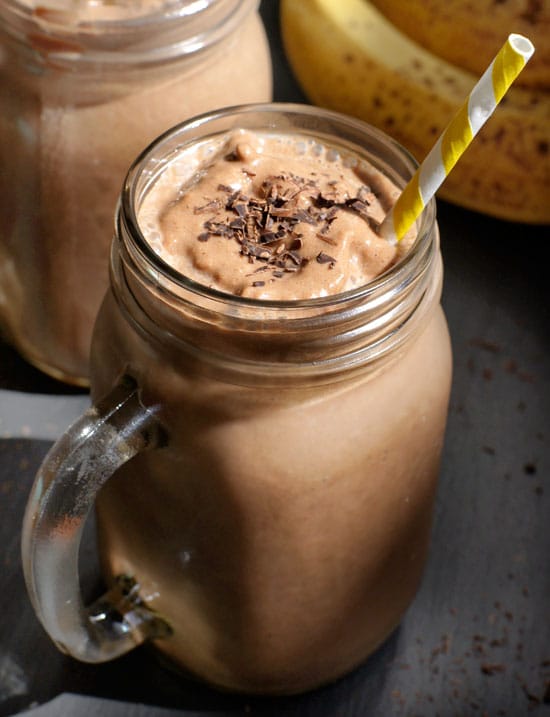
Chocolate hazelnut spread plus peanut butter makes this the closest thing to a dessert in the list. Frozen blueberries thicken it into a spoonable texture.
Ingredients
- 1 scoop chocolate protein powder
- 1/2 cup rolled oats
- 2 tbsp Nutella
- 2 tbsp peanut butter
- 1 cup frozen blueberries
- 1 cup almond milk
Instructions
- If using fresh blueberries, freeze at least 30 minutes first.
- Add all ingredients to blender.
- Blend on high for 60 seconds until smooth and thick.
Nutrition (1 serving): 795 kcal, 42 g protein, 90 g carbs, 33 g fat.
Sample Day That Includes an 800 Calorie Shake
A common weight-gain framework for a 165 lb (75 kg) adult in a lifting program: maintenance around 2,600 kcal, target around 3,000 kcal for a slow surplus.
That day might look like eggs and oatmeal for breakfast (600 kcal), a chicken and rice lunch (750 kcal), the Chocolate Spinach Protein Smoothie post-workout (890 kcal), and grilled fish with potatoes and vegetables for dinner (800 kcal).
Total lands near 3,040 kcal with roughly 190 g protein. The shake is doing structural work in the day, not a snack you added on top of otherwise-normal eating.
If your maintenance is higher, add a second smaller shake between meals. If lower, use one of the leaner recipes (Curd Chia at 748 kcal, Vegan PB Oat at 820 kcal) and reduce a solid meal by 100 to 150 kcal.
Ingredient Substitutions Without Wrecking the Macros
Almond butter for peanut butter is a 1-for-1 swap. Soy milk for almond milk adds 6 to 8 g protein per cup with about 40 more calories.
Rolled oats for granola cuts sugar without losing calorie density. Dates for honey trade a tablespoon of honey (60 kcal) for 2 pitted Medjool dates (135 kcal, plus more fiber and potassium), so adjust volume.
Cocoa powder for chocolate protein powder saves 100 to 130 kcal per scoop but drops the protein hit, so add a scoop of Greek yogurt back.
How to Fit This Into a Weight-Gain Plan
- Use it as an addition, not a replacement. Drinking one instead of a meal defeats the surplus purpose.
- Timing matters less than total intake. Post-workout, between meals, or before bed all work.
- Track for 2 weeks. If body weight is not moving up by 0.25 to 0.5 lb per week, add another 200 to 300 kcal elsewhere.
- Protein powder is not required for weight gain. It is required if you cannot hit 1.6 to 2.2 g/kg protein from food.
- Watch dental hygiene. Frequent high-sugar drinks are hard on teeth. Rinse with water after.
FAQ
Who should not drink an 800 calorie smoothie?
Anyone at or above a healthy weight, anyone with insulin resistance or type 2 diabetes who has not cleared it with their doctor, and anyone on a calorie-controlled prescription (post-bariatric, cardiac rehab, etc.).
Will an 800 calorie smoothie build muscle?
Not by itself. Muscle gain requires an energy surplus, adequate protein (1.6 to 2.2 g/kg/day per Slater 2019), and progressive resistance training. The shake helps with the surplus and protein pieces.
Can I use whole milk instead of almond milk?
Yes. Whole cow’s milk adds about 150 calories and 8 g protein per cup. If you swap it in, subtract another calorie source to stay near 800.
How long can these be stored?
Best fresh. Refrigerated in a sealed jar for up to 24 hours. Shake or restir before drinking. Nut butters and oats will settle.
Is peanut butter necessary?
No. Almond butter, cashew butter, or sunflower seed butter all work in equal amounts. Nut butters add roughly 90 to 100 kcal per tablespoon.
What if I do not like bananas?
Swap for 1/2 cup mango, 4 pitted dates, or 1/2 cup cooked and cooled sweet potato. Each provides similar sweetness and calorie density.
Are these smoothies safe daily for teens trying to gain weight?
Growing teens have specific nutrition needs. Any weight-gain plan for a minor should be supervised by a pediatrician or registered dietitian.