Medical Disclaimer: This article is for informational purposes only and is not a substitute for professional medical advice, diagnosis, or treatment. Always consult a registered dietitian, physician, or qualified healthcare provider before making significant changes to your diet, especially if you have a medical condition, take medication, are pregnant or nursing, or are managing a chronic illness. Protein needs vary. Individual results may vary.
A 500 calorie protein shake sits in a useful middle zone. It carries enough energy and protein to serve as a real post-workout recovery drink or a stand-in for a rushed meal, without ballooning into a mass-gainer.
The five recipes below each land near 500 calories and deliver 30 to 48 grams of protein using whey, milk, egg whites, and everyday pantry ingredients. Prep is 5 to 10 minutes with a standard blender.
Jump to a Recipe
Why 500 Calories With Roughly 30 to 40 Grams of Protein Works
The International Society of Sports Nutrition position stand on protein and exercise (Jager et al., 2017, PMID 28642676) recommends 0.25 to 0.55 g of protein per kg of body weight per meal, spread across 3 to 4 daily feedings, to maximize muscle protein synthesis.
For a 75 kg (165 lb) adult that is roughly 20 to 40 g per meal. Each shake below covers or exceeds that range in a single glass.
The 500 calorie ceiling is deliberate. It is heavy enough to matter post-workout or as a breakfast on a busy morning, but light enough that stacking it with two normal meals still leaves room for the rest of a training day.
Comparison Table
| Recipe | Calories | Protein | Prep time | Best for |
|---|---|---|---|---|
| Pomegranate Protein Shake | 435 kcal | 48 g | 10 min | Antioxidant + post-workout |
| Egg White Apple Shake | 527 kcal | 34 g | 5 min | Whey-free protein |
| Almond Berry Protein Shake | 493 kcal | 41 g | 5 min | Post-workout recovery |
| Red Beet Berry Shake | 504 kcal | 40 g | 5 min | Endurance training |
| Hazelnut Cocoa Shake | 474 kcal | 39 g | 5 min | Breakfast on the go |
The Recipes
1. Pomegranate Protein Shake (435 calories, 48 g protein)
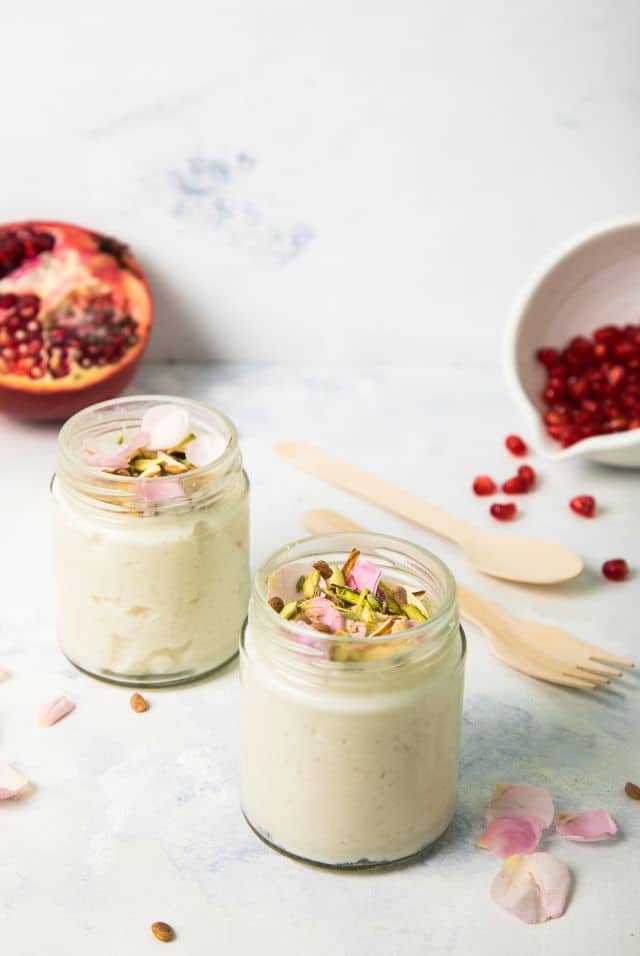
Pomegranate seeds add polyphenols and a tart edge that offsets banana sweetness. Whey brings a fast-digesting protein hit; milk fills in casein for a slower release.
Ingredients
- Seeds from 1/2 pomegranate
- 1 scoop whey protein (25 g)
- 1 1/2 cups low-fat milk
- 1 medium banana
Instructions
- Deseed the pomegranate.
- Chop banana.
- Add all ingredients plus a few ice cubes to a blender.
- Blend 30 to 45 seconds until smooth.
- Top with a spoonful of oats or extra seeds if desired.
Nutrition (1 serving): 435 kcal, 48 g protein, 76 g carbs, 15 g fat.
2. Egg White Apple Shake (527 calories, 34 g protein)
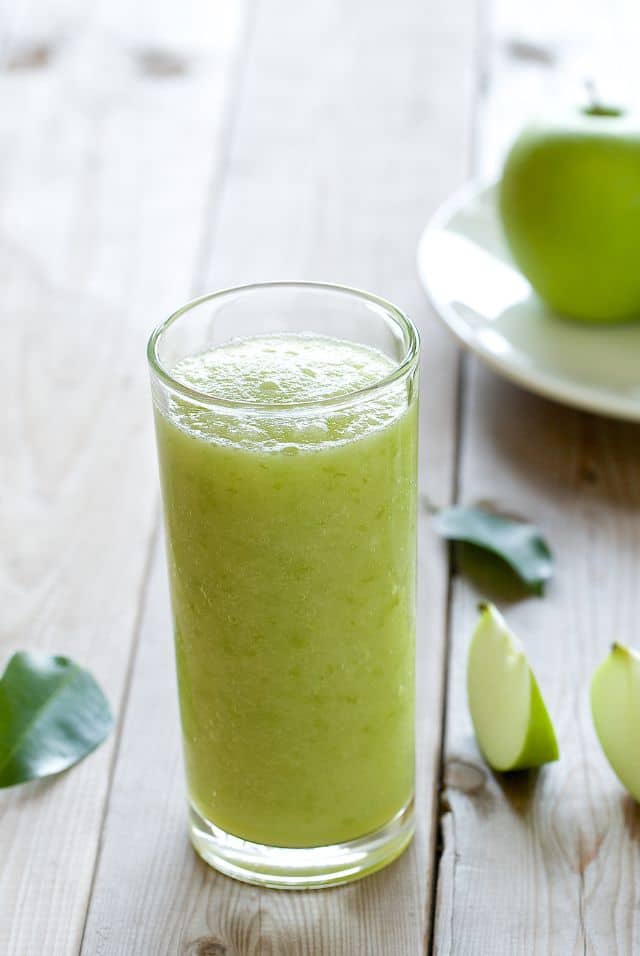
For anyone avoiding whey, pasteurized liquid egg whites are a clean protein base with almost no fat. Apples and honey carry the flavor.
Ingredients
- 15 fl oz skim milk
- 2 medium apples (peeled, cored)
- 5 large egg whites (pasteurized liquid, about 3/4 cup)
- 1 1/2 tbsp honey
Instructions
- Peel and core the apples, then chop.
- Add milk, apples, egg whites, and honey to the blender.
- Blend on high for 45 to 60 seconds.
- Serve immediately.
Nutrition (1 serving): 527 kcal, 34 g protein, 100 g carbs, 1.3 g fat.
Note: Use pasteurized egg whites from a carton to avoid raw-egg risk.
3. Almond Berry Protein Shake (493 calories, 41 g protein)
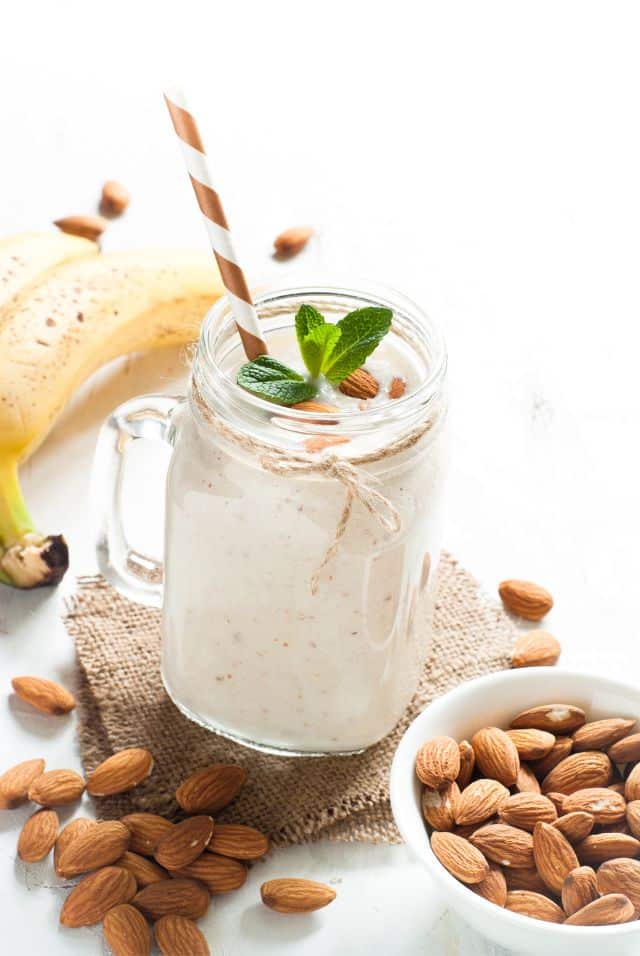
Raw almonds add healthy fats and a nutty backbone. Frozen berries thicken the drink and cut the need for extra ice.
Ingredients
- 25 raw almonds
- 1 scoop whey protein
- 1/2 medium banana (sliced and frozen)
- 1/2 cup frozen mixed berries
- 1 cup low-fat milk
Instructions
- Freeze sliced banana for at least 1 hour.
- Add all ingredients to blender.
- Blend on high for 45 to 60 seconds until fully smooth.
- Add a splash of water if too thick.
Nutrition (1 serving): 493 kcal, 41 g protein, 41 g carbs, 21 g fat.
4. Red Beet Berry Shake (504 calories, 40 g protein)
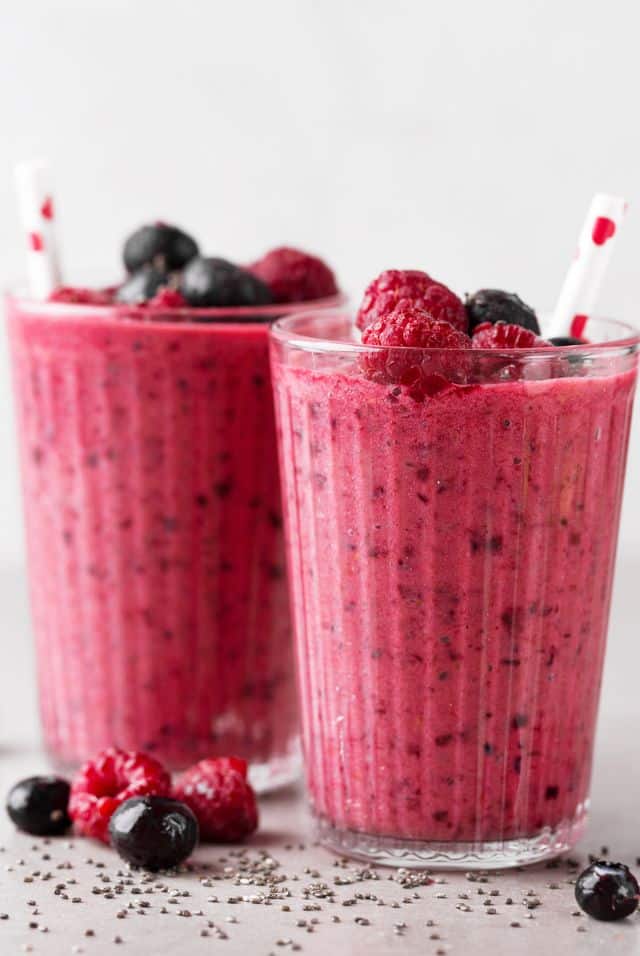
A tablespoon of chopped raw beet brings dietary nitrates, which have some evidence for endurance performance. Ginger and goji round out the flavor.
Ingredients
- 1 tbsp chopped raw beet
- 1 tbsp dried goji berries
- 1/2 tbsp fresh ginger (grated)
- 1/2 cup mixed berries
- 1/2 mango (chopped)
- 1 scoop whey protein
- 1/2 apple (chopped)
- 1 1/2 cups low-fat milk
Instructions
- Add all ingredients to blender.
- Blend on high for 60 seconds until smooth.
- Dilute with a splash of water or milk if needed.
Nutrition (1 serving): 504 kcal, 40 g protein, 71 g carbs, 8.9 g fat.
5. Hazelnut Cocoa Shake (474 calories, 39 g protein)
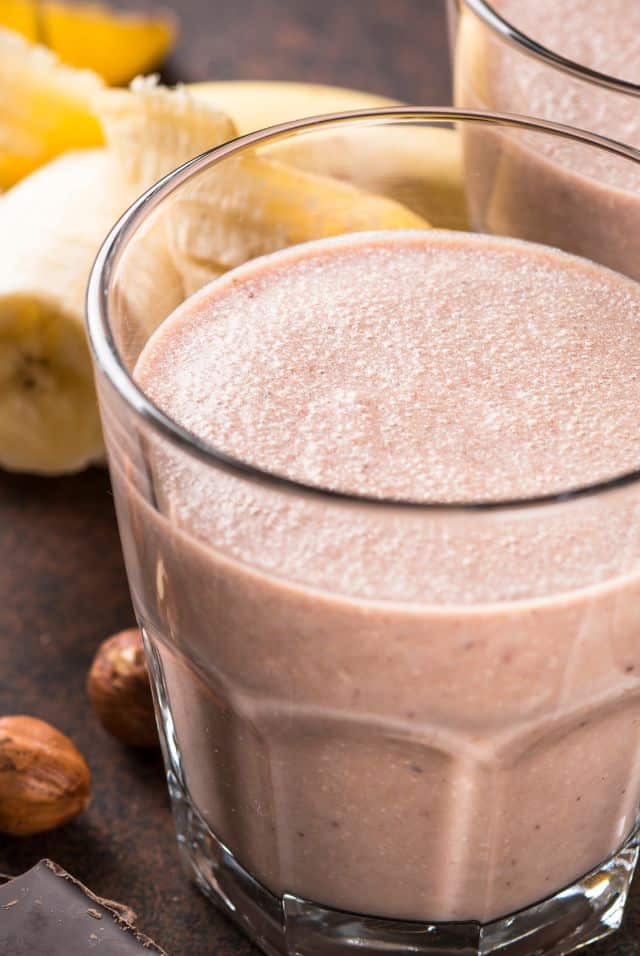
Cocoa and hazelnut give this shake a Nutella-adjacent flavor without adding the sugar. Oats slow digestion so you stay full longer.
Ingredients
- 1/2 banana (chopped)
- 4 tbsp rolled oats
- 1 cup low-fat milk
- 1/2 oz raw hazelnuts
- 1 tbsp unsweetened cocoa powder
- 1 scoop whey protein
Instructions
- Add all ingredients to blender.
- Blend on high for 45 to 60 seconds until smooth.
- Add ice for a colder consistency.
Nutrition (1 serving): 474 kcal, 39 g protein, 46 g carbs, 16 g fat.
When to Drink These
The often-repeated “anabolic window” is wider than most gym-floor advice suggests. The ISSN position stand (PMID 28642676) notes total daily protein and per-meal distribution matter more than a narrow post-workout timing window.
A shake within 1 to 2 hours of training is more than sufficient for most trainees. Whey-based recipes are useful right after lifting because they digest quickly; the almond and hazelnut versions with more fat and fiber suit a breakfast or between-meal use.
How to Pick the Right Protein Powder
The label is where most trainees lose money. Look at three numbers: protein per scoop (aim for 20 to 25 g), total calories per scoop (100 to 130 is standard whey; a “mass gainer” at 300+ is a different product), and the ingredient list length.
A clean whey isolate is water-processed milk plus a sweetener and maybe cocoa; if the label reads like a paragraph, you are paying for filler.
For lactose sensitivity, whey isolate has less lactose than whey concentrate. For vegans, look for a soy or pea-rice blend with a listed complete amino acid profile (5 to 6 g leucine per scoop is the practical threshold for muscle protein synthesis).
Storage and Blender Setup
Blend and drink within 15 minutes for the best texture. Whey and egg white shakes hold in the fridge for up to 24 hours in a sealed jar, though they separate.
Shake or restir before drinking. A 500 to 700 watt blender is enough for all five recipes; for the almond, beet, and hazelnut versions, run the blender an extra 30 seconds to fully break down the nuts and root vegetables.
If your blender leaves grit, soak nuts in warm water for 10 minutes first.
Practical Notes
- Whey protein: pick a scoop that lists 20 to 25 g protein and under 130 calories. Read the label; some “mass gainer” scoops carry 300+ calories on their own.
- Milk: low-fat cow’s milk hits both protein and calcium. For dairy-free, unsweetened soy milk is the closest protein match; almond milk is much lower in protein.
- Sweetness: skip added sugar. Ripe banana, dates, or a small amount of honey are enough.
- If you use pasteurized egg whites, chill them and use within the carton’s date. Cooked or pasteurized only for shakes.
FAQ
How much protein do I actually need per meal?
The ISSN position paper recommends 0.25 to 0.55 g/kg body weight per meal, with about 20 to 40 g being a reasonable target for most adults per feeding.
Is a 500 calorie shake good for weight loss?
It can be, if it replaces a similar-calorie meal rather than adding to your day. Weight loss depends on total calorie balance, not the drink itself.
Can I use plant-based protein powder?
Yes. Pea, soy, or a blended plant protein works. Look for a scoop with at least 20 g protein and a complete amino acid profile.
Are raw egg whites safe in shakes?
Use pasteurized liquid egg whites from a carton, not raw whites cracked from shell eggs. Pasteurization reduces salmonella risk.
Can I meal-prep these the night before?
You can pre-portion dry ingredients (oats, cocoa, protein powder) and freeze fruit. Blend fresh in the morning. Fully blended shakes separate and lose texture within a few hours.
Do I need a high-powered blender?
A basic 500 to 700 watt blender handles all five recipes. If using whole almonds or raw beet, blend 60 to 90 seconds to fully break them down.
Will drinking one every day cause kidney damage?
For healthy adults with normal kidney function, moderate high-protein intake has not been shown to harm kidneys in the research literature. If you have kidney disease or reduced function, talk to your physician before increasing protein.