Read this first. Menopause belly fat has real hormonal drivers, and it responds to a combination of resistance training, protein, sleep, dietary changes, and sometimes hormone therapy.
Hormone replacement therapy (HRT) is a medical decision that depends on your personal and family history, timing, and symptom burden; discuss it with your gynecologist or a menopause specialist. Nothing in this article replaces personalized medical guidance.
If new belly fat has appeared suddenly, or you have symptoms of thyroid disease, insulin resistance, or other endocrine changes, ask your doctor for labs. This is nutrition and lifestyle education, not medical advice.
Menopause Belly Fat: Why It Happens and What Helps
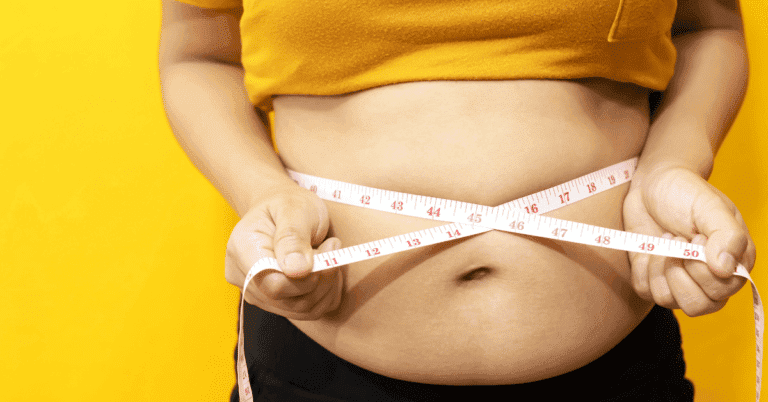
Menopause changes fat distribution. Estrogen used to direct fat storage toward hips and thighs during reproductive years; when its production winds down, fat shifts to the abdomen. That change isn’t cosmetic. Visceral fat (the deep abdominal kind) is linked to elevated cardiovascular, diabetes, and cancer risk.
According to the American Heart Association, women with excess visceral fat carry meaningfully higher heart-disease risk than women with the same total body weight distributed differently. That’s the reason to take midlife belly fat seriously, not vanity.
The good news: it responds to intervention. Below is what causes it and what actually works.
What’s on This Page
- What menopause belly fat is
- 8 causes of a menopausal belly
- Hormone therapy consideration
- Cut refined sugar and sugary drinks
- Manage emotional eating
- Increase soluble fiber
- Cardio + HIIT + strength training
- Portion size and meal timing
- Non-exercise movement
- FAQ
What Menopause Belly Fat Is
During reproductive years, fat storage favors hips and thighs (a subcutaneous, largely protective pattern). During perimenopause and after menopause, storage shifts to the abdomen, and much of the new fat is visceral (packed around organs).
Lovejoy and colleagues (2008) documented this shift in a longitudinal study: women accumulate visceral fat across the menopause transition even without significant total weight gain. That’s why some women say their weight didn’t change but their waistband did.
8 Causes of a Menopausal Belly
Beyond the primary driver (estrogen decline), other factors contribute:
- Family history of obesity or central fat. Genetics influence fat distribution.
- Certain medications. Some antidepressants and antipsychotics are associated with weight gain.
- Chemotherapy. Cancer treatment can shift body composition.
- Inadequate sleep. Poor sleep raises cortisol and hunger hormones.
- Loss of muscle mass. Sarcopenia lowers resting metabolic rate.
- Number of pregnancies. Repeated pregnancies can alter abdominal muscle tone and fat storage.
- Reduced physical activity. Midlife often brings less movement.
- Slowing metabolism. Basal metabolic rate typically declines with age; some of this is muscle-mass related and reversible.
Hormone Therapy Consideration
Hormone replacement therapy (HRT) is a legitimate option some women consider for menopausal symptoms including body-composition changes. The 2022 North American Menopause Society position statement notes that for symptomatic women under 60 (or within 10 years of menopause onset) without contraindications, the benefit-risk profile of HRT is generally favorable.
HRT is not a weight-loss drug. It can, however, reduce visceral fat accumulation and improve certain metabolic markers for some women. Whether it’s right for you depends on:
- Personal history of breast cancer, blood clots, stroke, or liver disease
- Family history
- Time since menopause
- Symptom burden
- Type of HRT (systemic vs local, oral vs transdermal, estrogen alone vs with progesterone)
This is a conversation with a gynecologist or menopause specialist, not a decision to make from a blog article.
Cut Refined Sugar and Sugary Drinks
Refined sugar and sugar-sweetened drinks cause rapid insulin spikes. Chronic elevation contributes to insulin resistance, and insulin resistance favors central fat storage. Whole fruit is different: the fiber slows absorption, so eat fruit freely.
The single biggest sugar-reduction lever for most adults is cutting sugar-sweetened beverages (soda, sweetened coffee drinks, sweet tea, fruit juice cocktails). Water, sparkling water, plain coffee, unsweetened tea take their place easily.
For more on this topic, check out our guide on keto and belly fat.
Manage Emotional Eating
Hormonal shifts affect mood and sleep, which affect food choices. Emotional eating is real and shouldn’t be shamed, but it needs a plan.
What helps: identifying triggers (stress, boredom, loneliness), building non-food coping tools (walks, calls, a hot shower, a book), and keeping your kitchen stocked so hungry-tired-you can reach for something reasonable at 10 pm.
Apple Cider Vinegar (Modest Evidence)
Small studies have shown modest blood-sugar and satiety benefits from 1 to 2 tablespoons of apple cider vinegar diluted in water with meals. It’s not a fat-burner or a cure. If you like it, add it. If not, no need. Always dilute (undiluted vinegar erodes tooth enamel and can irritate the throat).
Increase Soluble Fiber
Hairston and colleagues (2012) found that each 10 g increase in daily soluble fiber was associated with a roughly 3.7 percent reduction in 5-year visceral fat gain. Soluble fiber sources: oats, beans, lentils, apples, berries, chia seeds, flaxseed, Brussels sprouts, broccoli.
Cardio + HIIT + Strength Training
Strength Training (Twice a Week Minimum)
This is the highest-leverage exercise change for menopausal women. Muscle mass declines with age; resistance training preserves and rebuilds it, which raises resting metabolism and improves insulin sensitivity. Bodyweight, resistance bands, or free weights all work. Two to three 30 to 45 minute sessions per week produces visible change over months.
HIIT
Short bursts of high-intensity work (30 seconds hard, 60 to 90 seconds easy, repeated for 15 to 20 minutes) burn calories efficiently and improve cardiovascular fitness. Not for everyone; if you have cardiovascular conditions, check with your doctor first.
Moderate Cardio
Walking, cycling, swimming. Aim for the CDC’s 150 minutes of moderate cardio per week. This improves insulin sensitivity and burns calories without stressing joints.
Portion Size and Meal Timing
Metabolic rate declines with age, so calorie needs drop. If your portions haven’t changed since your 30s, that gap alone can drive gradual weight gain.
Several smaller meals per day work for some people; three meals plus a snack work for others. What matters is total intake, protein at each meal, and stopping when comfortably full.
Stay Vertical More Often
Non-exercise activity thermogenesis (fidgeting, standing, walking around) can account for hundreds of daily calories. Sitting for extended periods is independently linked to metabolic risk. A pedal exerciser under your desk, a standing desk, or simply standing up every 30 to 45 minutes helps.
FAQ
Does HRT reduce belly fat?
Some studies show HRT reduces visceral fat gain and improves metabolic markers in appropriately-selected menopausal women. It’s not a weight-loss drug and shouldn’t be prescribed only for that reason. Discuss with your gynecologist or menopause specialist.
Can diet alone fix menopause belly fat?
Diet + strength training + sleep + stress management is the combination that works. Diet alone helps but rarely gets full results without the movement piece, particularly resistance training to preserve muscle.
How long until I see results?
Give it 8 to 12 weeks of consistent effort. Waist circumference and how clothes fit are better metrics than the scale, since strength training can add muscle while fat is dropping.
Could this be thyroid?
Yes, sometimes. Hypothyroidism causes weight gain, fatigue, and cold intolerance. If you have symptoms, ask your doctor for a TSH test. It’s a quick blood draw.
When should I see a doctor?
If belly fat appeared suddenly, if you have menopause symptoms disrupting sleep or quality of life, if you have signs of insulin resistance (skin changes, energy crashes, high triglycerides), or if standard lifestyle changes haven’t moved the needle over months.
Won’t lifting weights make me bulky?
No. Building the kind of muscle that looks “bulky” requires specific training, calorie surplus, and often years. Normal strength training produces stronger, leaner, more functional bodies, not linebacker builds.
Any supplements worth trying?
Adequate protein and vitamin D matter for muscle and bone. Beyond that, most “menopause fat burner” supplements have weak or no evidence. Save your money for good food and a gym membership if you don’t already have one.