Read this first. The DASH pattern is safe for most healthy adult women.
It requires more care during pregnancy (don’t over-restrict sodium, watch caffeine and mercury from fish), breastfeeding (calorie needs go up), on blood pressure or diabetes meds (doses may need to change), and with a history of disordered eating.
Iron needs are high for menstruating women; the DASH pattern covers this if you eat legumes, leafy greens, and lean red meat regularly. Talk to your doctor or a registered dietitian before making big changes. This article is general information, not medical advice.
DASH Diet for Women: A 7-Day Plan That Works With Your Nutrient Needs
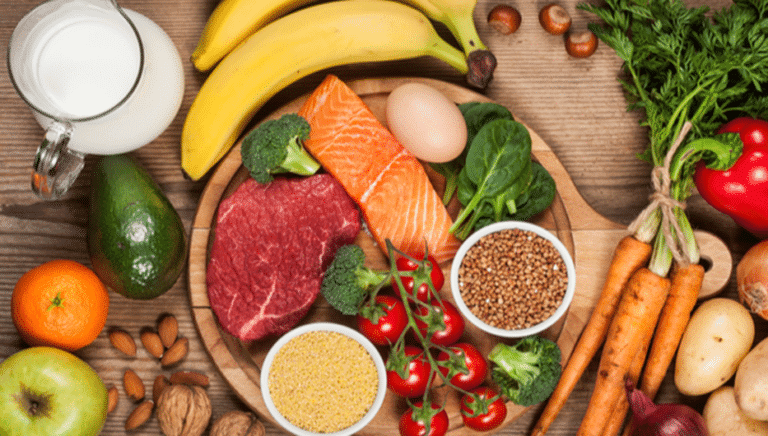
DASH lines up well with what women’s bodies typically need. It’s built around potassium, calcium, magnesium, fiber, and lean protein. Those are exactly the nutrients most women under-eat, according to national intake surveys.
This isn’t a “for women” version with fewer calories and pink packaging. It’s the same NHLBI DASH pattern, tuned to a full week of realistic meals, with notes on where women’s needs differ from men’s.
What’s on This Page
- Why DASH fits women’s nutrient gaps
- How many calories do you actually need?
- Practical guidelines
- 7-day sample meal plan
- Full week at a glance
- Notes for pregnancy, breastfeeding, and menopause
- FAQ
Why DASH Fits Women’s Nutrient Gaps
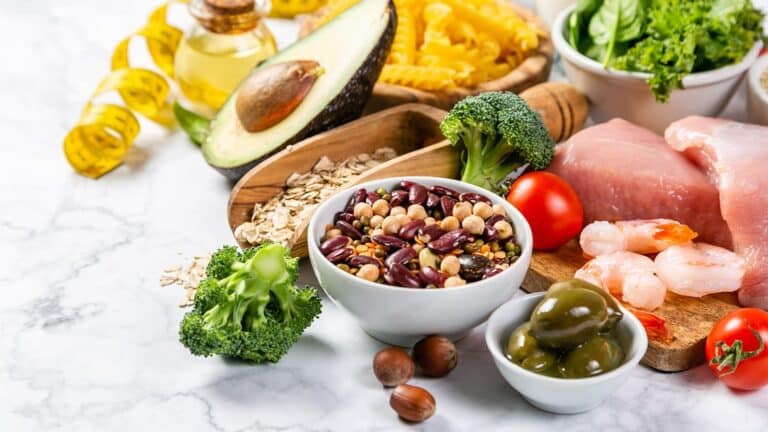
The USDA’s national dietary surveys consistently flag the same shortfalls in adult women: calcium, potassium, magnesium, fiber, and vitamin D. Iron is under-consumed by menstruating women in particular. DASH addresses each one without any supplement:
- Calcium: 2-3 servings of low-fat dairy plus leafy greens
- Potassium: 4-5 servings of vegetables and 4-5 of fruit
- Magnesium: nuts, seeds, whole grains, and legumes
- Fiber: 25-35 g/day from produce, beans, and whole grains
- Iron: lean red meat 1-2x/week, plus lentils, spinach, and fortified whole-grain cereals with vitamin C to boost absorption
The 2021 AHA scientific statement on dietary guidance (Lichtenstein 2021) puts DASH in the top tier of cardiovascular-protective eating patterns for adults. That matters because heart disease is the leading cause of death for U.S. women.
How Many Calories Do You Actually Need?
USDA Dietary Guidelines estimated needs for women:
| Age | Sedentary | Moderately active | Active |
|---|---|---|---|
| 19-30 | 1,800-2,000 | 2,000-2,200 | 2,400 |
| 31-50 | 1,800 | 2,000 | 2,200 |
| 51+ | 1,600 | 1,800 | 2,000-2,200 |
The plan below sits around 1,800 calories, which fits most adult women. Add a snack or larger portions if you’re taller, more active, breastfeeding, or losing weight faster than about 1 pound per week.
For more on this topic, check out our guide on 1200 calorie diet for women.
Practical Guidelines
- Aim for 2,300 mg sodium/day (or 1,500 mg if you’re managing high blood pressure)
- Choose foods high in potassium, calcium, magnesium, and fiber
- Cut added sugar to 5 or fewer servings per week
- Limit processed and packaged foods; they carry most of the sodium load
- Drink water first. Kidney stones are more common in low-fluid, high-sodium routines.
- Walk, lift, or move most days of the week
- Talk to your doctor before starting if you’re on blood pressure or diabetes medication, pregnant, or breastfeeding
7-Day Sample Meal Plan
Day 1
- Breakfast: 1 serving honey oatmeal with skim milk and berries
- Snack: 1 tbsp almond butter with apple slices
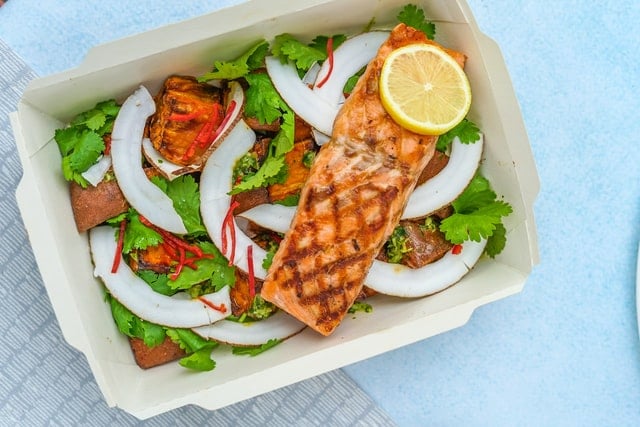
- Lunch: 2 servings smoked salmon on whole wheat pita, mixed greens
- Snack: 1 cup non-fat Greek yogurt with strawberries
- Dinner: Roasted shrimp with mixed greens and quinoa
Day 2
- Breakfast: Classic omelet with 1 cup skim milk
- Snack: Peanut butter with 1 banana
- Lunch: 2 servings grilled lemon chicken with roasted cauliflower
- Snack: Greek yogurt with raspberries
- Dinner: Tex-Mex tuna salad with 1/2 cup brown rice
Day 3
- Breakfast: Scrambled eggs in olive oil with 1 apple
- Snack: 2 servings baby carrots with hummus
- Lunch: Smoked salmon on mixed green salad
- Snack: 1 oz pretzels with 1/2 cup cottage cheese
- Dinner: Steak and vegetable stir-fry with 1 cup brown rice
Day 4
- Breakfast: Spinach and tomato eggs with whole wheat toast
- Snack: Non-fat Greek yogurt with strawberries
- Lunch: Baked cod with roasted kale and sweet potato
- Snack: Banana with almond butter
- Dinner: 2 servings garlic chicken wrap with mixed green salad
Day 5
- Breakfast: Hard-boiled eggs with 1 orange
- Snack: 1/2 cup raspberries
- Lunch: Whole wheat pasta with ground turkey and olive oil
- Snack: Banana with 1 tbsp peanut butter
- Dinner: Vegetable stir-fry with avocado-tuna salad
Day 6
- Breakfast: Tomato-spinach scrambled eggs with whole wheat toast and 1 apple
- Snack: 3 cups air-popped popcorn (no salt) with infused water
- Lunch: 2 servings smoked salmon with mashed chickpeas and roasted vegetables
- Snack: 1/2 cup mini pretzels with 2 tbsp hummus
- Dinner: Brown rice with lean roast beef and sliced tomato
Day 7
- Breakfast: Hard-boiled eggs with green smoothie (spinach, banana, unsweetened almond milk)
- Snack: Peanut butter with banana
- Lunch: Baked cod with roasted asparagus and kale
- Snack: Apple with almond butter
- Dinner: 2 servings lemon-garlic chicken with 1 cup brown rice
Full Week at a Glance
| Meal | Day 1 | Day 2 | Day 3 | Day 4 | Day 5 | Day 6 | Day 7 |
|---|---|---|---|---|---|---|---|
| Breakfast | Honey oatmeal + skim milk | Omelet + skim milk | Scrambled eggs + apple | Spinach-tomato eggs + toast | Hard-boiled eggs + orange | Tomato-spinach eggs + toast + apple | Hard-boiled eggs + green smoothie |
| Snack 1 | Almond butter + apple | PB + banana | Carrots + hummus | Yogurt + strawberries | Raspberries | Popcorn + infused water | PB + banana |
| Lunch | Salmon + pita + greens | Chicken + cauliflower | Salmon + salad | Cod + kale + sweet potato | Turkey pasta + olive oil | Salmon + chickpeas + veg | Cod + asparagus + kale |
| Snack 2 | Greek yogurt + berries | Yogurt + raspberries | Pretzels + cottage cheese | Banana + almond butter | Banana + PB | Pretzels + hummus | Apple + almond butter |
| Dinner | Shrimp + greens + quinoa | Tuna salad + brown rice | Steak stir-fry + rice | Chicken wrap + salad | Veg stir-fry + tuna | Roast beef + brown rice | Lemon-garlic chicken + rice |
Notes for Pregnancy, Breastfeeding, and Menopause
Pregnancy
Don’t slash sodium during pregnancy without your OB’s sign-off. Blood volume expands, and drastic sodium restriction isn’t recommended. AHA doesn’t set a specific pregnancy sodium target below the general 2,300 mg. Keep fish to 8-12 oz/week and stick to low-mercury choices (salmon, sardines, cod, tilapia; skip shark, swordfish, king mackerel, tilefish). Add a prenatal vitamin as directed.
Breastfeeding
Calorie needs are 300-500 higher than baseline. This is not the time to cut calories. Add a snack: nuts, yogurt with fruit, or hummus with whole grain crackers.
Menopause and beyond
Calcium needs go up to 1,200 mg/day at 51+ (from 1,000 mg). Vitamin D to 600-800 IU. Bone loss accelerates after menopause. DASH’s dairy plus leafy greens covers most of it if you’re eating dairy; if you’re not, talk to your doctor about whether a supplement makes sense.
FAQ
Is DASH different for women than for men?
The pattern is identical. Calorie and iron needs are the ones that differ. Women 19-50 need 18 mg iron per day; men need 8 mg. Menstruating women who don’t eat red meat should double down on lentils, spinach, and iron-fortified whole grains, paired with vitamin C to help absorption.
Will I lose weight on this?
Most women lose weight on DASH if they were previously eating a lot of processed food, refined grains, and restaurant meals. It’s slower than aggressive low-carb approaches, but studies show it’s more sustainable over years. Weight loss also depends on total calorie intake.
What if I can’t eat dairy?
Fortified soy or almond milk (with calcium and vitamin D), leafy greens (kale, bok choy, collards), sardines with bones, tofu made with calcium sulfate, and fortified orange juice. Adult women need 1,000 mg calcium/day (1,200 mg at 51+). You can hit that without dairy but you need to plan for it.
Is DASH good for PCOS?
The full evidence is smaller than for hypertension, but a 2015 meta-analysis found DASH improved insulin sensitivity and reduced abdominal fat in women with PCOS. It’s a reasonable pattern to try. Work with a dietitian or endocrinologist if PCOS is well-established.
Can I follow DASH while pregnant?
The pattern is compatible with pregnancy, but don’t restrict sodium below standard recommendations and don’t aim for weight loss during pregnancy. Get individual guidance from your OB or a prenatal dietitian.
Does DASH help with perimenopause symptoms?
DASH may help with weight management, bone health, and blood pressure risk that rises around menopause. It’s not a hot-flash treatment. If perimenopausal symptoms are disrupting sleep or quality of life, that’s a conversation with your OB or PCP.
Do I need more iron on DASH?
No, DASH doesn’t create an iron problem. But menstruating women need 18 mg/day regardless. Lean red meat 1-2x/week, plus lentils, spinach, and fortified whole grains most days, covers it. If you’re anemic, ask your doctor about supplementation.
Related Reading
- The full DASH diet plan
- 1,800-calorie DASH meal plan
- More meal plans for women
- DASH grocery list