A vegan mango smoothie is one of the easiest plant-based breakfasts you can make: frozen mango, plant milk, and banana blitzed into a thick, naturally sweet drink in under 5 minutes.
This version lands at about 200 kcal per serving with 3 grams of fiber and a full daily serving of vitamin C from the mango. It uses no added sugar, no ice cream, and no dairy, and it works as either a portable breakfast or a snack after a workout.
Why This Smoothie Works
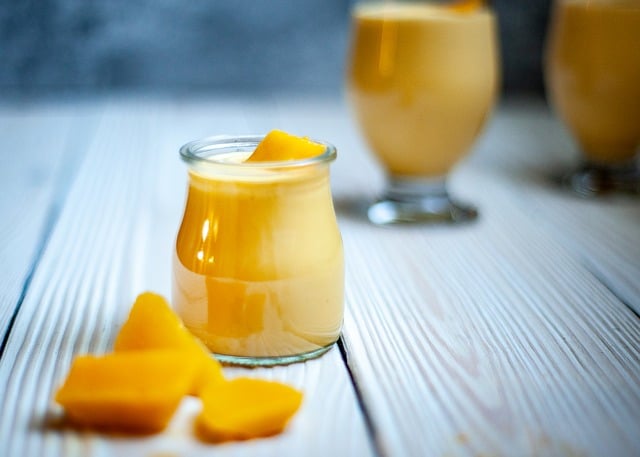
Frozen mango is the workhorse. Freezing before blending means you skip ice, keep the smoothie thick, and lock in the fruit’s peak-ripeness sugar and vitamin C.
Banana pulls double duty: it thickens the drink further and delivers roughly 400 mg of potassium per medium fruit, useful after sweating through a morning workout. The plant milk (soy, almond, or oat) adds a touch of protein and calcium without dairy.
Testing in my Wayne, New Jersey kitchen, I compared three plant milks side by side. Soy milk gave the highest protein at 7 grams per cup and the creamiest mouthfeel.
Almond milk kept calories lowest at around 30 to 40 per cup but felt thinner. Oat milk landed in the middle and its natural sweetness let me skip the maple syrup entirely.
Choose whichever fits your macros and taste; the recipe below defaults to soy.
Vegan Mango Smoothie
Ingredients
For 2 Servings (Two 12 oz Glasses)
- 2 cups frozen mango chunks 320 g / 11 oz
- 1 medium ripe banana peeled and broken into pieces (about 120 g / 4 oz)
- 1 1/2 cups unsweetened soy milk 360 ml / 12 fl oz; or almond, oat, or coconut milk
- 1 tablespoon fresh lime juice 15 ml
- 1/2 teaspoon vanilla extract
- 1/2 teaspoon fresh ginger grated (optional, brightens the flavor)
- 1 tablespoon maple syrup optional, only if your mango is not fully ripe (15 ml)
- 4 to 6 ice cubes if you like it colder
Optional Boosters
- 1 tablespoon ground flaxseed for extra fiber and omega-3 7 g
- 1 tablespoon almond butter for extra fat protein, and staying power (16 g)
- 1 scoop plant-based vanilla protein powder for a 20+ g protein version 20 g
- 1/2 cup fresh spinach blended in first (turns the color to sunset orange with no strong flavor)
Instructions
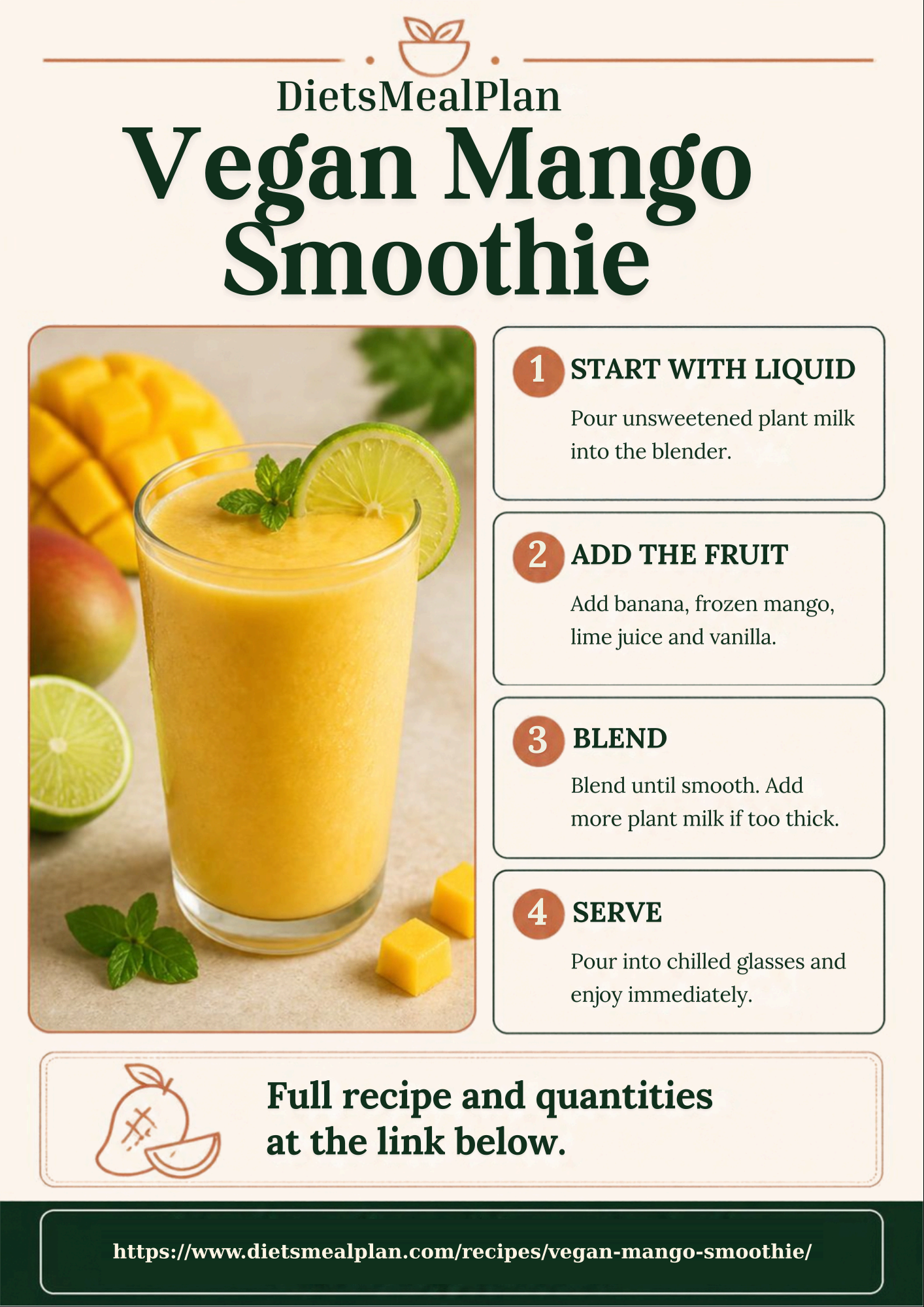
- Add the plant milk to your blender first. This helps the blades catch the frozen mango without stalling.
- Add the banana pieces, then the frozen mango on top. Add lime juice, vanilla, and optional ginger.
- Blend on low for 15 seconds to break up the fruit, then increase to high for 30 to 45 seconds until the smoothie is thick and smooth. Scrape down the sides once if needed.
- Taste. If your mango was underripe, blend in the optional maple syrup. If the drink is too thick, add a splash more plant milk.
- Pour into two chilled glasses. Top with a sprinkle of shredded coconut, a lime wedge, or a few extra frozen mango cubes. Serve immediately.
Nutrition
Nutrition per Serving
Values calculated from USDA FoodData Central entries for frozen mango, banana, and unsweetened soy milk. Optional maple syrup not included.
- Calories: about 200 kcal
- Protein: 6 g
- Total carbohydrates: 40 g
- Sugars: 28 g (all from fruit)
- Fiber: 4 g
- Total fat: 3 g
- Sodium: 65 mg
- Vitamin C: about 60 mg (roughly 67 percent of Daily Value)
- Potassium: about 500 mg
Almond milk version drops calories to about 170 and protein to 3 g. Adding 1 scoop of plant protein powder adds 100 kcal and 20 g of protein.
Tips From My Kitchen
- Freeze mango yourself for the best flavor. Fresh champagne mangoes or Kent mangoes, cubed and frozen on a sheet pan overnight, beat commercial frozen bags. Bagged frozen mango is a fine backup.
- Freeze the banana too if you want it thicker. Peel ripe bananas, break into pieces, and store in a zip bag in the freezer. Frozen banana makes the smoothie milkshake-thick.
- Do not skip the lime. A squeeze of citrus keeps the mango tasting bright rather than flat and one-note.
- Blend milk first. Adding liquid to the blender before frozen fruit prevents the blades from choking and shortens blend time.
- For a thicker bowl-style smoothie, cut the milk to 1 cup. Serve in bowls and top with granola, chia seeds, and fresh berries.
Storage and Prep-Ahead
This smoothie is best served immediately. If you must make it ahead, pour it into a mason jar and fill to the very top to limit oxidation.
Cap tightly and refrigerate up to 12 hours. Shake or re-blend before drinking.
For a longer keep, freeze in silicone molds and re-blend the “smoothie cubes” with a splash of plant milk.
Frequently Asked Questions
Is a vegan mango smoothie good for weight loss?
At about 200 kcal, it is calorie-appropriate for a snack or half of a light breakfast. Weight loss depends on your total daily calories, not any single drink. Pair it with a source of protein like a boiled egg substitute or a spoon of nut butter to feel full longer.
Can I use fresh mango instead of frozen?
Yes. Use the same weight (about 320 g of fresh mango chunks) plus 6 to 8 ice cubes to get similar thickness. Fresh mango gives a slightly less sweet result unless you catch it at peak ripeness.
Which plant milk is best?
Soy milk gives the most protein at 7 grams per cup and blends creamily. Oat milk is naturally sweeter and needs no added sweetener. Almond milk is lowest in calories but thinner. Coconut milk (the drinkable kind, not canned) adds tropical flavor.
Can I add protein powder?
Yes. One scoop of a neutral or vanilla plant protein powder (pea, soy, or rice blend) adds about 20 g of protein and 100 kcal. Blend it in with the milk before adding the frozen fruit so it dissolves fully.
Is this smoothie kid-friendly?
Yes. The natural sweetness of mango and banana is enough for most kids without any added sugar. Skip the ginger for younger children and use oat or soy milk for extra creaminess.
Can I make it lower in sugar?
Replace half the mango with frozen cauliflower florets. Cauliflower is neutral in taste, adds fiber, and drops the sugar by about 10 g while keeping the smoothie thick.
Can I freeze leftover smoothie?
Yes. Pour into silicone ice cube molds, freeze overnight, and re-blend the cubes with a splash of plant milk when you want a fresh smoothie. Ice-cube portioning works well for meal prep.
This recipe and its nutrition information are provided for educational purposes only and are not a substitute for individualized medical or nutrition advice. Consult a registered dietitian or your physician before making changes to your diet, especially if you manage diabetes, cardiovascular disease, or a food allergy.