Keto Salmon Marinade Recipe (2g Net Carbs)
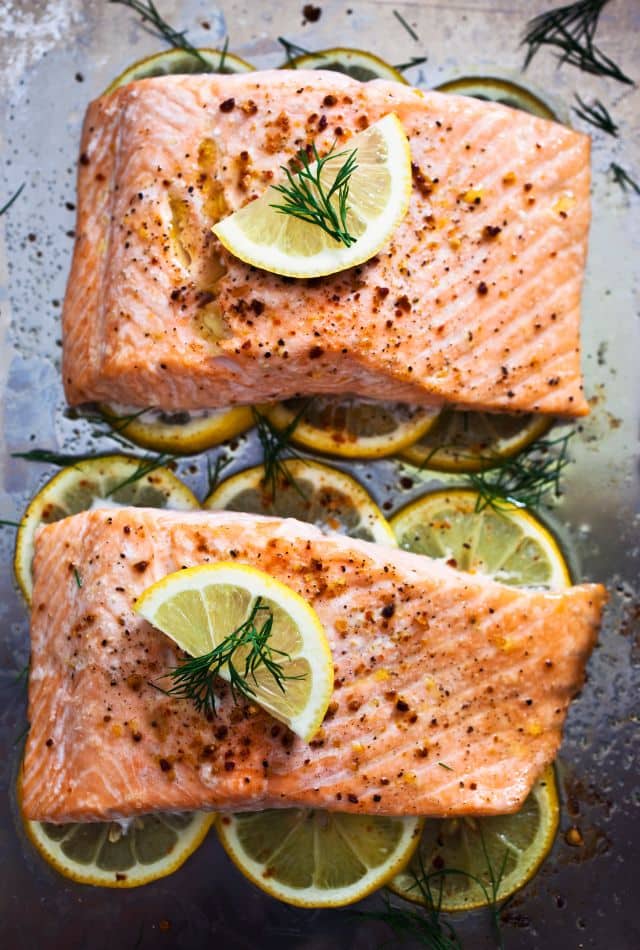
Sheet-pan salmon in a keto-clean lemon garlic herb marinade at 2g net carbs per serving. Roasts at 400F for 12-14 minutes. Serves 4 with 420 calories, 34g protein, and 30g fat each. A single-pan build with no sugar, teriyaki, or honey glaze. Built for keto, low-carb, and pescatarian keto eaters looking for a fast weeknight protein hit with omega-3s intact.
Why This Works on Keto
Most restaurant salmon marinades lean on brown sugar, honey, or teriyaki, which push a plain fillet from 0g carbs up to 15-20g per serving.
This marinade builds flavor with olive oil, lemon juice, minced garlic, Dijon mustard, and fresh herbs (dill, parsley, thyme), keeping the total added carbs at 2g per serving. The fat in the marinade coats the fish and helps the surface brown at high heat without a sweetener-based glaze.
Salmon itself is naturally zero-carb and pushes a 34g protein hit with almost 20g of healthy fats including EPA and DHA omega-3s. The macro split lands near 65% fat, 32% protein, 3% carbs.
Readers who found this helpful also liked our guide on keto chicken recipes.
For more on this topic, check out our guide on keto avocado smoothie.
Keto Salmon Marinade Recipe
Ingredients
- 4 salmon fillets
- 20 asparagus spears
- 4 lemon slices
Marinade Ingredients
- 5 tbsp. butter
- 2 1/2 tbsp. parsley chopped
- 2 garlic cloves
- Salt and pepper to taste
Instructions
- As preparation will take a very short time, start by preheating the oven to 220°C / 425°F.
- Melt the butter. Once it cools down a bit, transfer it to a baking tray that can fit 4 salmon fillets. Mince the cloves of garlic and add them to the butter. Finally, chop the parsley, add some pepper and salt, and mix well with the marinade.
- Take the salmon fillets and thoroughly coat them in the marinade, both front and back, then place them on the baking tray. Arrange the asparagus in the center of the baking tray. Put the tray in the oven and bake for 10 minutes.
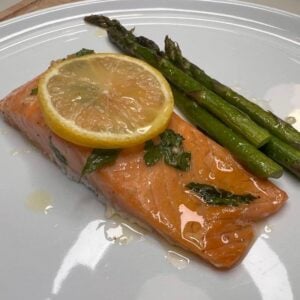
- After 10 minutes, take one of the baked salmon fillets on a serving plate. Pour a couple of tablespoons of marinade sauce from the baking tray on top. Place 5 asparagus spears right next to the salmon. Finally, place 1 slice of lemon on the salmon fillet. Follow the same procedure for each serving.
Video
Notes
Nutrition
Ingredient Notes
Use fresh, wild-caught salmon fillets when possible (Alaskan sockeye or coho). Farmed Atlantic salmon works but carries a milder flavor and higher omega-6 ratio. Skin-on fillets hold structure on the sheet pan and crisp under a broiler.
Extra virgin olive oil for the marinade; the low-heat marinade phase preserves the flavor and it does not need to survive extreme heat. Fresh lemon only, not bottled. Dijon mustard should list mustard seed, vinegar, salt (Maille or Grey Poupon; skip honey Dijon).
Fresh dill and parsley are non-negotiable; dried herbs will not deliver the same brightness. Kosher salt for the surface. Skip pre-made bottled marinades; nearly all of them contain sugar or high-fructose corn syrup.
For more on this, take a look at our keto guacamole recipe guide.
Tips and Variations
Marinate for 20-30 minutes maximum. Longer than that and the lemon juice starts to denature the salmon proteins, turning the surface mushy (this is essentially a ceviche effect). Bring the fish to room temperature 15 minutes before roasting.
Roast at 400F for 12-14 minutes for medium (125-130F internal), then finish under the broiler for 90 seconds to set the top. Rest 3 minutes before serving. For a dairy-free version, this recipe is already dairy-free as written.
For a spicier version, add 1 tsp red pepper flakes and 1 tbsp harissa (checking label for under 2g carbs per tbsp). For an Asian-inspired variation, swap the Dijon for 1 tbsp toasted sesame oil and 1 tbsp coconut aminos (about 2g carbs).
Serve over sauteed spinach or riced cauliflower for a full plate under 6g net carbs. For higher-fat, top with 2 tbsp lemon-butter compound butter.
Storage and Reheating
Refrigerate leftovers up to 2 days in a sealed container. Salmon dries out quickly on reheat; the best method is to eat cold, flaked over a salad. If reheating, use a 275F oven with the fish covered in foil for 8 minutes. Do not microwave; it turns the fish rubbery and pushes out the fat. Not recommended for freezing after cooking.