21 Day Anti-Inflammatory Diet Plan – Overview
It is important to consult with a registered dietitian or physician before making any dietary changes, as different diets may have varying effects on health and may not be suitable for everyone.
Imagine a world where you wake up feeling energized, your mind is sharp, and your body is free from chronic inflammation. This is the world an anti-inflammatory diet can offer.
An anti-inflammatory diet is a way of eating that focuses on consuming whole, nutrient-dense foods that work to reduce chronic inflammation in the body.
This type of diet is becoming increasingly popular as it’s been linked to lowering the risk of developing chronic diseases such as diabetes, heart disease, and cancer.
The 21-day anti-inflammatory diet plan pdf is a great way to kickstart your journey toward better health. It’s a comprehensive plan that includes a detailed meal plan to help you make healthy eating a sustainable part of your lifestyle.
Summary: 21 Days at a Glance
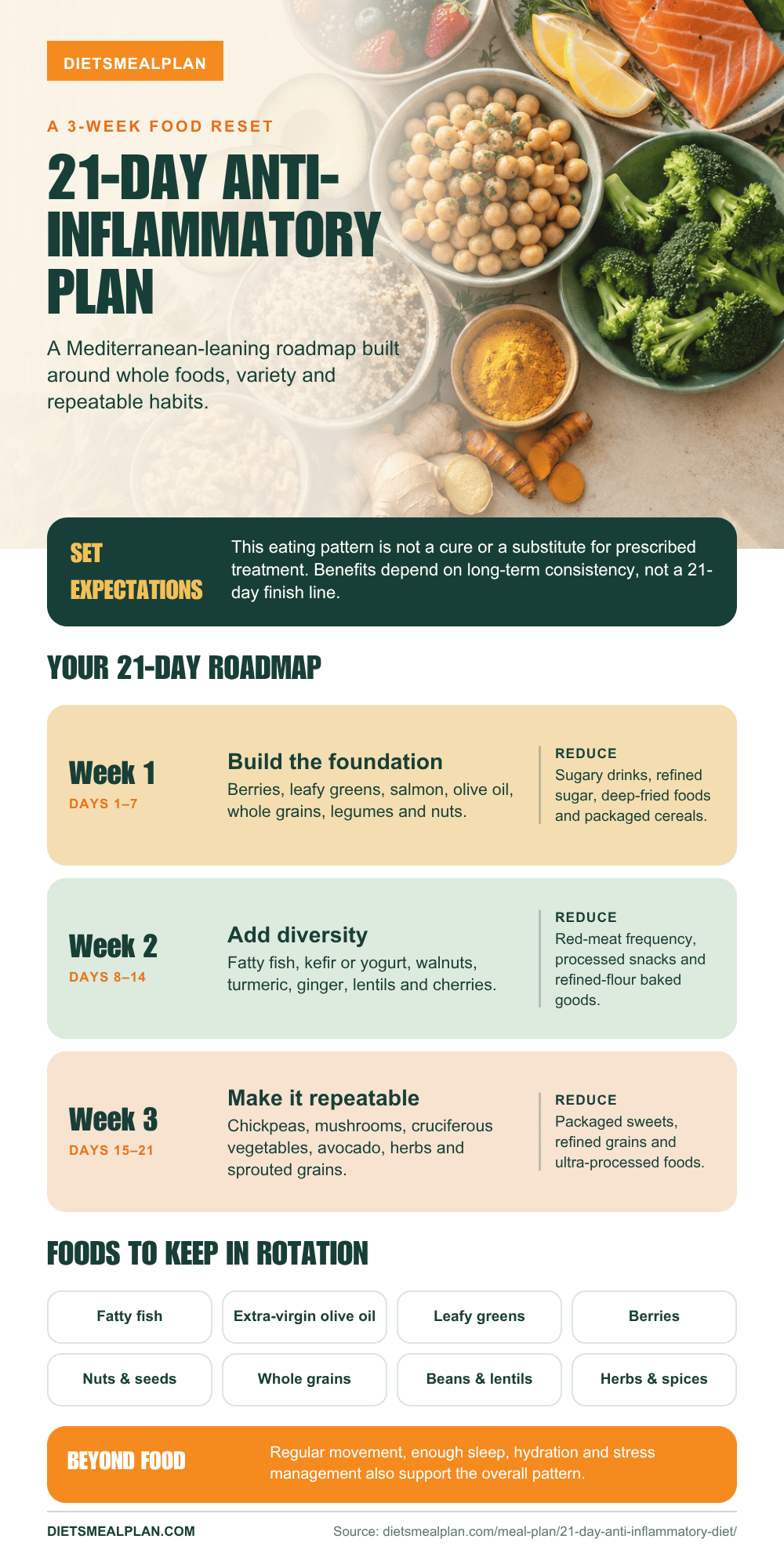
Save as PDF| Week | Focus | Foods Emphasized | Foods Reduced |
|---|---|---|---|
| Week 1 (Days 1 to 7) | Foundation: whole-food swaps, Mediterranean staples | Berries, leafy greens, salmon, extra virgin olive oil, whole grains, legumes, nuts | Sugar-sweetened beverages, refined sugar, deep-fried foods, packaged breakfast cereals |
| Week 2 (Days 8 to 14) | Diversification: more omega-3, fermented foods, spices | Fatty fish, kefir, Greek yogurt, walnuts, turmeric, ginger, lentils, cherries | Red meat frequency, processed snacks, refined-flour baked goods |
| Week 3 (Days 15 to 21) | Consolidation: plant-forward, herbs and spices anchored | Chickpeas, mushrooms, cruciferous vegetables, saffron, avocado, sprouted grains | Packaged sweets, refined grains, ultra-processed foods, industrial seed-oil-fried items |
The plan is a Mediterranean-leaning template. Individual portions, calorie targets, and substitutions should be tailored with a registered dietitian, especially if you have a chronic condition.
Table of Contents
- Overview
- What an Anti-Inflammatory Diet Actually Means
- How the 21-Day Plan Combats Inflammation
- Foods That Fight Inflammation (Evidence Tier)
- Foods That Promote Inflammation
- The Significance in Disease Prevention
- 5 Variations of Anti-Inflammatory Diet
- 10 Ways to Thrive on the Plan
- Week 1 (Days 1 to 7)
- Week 2 (Days 8 to 14)
- Week 3 (Days 15 to 21)
- Limitations of the Plan
- Printable PDF
- Frequently Asked Questions
- References
- Medical Disclaimer
What an “Anti-Inflammatory Diet” Actually Means
Chronic low-grade inflammation is a persistent, silent activation of the immune system that runs in the background for years. Unlike the acute inflammation you feel after a cut or infection, this low-grade version does not resolve on its own.
It is measurable through blood biomarkers such as high-sensitivity C-reactive protein (hs-CRP), interleukin-6 (IL-6), and tumor necrosis factor alpha (TNF-alpha). Elevated levels are associated with cardiovascular disease, type 2 diabetes, metabolic syndrome, and cognitive decline (11).
Diet can modestly but meaningfully move these numbers. In the ATTICA study, closer adherence to a Mediterranean-style pattern was associated with 20% lower hs-CRP and 17% lower IL-6 in healthy adults (11).
A separate randomized trial in patients with metabolic syndrome showed the same pattern reduced IL-6, IL-7, IL-18, and hs-CRP after two years while improving endothelial function (12).
What an “anti-inflammatory diet” does NOT mean: it is not a cure, it is not a substitute for prescribed medication, and it is not a rapid fix. Expect modest laboratory changes over 4 to 12 weeks and symptom changes (joint stiffness, energy, digestion) over weeks to months (13).
How Does 21 Day Anti-Inflammatory Diet Combat Inflammation?
Watch the 21 Day Anti-Inflammatory Diet Plan Video
In order to combat inflammation in the body, an anti-inflammatory diet is recommended. You may check and download the below 21 days anti-inflammatory diet plan pdf for your daily diet schedule.
What is an Anti-Inflammatory Diet?
An anti-inflammatory diet involves consuming foods with anti-inflammatory properties and limiting or eliminating those that have pro-inflammatory effects.
The human body is constantly exposed to environmental toxins, processed foods, chronic stress, and lifestyle factors, which can lead to chronic inflammation.
Chronic inflammation describes a state where the body’s immune system is in a state of constant activation, leading to the production of pro-inflammatory molecules such as cytokines and chemokines (1).
This further results in the development of various diseases including:
- Cancer,
- Metabolic disease,
- Cardiovascular disease,
- Autoimmune diseases,
- Neurological diseases,
- Respiratory diseases,
- Gastrointestinal diseases,
- Skin disorders (2).
21 Day Anti-inflammatory diet is believed to play a role in reducing chronic inflammation by providing the body with the necessary nutrients to support optimal health and minimizing the intake of foods that may promote inflammation.
The 21 day anti-inflammatory diet typically includes a variety of nutrient-dense foods, such as:

- Fruits: Berries, cherries, and citrus fruits are high in antioxidants and anti-inflammatory compounds.
- Vegetables: Plant-based foods such as leafy greens, broccoli, and bell peppers are rich in vitamins, minerals, and antioxidants.
- Whole grains: Whole grains such as oats, quinoa, brown rice, and barley are high in fiber, vitamins, and minerals and have anti-inflammatory properties.
- Healthy fats: Foods such as nuts, seeds, olive oil, avocado, and fatty fish (such as salmon and sardines) are high in anti-inflammatory omega-3 fatty acids.
- Lean proteins: Foods such as fish, chicken, turkey, and tofu are good sources of lean protein, which can help to reduce inflammation.
- Herbs and spices: Spices such as ginger, turmeric, garlic, and cinnamon have anti-inflammatory properties.
- Nuts and seeds: Almonds, walnuts, flaxseeds, and chia seeds.
- Olive oil and avocado oil.
It is also recommended to drink enough water, herbal teas, and other fluids to keep the body hydrated.
The anti-inflammatory diet limits the intake of processed foods, refined sugars, and saturated and trans fats, which have been linked to inflammation and chronic disease.
Processed foods are high in added sugars, unhealthy fats and salt, and refined carbohydrates, which can contribute to chronic inflammation.
Other variables, such as regular exercise, stress management, and adequate sleep, may also assist in decreasing inflammation as they are the risk factors for inflammation (3)
Foods That Fight Inflammation: Evidence Tier
Not every “anti-inflammatory food” carries the same weight of evidence. The table below groups common foods by the strength of the human clinical data behind them.
| Food | Key Compound(s) | Evidence Tier |
|---|---|---|
| Fatty fish (salmon, sardines, mackerel) | EPA and DHA omega-3 fatty acids | Strong (13, 15, 16) |
| Extra virgin olive oil | Oleocanthal, polyphenols, monounsaturated fat | Strong (15, 16) |
| Leafy greens (spinach, kale, chard) | Vitamin K, folate, carotenoids | Moderate (11, 16) |
| Berries (blueberries, strawberries, cherries) | Anthocyanins, ellagitannins, polyphenols | Moderate (16, 18) |
| Nuts (walnuts, almonds, pistachios) | ALA, vitamin E, magnesium, plant sterols | Moderate (15, 16) |
| Whole grains (oats, quinoa, barley) | Beta-glucan, fiber, lignans | Moderate (16) |
| Legumes (lentils, chickpeas, beans) | Soluble fiber, resistant starch, polyphenols | Moderate (15, 16) |
| Cruciferous vegetables (broccoli, cauliflower, Brussels sprouts) | Sulforaphane, glucosinolates | Moderate (17, 18) |
| Green tea | EGCG catechins | Moderate (18) |
| Turmeric | Curcumin (limited bioavailability) | Emerging (17) |
| Ginger | Gingerols, shogaols | Emerging (17) |
| Dark chocolate (70%+ cacao) | Flavanols | Emerging (18) |
“Strong” = replicated large randomized controlled trials or major society endorsement (AHA, PREDIMED). “Moderate” = consistent cohort data plus mechanistic support. “Emerging” = smaller trials, promising mechanistic data, still evolving.
Foods That Promote Inflammation
A large 2020 systematic review of ultra-processed food (UPF) intake found consistent associations with higher hs-CRP, obesity, cardiovascular events, and all-cause mortality (14). The categories below have the most consistent pro-inflammatory signal in the literature.
- Ultra-processed foods: packaged snacks, instant meals, industrial baked goods, reconstituted meat products (14).
- Added sugars and sugar-sweetened beverages: soda, sweet coffee drinks, sweetened yogurts, dessert sauces.
- Refined grains: white bread, white rice used in isolation, refined-flour pasta, most breakfast cereals.
- Industrial trans fats: partially hydrogenated oils still found in some imported margarines and shortenings (FDA has largely banned them in the U.S. food supply since 2018, but check labels on imported items).
- Processed and cured meats: hot dogs, bacon, deli meats, sausages high in nitrites and sodium.
- Excessive alcohol: more than 1 drink/day for women or 2 for men raises hs-CRP and IL-6.
- Fried foods cooked in reused or unstable industrial oils: repeated frying oxidizes fats and generates advanced glycation end products (AGEs).
The Significance of an Anti-Inflammatory Diet in Disease Prevention
It is important to note that the anti-inflammatory diet is not a specific diet plan but rather a way of eating that emphasizes nutrient-dense foods and limits those that may contribute to inflammation.
However, there are different variations of an anti-inflammatory diet, such as the Mediterranean, plant-based, ketogenic, DASH, and AIP diets etc., depending on the specific dietary approach or the individual’s dietary needs.
5 Variations of Anti-Inflammatory Diet Plan
1. Mediterranean-style anti-inflammatory diet
Some individuals may follow a Mediterranean-style anti-inflammatory diet, which emphasizes whole foods such as fruits, vegetables, whole grains, legumes, nuts, seeds, and healthy fats such as olive oil.
It also includes a moderate intake of fish and seafood, and a low intake of red meat and processed foods.
Studies reveal that healthy Mediterranean diet food choices can prevent over 80% of cardiac disease, 70% of strokes, and 90% of type 2 diabetes when combined with regular physical exercise and avoiding smoking. (4)
2. DASH Diet-style anti-inflammatory diet
Similarly, another diet pattern, the DASH Diet (Dietary Approaches to Stop Hypertension), is focused on reducing blood pressure and promoting heart health through an emphasis on fruits, vegetables, whole grains, and lean protein.
It also limits saturated and trans fats, sugar, and salt.
It has been shown to have anti-inflammatory properties. Researchers have found that combining the DASH and Mediterranean diets (called the MIND DIET) lowered the risk of Alzheimer’s disease by 53% in people who followed the diet carefully. (5)
3. Plant-based-style anti-inflammatory diet
While some may rely on a plant-based anti-inflammatory diet, which emphasizes whole, plant-based foods and eliminates animal products. According to research, plant-based diets minimize the chance of developing chronic diseases, the need for medication, and the risk of heart disease. (6)
4. Low-carb (ketogenic)-style anti-inflammatory diet
Low-carb (ketogenic), anti-inflammatory diet emphasizes healthy fats, lean proteins, and low carbohydrate intake. Reducing carbs appears to benefit the nervous system and inflammatory biomarkers. (7)
5. Autoimmune protocol diet style anti-inflammatory diet
The Autoimmune Protocol Diet (AIP) is another diet that eliminates certain foods that are known to be inflammatory, such as grains, legumes, dairy, nightshades, and processed foods, and encourages the consumption of nutrient-dense, anti-inflammatory foods like meat, fish, fruits, vegetables, nuts, and seeds.
As per the findings of the research, AIP has been shown to reduce the symptoms of inflammatory bowel diseases. (8)
Similarly, an anti-inflammatory diet can help reduce pain and inflammation in people with rheumatoid arthritis and improve cognitive function in older adults. (9)
It may also help to reduce the risk of kidney disease by reducing inflammation in the body and providing the body with the nutrients it needs to support healthy kidney function (10).
An anti-inflammatory diet plan is particularly significant for individuals who are at risk of or are currently living with chronic diseases such as diabetes, heart disease, and cancer.
These conditions are often linked to chronic inflammation in the body, and an anti-inflammatory diet can help to reduce this inflammation and lower the risk of these diseases.
10 Ways to Thrive on an Anti-inflammatory Diet Plan
Adopting an anti-inflammatory diet can significantly improve your overall health and reduce the risk of chronic diseases.
However, making the transition to a new way of eating can be challenging. To ensure your success on an anti-inflammatory diet, it’s important to have a plan and the right tools in place.
Here are some tips to help you get started and stay on track.
1. Meal planning: Plan your meals to ensure you always have healthy food. This can include meal prepping for the week or batch cooking to have ready-made meals in the freezer.
2. Keep healthy snacks on hand: Readily available healthy snacks can help prevent overeating or reaching for unhealthy options when hunger strikes.
3. Make a grocery list: Make a list of all the foods you’ll need for the 21 days and stick to it when shopping. This will help you avoid impulse buying processed or high-calorie foods.
4. Incorporate variety: Ensure you include a mix of fruits, vegetables, whole grains, lean meats, and healthy fats in your meals to ensure you receive all the nutrients you need.
5. Adequate Hydration: Drinking water can help you feel full and keep your body hydrated, which is important for overall health.
6. Get enough sleep: Adequate sleep is essential for overall health and can help reduce stress and improve the effectiveness of the diet.
7. Be consistent: Stick to the plan as closely as possible and adjust as needed to fit your lifestyle.
8. Find healthy alternatives: If you have a sweet tooth, try to find healthy alternatives to your favorite treats.
9. Keep track of progress: Keep a food diary or take photos of your meals to track your progress and stay motivated.
10. Listen to your body: If you feel unwell or experience any negative side effects, consult a healthcare professional to ensure the diet is safe for you.
21-Day Anti-Inflammatory Diet Plan: A Sample Guide
Week 1: Days 1 to 7 (Foundation)
Focus this week on the basics: build meals around vegetables, whole grains, fatty fish, and extra virgin olive oil. Drop sugar-sweetened beverages and swap refined-grain breakfasts for oats or eggs.
Day 1:
- Breakfast: Blueberry smoothies with nuts
- Lunch: Spinach and chickpea stew
- Snack: 1 Pear
- Dinner: Honey Glazed Salmon
Day 2:
- Breakfast: Scrambled eggs And Avocado toast
- Lunch: Quinoa chili with sweet potato
- Snack: Cinnamon glazed Walnuts
- Dinner: Kale and chicken soup
Day 3:
- Breakfast: Coconut and chia pudding with nuts
- Lunch: Chicken & kimchi Stew
- Snack: Pomegranate salsa
- Dinner: Vegetable turmeric soup
Day 4:
- Breakfast: Kale pineapple smoothie
- Lunch: Slow cooked turkey
- Snack: Chili lime cucumber
- Dinner: Chickpea curry
Day 5:
- Breakfast: Spinach toast with whole wheat bread
- Lunch: Chicken and spinach pasta
- Snack: Roasted almonds
- Dinner: Quinoa Egg Fried rice
Day 6:
- Breakfast: Blueberry Chia Almond Pudding
- Lunch: Sweet Potato and kale salad
- Snack: Honey Roasted Cashews
- Dinner: Herby fish with mushrooms
Day 7:
- Breakfast: Oatmeal pancakes with apple & cinnamon
- Lunch: Sushi salad
- Snack: Toasted chickpeas
- Dinner: Lime chicken with cilantro
Week 2: Days 8 to 14 (Diversification)
This week adds more omega-3 rich meals, fermented dairy (kefir, Greek yogurt), and anti-inflammatory spices like turmeric and ginger. Reduce red-meat frequency and continue phasing out refined-flour baked goods.
Day 8:
- Breakfast: Banana and almond smoothie
- Lunch: Green salad with blueberry
- Snack: Oatmeal cookies
- Dinner: Fish tacos with white beans
Day 9:
- Breakfast: Buckwheat Porridge with cherries
- Lunch: Broccoli soup
- Snack: Crunchy Cinnamon Granola
- Dinner: Red bean rice with chicken
Day 10:
- Breakfast: Cocoa cheery oatmeal
- Lunch: Tuna and Green Bean Salad
- Snack: Honey Roasted Cashews
- Dinner: Grilled chicken with broccoli
Day 11:
- Breakfast: Baked egg in tomato sauce
- Lunch: Mediterranean lentil salad
- Snack: Greek yogurt with blackberries
- Dinner: Shrimp with lime and rosemary
Day 12:
- Breakfast: Raspberry Lemon Tart Smoothie
- Lunch: Broccoli soup with chickpeas
- Snack: Spicy roasted cashews
- Dinner: Honey garlic chicken with carrots
Day 13:
- Breakfast: Coconut flour pancakes with turmeric
- Lunch: Baked fish tacos with avocado
- Snack: Greek yogurt with strawberries
- Dinner: Lentils meatball
Day 14:
- Breakfast: Kefir and raspberry smoothie
- Lunch: Walnut-crusted fish with rosemary
- Snack: Roasted Carrots
- Dinner: White bean pasta soup
Week 3: Days 15 to 21 (Consolidation)
The final week locks in plant-forward habits: more legumes, mushrooms, cruciferous vegetables, and herbs and spices used as flavor anchors instead of added sugar or excess salt.
Day 15:
- Breakfast: Wheat toast with chickpeas
- Lunch: Black bean vegan Quesadilla
- Snack: Baked Apple chips
- Dinner: Roasted fish with almonds
Day 16:
- Breakfast: Baked crepes with mushrooms
- Lunch: Chicken and potato
- Snack: Salted roasted almonds
- Dinner: Lentil and vegetable soup
Day 17:
- Breakfast: Golden milk & chia seed pudding
- Lunch: Chicken with lemon tahini sauce
- Snack: One plum
- Dinner: Mushroom and spinach pasta
Day 18:
- Breakfast: Peanut butter with sprouted grain toast
- Lunch: Veges and white bean salad
- Snack: Pistachio and Greek yogurt bars
- Dinner: Salmon with broccoli
Day 19:
- Breakfast: Turmeric scrambled eggs
- Lunch: Quinoa Chicken salad
- Snack: Greek yogurt and avocado dip
- Dinner: Red bean and Veges Meatball
Day 20:
- Breakfast: Overnight Oats with peanut butter
- Lunch: Roasted Vegetable and black beans tacos
- Snack: Greek yogurt with berries
- Dinner: Chickpea and potato curry
Day 21:
- Breakfast: Raspberry kefir
- Lunch: Baked fish with mushrooms and roasted potatoes
- Snack: Humus with cucumber
- Dinner: Red Bean vegan soup with saffron
Limitations of the 21 Day Anti-Inflammatory Diet Plan
Even though an anti-inflammatory diet can be good for your health in many ways, it is not without its challenges. It’s important to be aware of them so you can set realistic goals and plan accordingly.
Some of the most common limitations or challenges in implementing a 21 day anti-inflammatory diet are as follows: Difficulty finding and affording certain foods.
- Difficulty sticking to the diet due to social and cultural pressures
- Limited options for people with dietary restrictions or allergies
- Need to consult with a registered dietitian before making changes to diet.
- The potential for nutrient deficiencies if not planned properly
- Difficulty in maintaining the diet in the long-term due to its restrictive nature.
- Risk of over-restriction leading to disordered eating.
- Difficulty in finding anti-inflammatory options when eating out or traveling.
- The possibility of increased food costs due to the focus on high-quality, whole foods.
- Difficulty in implementing the diet in a busy daily routine.
- Lack of understanding and knowledge about anti-inflammatory foods and their preparation
- Difficulty in maintaining variety in the diet to prevent boredom and lack of adherence
- The need for consistent monitoring of symptoms to assess the effectiveness of the diet
21 Day Anti-Inflammatory Diet Plan in PDF (Printable)
| Days | Breakfast | Lunch | Snack | Dinner |
|---|---|---|---|---|
| 1 | Blueberry smoothies with nuts | Spinach and chickpea stew | 1 Pear | Honey Glazed salmon |
| 2 | Scrambled eggs And Avocado toast | Quinoa chili with sweet potato | Cinnamon glazed Walnuts | Kale and chicken soup |
| 3 | Coconut and chia pudding with nuts | Chicken & kimchi Stew | Pomegranate salsa | Vegetable turmeric soup |
| 4 | Kale pineapple smoothie | Slow cooked turkey | Chili lime cucumber | Chickpea curry |
| 5 | Spinach toast with whole wheat bread | Chicken and spinach pasta | Roasted almonds | Quinoa Egg Fried rice |
| 6 | Blueberry Chia Almond Pudding | Sweet Potato and kale salad | Honey Roasted Cashews | Herby fish with mushrooms |
| 7 | Oatmeal pancakes with apple & cinnamon | Sushi salad | Toasted chickpeas | Lime chicken with cilantro |
| 8 | Banana and almond smoothie | Green salad with blueberry | Oatmeal cookies | Fish tacos with white beans |
| 9 | Buckwheat Porridge with cherries | Broccoli soup | Crunchy Cinnamon Granola | Red bean rice with chicken |
| 10 | Cocoa cheery oatmeal | Tuna and Green Bean Salad | Honey Roasted Cashews | Grilled chicken with broccoli |
| 11 | Baked egg in tomato sauce | Mediterranean lentil salad | Greek yogurt with blackberries | Shrimp with lime and rosemary |
| 12 | Raspberry Lemon Tart Smoothie | Broccoli soup with chickpeas | Spicy roasted cashews | Honey garlic chicken with carrots |
| 13 | Coconut flour pancakes with turmeric | Baked fish tacos with avocado | Greek yogurt with strawberries | Lentils meatball |
| 14 | Kefir and raspberry smoothie | Walnut crusted fish with rosemary | Roasted Carrots | White bean pasta soup |
| 15 | Wheat toast with chickpeas | Black bean vegan Quesadilla | Baked Apple chips | Roasted fish with almonds |
| 16 | Baked crepes with mushrooms | Chicken and potato | Salted roasted almonds | Lentil and vegetable soup |
| 17 | Golden milk & chia seed pudding | Chicken with lemon tahini sauce | One plum | Mushroom and spinach pasta |
| 18 | Peanut butter with sprouted grain toast | Veges and white bean salad | Pistachio and Greek yogurt bars | Salmon with broccoli |
| 19 | Turmeric scrambled eggs | Quinoa Chicken salad | Greek yogurt and avocado dip | Red bean and Veges Meatball |
| 20 | Overnight Oats with peanut butter | Roasted Vegetable and black beans tacos | Greek yogurt with berries | Chickpea and potato curry |
| 21 | Raspberry kefir | Baked fish with mushrooms and roasted potatoes | Humus with cucumber | Red Bean vegan soup with saffron |
How fast can I feel better on an anti-inflammatory diet?
Some people notice reduced bloating, steadier energy, and better sleep within 7 to 14 days of consistent changes. Serum inflammatory biomarkers (hs-CRP, IL-6) typically shift measurably after 4 to 12 weeks (12).
Structural changes to joint pain, blood pressure, waist circumference, or fasting glucose usually take 3 to 6 months of sustained adherence.
Is this the same as the Mediterranean diet?
There is significant overlap. The Mediterranean pattern is the most studied anti-inflammatory diet and consistently lowers hs-CRP and IL-6 in randomized trials, including PREDIMED (11, 15).
“Anti-inflammatory diet” is a broader umbrella that also includes DASH, MIND, plant-based, low-carb, and Autoimmune Protocol (AIP) variants. Any of them can qualify if they emphasize whole foods and reduce ultra-processed intake.
Can this help autoimmune conditions?
Diet can modestly reduce inflammation markers and self-reported symptoms in rheumatoid arthritis, psoriasis, and inflammatory bowel disease (17). It does NOT replace disease-modifying antirheumatic drugs (DMARDs), biologics, or corticosteroids.
Never stop or reduce prescribed medication without your rheumatologist, gastroenterologist, or dermatologist. Dietary changes are additive support, not a substitute.
Do I need supplements like omega-3 or turmeric?
Most of the benefit comes from whole-food patterns. Omega-3 (EPA/DHA) supplements at 1 to 3 g/day have modest anti-inflammatory effects and are reasonable if you do not eat fatty fish 2 to 3 times per week (13).
Turmeric/curcumin has emerging evidence but poor oral bioavailability without piperine or lipid carriers. Discuss any supplement with your MD, especially if you take blood thinners, blood pressure medication, or diabetes medication.
Is red wine anti-inflammatory?
The resveratrol-in-red-wine story is overstated. Moderate red wine (1 glass/day for women, up to 2 for men) is part of the traditional Mediterranean pattern, and some observational studies show cardiometabolic benefits.
However, the current WHO position is that no level of alcohol is safe for health, and alcohol above moderate levels raises hs-CRP. Do not start drinking for health reasons; get the polyphenols from berries, tea, and cocoa instead.
Can I do this diet if I am pregnant?
The base pattern (fruits, vegetables, whole grains, lean protein, olive oil, low-mercury fish, legumes) is safe and generally encouraged during pregnancy and breastfeeding.
Avoid high-mercury fish (king mackerel, swordfish, tilefish, shark, bigeye tuna), unpasteurized soft cheeses, raw seafood, undercooked eggs, and high-dose herbal supplements including concentrated turmeric extracts. Coordinate any structured plan with your OB and a registered dietitian.
What if I have IBD or IBS?
Trigger foods vary significantly by person. Some anti-inflammatory staples (raw cruciferous vegetables, high-FODMAP legumes, nuts, seeds, cruciferous slaws) can worsen IBS symptoms or trigger IBD flares.
Work with a GI-focused registered dietitian on a personalized protocol (a low-FODMAP elimination and reintroduction, Specific Carbohydrate Diet, or a supervised AIP trial), especially during active flares. Do not self-restrict long-term without professional guidance.
Medical Disclaimer
This 21-day anti-inflammatory diet plan is provided for educational and informational purposes only and is not medical advice, diagnosis, or treatment. An anti-inflammatory diet is NOT a substitute for prescribed medication.
Do not stop, reduce, or delay disease-modifying antirheumatic drugs (DMARDs), biologics, corticosteroids, immunosuppressants, statins, blood pressure medications, or diabetes medications without direct guidance from your cardiologist, rheumatologist, endocrinologist, or gastroenterologist.
Patients with autoimmune conditions (rheumatoid arthritis, lupus, psoriasis, Hashimoto’s, multiple sclerosis) require ongoing medical supervision; dietary changes are additive support, not a replacement for care.
Patients with inflammatory bowel disease (Crohn’s, ulcerative colitis) or irritable bowel syndrome often have individual food triggers that require a personalized elimination and reintroduction protocol supervised by a GI-focused registered dietitian, especially during active flares.
Pregnancy, breastfeeding, and any chronic condition require MD and RD supervision before adopting a structured plan; some anti-inflammatory foods and supplements (high-mercury fish, high-dose turmeric or curcumin, high-dose omega-3, and certain herbal teas) are contraindicated in pregnancy or interact with common medications including anticoagulants.
Anyone with a history of an eating disorder should work with a qualified clinician before adopting any restrictive plan. Children and older adults should consult a registered dietitian (RD or RDN) for individualized guidance.