Read this first. “Juice cleanses” are marketing, not medicine. Your liver, kidneys, and gut already handle detoxification 24/7. This article explains what a juice actually does for your gut, why fiber matters more than the juice itself, and when to skip juice entirely. It is not medical advice.
If you have diabetes, kidney disease, IBD, are pregnant or breastfeeding, or take medications that interact with grapefruit or high-potassium foods (ACE inhibitors, potassium-sparing diuretics, some heart drugs), talk to your doctor or a registered dietitian before drinking daily juice, especially any “cleanse” protocol.
The Honest Version: Juice Doesn’t Cleanse Your Gut
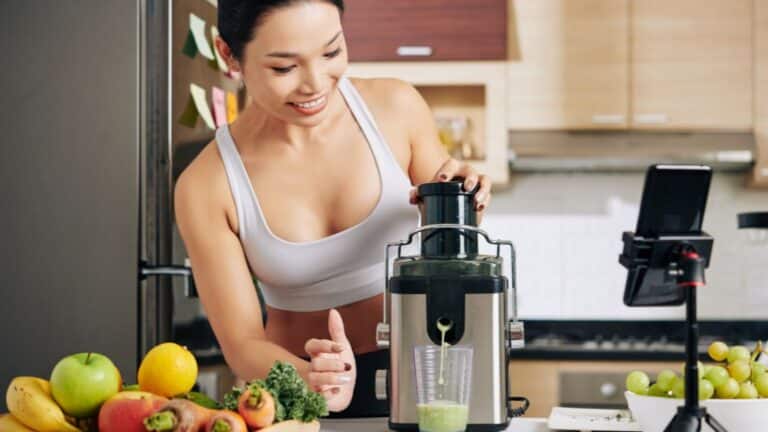
If you searched for a juice cleanse to fix your gut, here’s the part most blog posts skip. Juicing strips out the fiber, and fiber is the actual nutrient your gut needs. Your intestines don’t have a “cleaning cycle” waiting to be triggered by a lemon-ginger shot. What they need is fermentable plant fiber that feeds the bacteria living in your colon.
The National Center for Complementary and Integrative Health has looked at “detox” and “cleanse” claims and found little evidence that these products remove toxins or improve gut health beyond what a normal diet does. What the evidence actually supports for gut health is straightforward: more whole plants, more fiber, hydration, sleep, and moving your body.
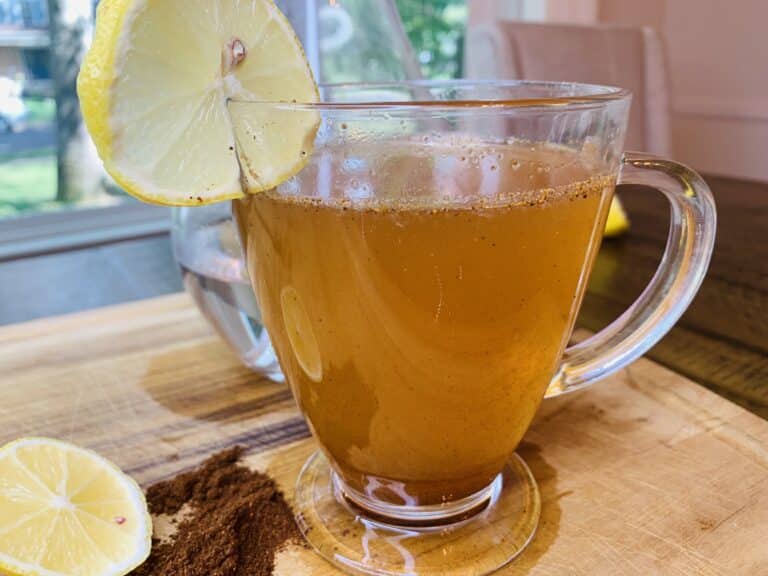
So here’s the honest reframe. A ginger-lemon-apple juice can taste great and hydrate you. It is not a colon cleanse. If you still want the drink, blend it with the whole fruit instead of straining it. That way you keep the fiber. Recipe and reasoning below.
What’s on This Page
- What a “juice cleanse” actually is
- Why fiber is the real gut nutrient
- Blending vs. juicing (with a table)
- Ginger-apple blend recipe (with fiber kept in)
- What actually helps your gut
- Who should skip juice cleanses entirely
- FAQ
What a “Juice Cleanse” Actually Is
A juice cleanse is a short period of drinking only fresh juices, usually 1 to 5 days, sometimes with added supplements. The marketing pitch is that it “flushes toxins” and “resets” your digestion. The physiology doesn’t back that up.
Your gut has a lining that turns over every few days on its own. Your liver runs continuous two-phase detox chemistry using enzymes and glutathione. Your kidneys filter about 180 liters of fluid a day. None of these processes wait for lemon water to activate them. When people feel “better” after a juice day, they’re often just experiencing lower calories, less alcohol, less ultra-processed food, and more hydration. Those are real wins. They just aren’t caused by the juice.
Why Fiber Is the Real Gut Nutrient
Your colon is home to trillions of bacteria that make short-chain fatty acids (SCFAs) when they ferment dietary fiber. Butyrate, one of those SCFAs, feeds the cells lining your colon. Higher SCFA production is linked with better barrier function, lower colon inflammation, and healthier bowel movements.
Slavin’s 2013 review in Nutrients summarized the evidence: adequate fiber intake is associated with lower risk of constipation, diverticular disease, hemorrhoids, coronary heart disease, stroke, hypertension, diabetes, obesity, and some GI cancers. Adults need roughly 25 to 38 grams of fiber a day. Most Americans get about 15.
Here’s the problem with juicing. A medium apple has about 4.4 grams of fiber. Apple juice, strained, has near zero. You’ve kept the sugar and dumped the exact thing your gut wanted.
For more on this topic, check out our guide on 7 day cleanse diet.
Blending vs. Juicing: The Short Version
| Feature | Cold-pressed juice | Blended smoothie (fiber kept) |
|---|---|---|
| Fiber content | Near zero | Nearly all preserved |
| Blood sugar spike | Higher and faster | Slower, gentler |
| Feeds gut bacteria | Minimal | Yes (fermentable fiber) |
| Satiety | Low; hungry again fast | Higher; keeps you full |
| Vitamin C, folate | Present | Present |
| Best use | Occasional flavor drink | Daily gut-friendly option |
Both can taste great. Only one is doing anything for your microbiome.
Ginger-Apple Blend (Fiber Kept In)
This is the original recipe rebuilt with a blender instead of a juicer. Same flavors, real fiber.
Ingredients (1 serving)
- 1 medium apple, cored, skin on, roughly chopped
- 1/2 cup water (or coconut water for extra electrolytes)
- 2 tablespoons freshly squeezed lemon juice
- 1 teaspoon grated fresh ginger (or a thumbnail-sized piece)
- Pinch of salt (optional; skip if you have hypertension)
- Optional: 1 tablespoon ground chia or flax for extra fiber
Method
- Add everything to a high-speed blender.
- Blend 30 to 45 seconds until smooth. Add a splash more water if it’s too thick.
- Pour and drink immediately. Don’t strain.
Nutrition (approx., without chia): 110 kcal, 27 g carbs, 5 g fiber, 20 g natural sugar. Compare that with the original juice-only version, which had 1 g fiber and 41 g sugar in the same drink.
What Actually Helps Your Gut
If you want measurable gut improvements, the boring answers are the ones that work.
- Eat 25 to 38 grams of fiber a day. Mix soluble (oats, beans, apples, chia) and insoluble (whole grains, vegetables, nuts).
- Diversify your plants. The American Gut Project found people who eat 30+ different plant foods a week have more diverse microbiomes than those eating 10 or fewer.
- Include fermented foods regularly. Yogurt with live cultures, kefir, sauerkraut, kimchi, miso, and tempeh have all shown microbiome benefits in controlled trials.
- Drink water throughout the day. Constipation is often just dehydration plus low fiber.
- Move daily. Even brisk walking speeds up transit time.
- Sleep. Circadian disruption affects gut bacteria composition in as little as two nights.
- Limit ultra-processed foods and alcohol. Both are consistently linked with reduced microbial diversity.
Do those things and you don’t need a cleanse. Skip those things and no cleanse will save you.
Who Should Skip Juice Cleanses Entirely
- People with diabetes or prediabetes. Juice hits blood sugar fast.
- People with CKD. Many “detox” juices are high in potassium (spinach, celery, beet, orange), which can be dangerous with impaired kidneys.
- People on ACE inhibitors, ARBs, potassium-sparing diuretics, or heart medication. Same reason.
- People on grapefruit-interacting medications. Statins, some blood pressure meds, and immunosuppressants interact.
- People with IBD or IBS flare-ups. High-FODMAP juices (apple, pear, watermelon) can trigger symptoms.
- Pregnant and breastfeeding people. Not the time for restrictive protocols.
- People with a history of disordered eating. Cleanses often trigger relapse.
FAQ
Does a juice cleanse actually detox my body?
No. Your liver and kidneys handle detoxification continuously. NCCIH and multiple systematic reviews have found no reliable evidence that juice cleanses remove toxins beyond what your body already does.
If juice removes fiber, why does anyone recommend juicing?
Cold-pressed juice can still deliver vitamins and phytonutrients. It’s a fine flavored drink. It just isn’t a gut-health strategy. For that, blend or eat the whole fruit or vegetable.
Will a juice cleanse help me lose weight?
You’ll drop water weight and scale weight quickly because calories are lower. Most of it returns within a week of eating normally. Sustainable weight loss comes from a modest, ongoing calorie deficit with adequate protein and fiber.
I’m constipated. What should I drink?
Water first. Then add fiber gradually: prunes, kiwi, chia in yogurt, oatmeal, ground flax on salad. If constipation lasts more than two weeks or comes with blood or weight loss, see a doctor.
Is it safe to drink this recipe daily?
The blended version is fine for most healthy adults. Watch total sugar if you already drink other juices or sweetened beverages. Skip it if any of the “who should skip” flags apply to you.
Do I need to drink it on an empty stomach?
No. That’s a common wellness myth. Your body absorbs nutrients equally well with or without other foods present.
When should I see a doctor about gut issues?
See a doctor for blood in stool, unexplained weight loss, persistent abdominal pain, changes in bowel habits lasting more than a few weeks, or a family history of colon cancer. Don’t self-treat these with juice.
Related Reading
- How to reduce bloating (what actually works)
- Foods that support your body’s own detox systems
- Antioxidant smoothie under 200 calories
- Master cleanse recipe (with honest caveats)