Medical Disclaimer: This article is for informational purposes only and is not a substitute for professional medical advice, diagnosis, or treatment.
Always consult a registered dietitian, physician, or qualified healthcare provider before making significant changes to your diet, especially if you have a medical condition, take medication, are pregnant or nursing, or are managing a chronic illness. Individual results may vary.
1400-Calorie High-Protein Meal Plan: An Honest 7-Day Guide
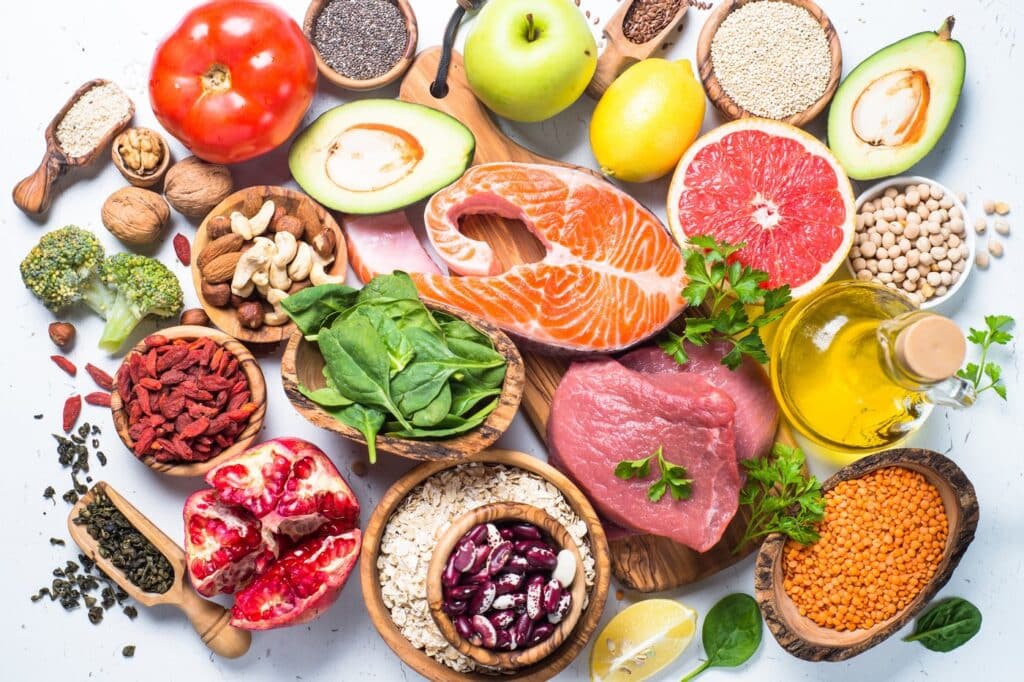
A 1400-calorie high-protein meal plan targets 100 to 120 g of protein per day (roughly 1.4 to 1.8 g per kg of reference body weight for a 145 lb adult), spread across three meals and two snacks.
The Leidy et al. 2015 satiety review found higher-protein intakes reliably reduced hunger and improved appetite control during weight loss (1).
Longland et al. 2016 showed that a high-protein deficit (2.4 g/kg) protected lean mass and increased fat loss during a hypocaloric period, when paired with resistance training (2). This plan sits at the practical middle of that range.
Why 100 to 120 g Protein at 1400 Calories
Protein at that level takes up roughly 400 to 480 kcal (28 to 34 percent of the day). That leaves room for 130 to 160 g carbohydrate and 45 to 55 g fat, which is enough energy for daily activity plus 2 to 4 gym sessions per week.
Protein above 100 g does three things during a moderate deficit:
- Preserves lean mass. Longland et al. 2016 saw participants on a high-protein deficit gain 1.2 kg of lean mass and lose 4.8 kg of fat over 4 weeks, versus 0.1 kg lean and 3.5 kg fat on standard protein (2).
- Blunts hunger. Leidy et al. 2015 note protein triggers a stronger satiety hormone response (PYY, GLP-1) than carb or fat at the same calorie level (1).
- Boosts diet-induced thermogenesis. About 20 to 30 percent of protein calories are burned during digestion, versus 5 to 10 percent for carbs and 0 to 3 percent for fat.
Macro Breakdown at 1400 Calories
- Protein: 100 to 120 g. Anchor with lean poultry, fish, Greek yogurt, cottage cheese, eggs, whey/plant protein powder, tofu, legumes.
- Carbohydrate: 130 to 160 g. Whole grains, legumes, fruit, vegetables. Time the largest carb block around training if you lift.
- Fat: 45 to 55 g. Olive oil, avocado, nuts, seeds, fatty fish.
- Fiber: 25 to 30 g.
- Water: 3 to 4 liters daily. Higher-protein intakes raise urea excretion, so hydration matters.
Who This Plan Fits and Who It Does Not
- Fits: adults who lift 2 to 4 times weekly and want to hold onto muscle during weight loss, women who feel unusually hungry on standard-protein plans, adults recovering from surgery under clinician guidance, people over 60 who want to slow age-related muscle loss.
- Does not fit as written: anyone with moderate-to-severe kidney disease (protein must be 0.6 to 0.8 g/kg under a renal dietitian), certain rare metabolic disorders (PKU, urea cycle disorders), people with a history of disordered eating who cannot manage macro targets.
Healthy kidneys handle higher protein without harm. If you have never had labs checked, ask your primary care team to run a basic metabolic panel before starting.
Our guide on 1500 calorie meal plan high protein goes into more detail if you need it.
7-Day 1400-Calorie High-Protein Meal Plan
Day 1 (~1,405 kcal, 110 g protein)
- Breakfast: Flourless banana protein mini muffins (2 muffins made with 1 scoop / 30 g whey, 1/2 medium banana / 60 g, 1 egg, 1 tbsp oats), 1/2 cup raspberries (60 g), 3/4 cup non-fat Greek yogurt (170 g). 340 kcal, 30 g protein, 30 g carb, 8 g fat.
- Snack: 1/2 cup blackberries (75 g) with 1/2 cup low-fat cottage cheese (110 g). 110 kcal, 15 g protein, 12 g carb, 1 g fat.
- Lunch: Chicken satay bowl (4 oz / 115 g grilled chicken breast, 1 cup shredded cabbage / 90 g, 1/2 cup cooked brown rice / 100 g, 1 tbsp peanut sauce, lime). 410 kcal, 32 g protein, 32 g carb, 15 g fat.
- Snack: Shelled edamame (1/2 cup / 85 g) with sea salt. 110 kcal, 10 g protein, 8 g carb, 5 g fat.
- Dinner: Shrimp scampi zoodles (4 oz / 115 g shrimp, 2 cups zucchini noodles / 250 g, 1 tbsp olive oil, garlic, lemon) with 1 small slice whole-wheat baguette (30 g). 435 kcal, 30 g protein, 25 g carb, 22 g fat.
- Daily total: 1,405 kcal, 117 g protein, 107 g carb, 51 g fat.
Day 2 (~1,395 kcal, 112 g protein)
- Breakfast: Eggs baked in bell peppers (2 halves red bell pepper / 150 g stuffed with 2 eggs, 1/4 cup / 30 g black beans, 2 tbsp salsa), 1/4 avocado (35 g), 1 clementine (75 g). 340 kcal, 20 g protein, 25 g carb, 18 g fat.
- Snack: 1/2 cup blueberries (75 g) with unsalted almonds (0.75 oz / 21 g) and 1/2 cup non-fat Greek yogurt (115 g). 210 kcal, 15 g protein, 18 g carb, 10 g fat.
- Lunch: Salmon salad stuffed avocado (1/2 medium avocado / 75 g, 3 oz / 85 g wild salmon flaked, 1 tbsp Greek yogurt, lemon, dill) on 2 cups spinach. 380 kcal, 28 g protein, 12 g carb, 24 g fat.
- Snack: Flourless banana protein mini muffin (1 muffin). 90 kcal, 8 g protein, 8 g carb, 2 g fat.
- Dinner: White bean cauliflower gnocchi (1 cup cauliflower gnocchi / 200 g, 1/2 cup white beans / 80 g, 2 tbsp sage brown butter, 1 tbsp parmesan) with 2-cup mixed greens salad and 1 tbsp olive oil vinaigrette, plus 3 oz / 85 g grilled chicken breast. 380 kcal, 40 g protein, 30 g carb, 15 g fat.
- Daily total: 1,400 kcal, 111 g protein, 93 g carb, 69 g fat.
Day 3 (~1,410 kcal, 105 g protein)
- Breakfast: 2 slices whole-grain toast (70 g), 1 tbsp almond butter (16 g), 1/2 medium banana (60 g), cinnamon, 3/4 cup non-fat Greek yogurt (170 g). 420 kcal, 25 g protein, 55 g carb, 12 g fat.
- Snack: Almonds (1 oz / 28 g). 165 kcal, 6 g protein, 6 g carb, 14 g fat.
- Lunch: Carrots (1 cup / 120 g) with 4 tbsp hummus (60 g), 2 hard-boiled eggs, 1 oz / 28 g feta. 335 kcal, 22 g protein, 25 g carb, 20 g fat.
- Snack: Whey protein shake (1 scoop / 30 g whey in 1 cup unsweetened almond milk). 140 kcal, 25 g protein, 3 g carb, 3 g fat.
- Dinner: Grilled chicken teriyaki (4 oz / 115 g chicken breast, 1 tbsp reduced-sodium teriyaki, 1 tsp sesame oil) with 1 cup steamed carrots (150 g) and 1/2 cup cooked brown rice (100 g). 350 kcal, 32 g protein, 40 g carb, 8 g fat.
- Daily total: 1,410 kcal, 110 g protein, 129 g carb, 57 g fat.
Day 4 (~1,395 kcal, 118 g protein)
- Breakfast: 2 eggs baked in 2 large Portobello mushrooms (200 g total), 1 cup non-fat Greek yogurt (225 g) with 1/4 cup blueberries (40 g). 350 kcal, 32 g protein, 22 g carb, 12 g fat.
- Snack: 3/4 cup non-fat Greek yogurt (170 g) with 1/4 cup high-fiber cereal (30 g) and 1 tsp honey. 195 kcal, 18 g protein, 30 g carb, 1 g fat.
- Lunch: 2 slices whole-grain rye (70 g) with 1/4 cup hummus (60 g), 3 slices tomato (75 g), and 3 oz / 85 g deli turkey. Add 1 oz / 28 g almonds on the side. 430 kcal, 30 g protein, 45 g carb, 16 g fat.
- Snack: Granola (0.75 oz / 21 g). 95 kcal, 3 g protein, 14 g carb, 3 g fat.
- Dinner: Chicken and hummus toast (2 slices whole-grain toast / 70 g, 1/4 cup hummus / 60 g, 3 oz / 85 g grilled chicken breast, tomato, 1 tsp olive oil). 330 kcal, 35 g protein, 40 g carb, 10 g fat.
- Daily total: 1,400 kcal, 118 g protein, 151 g carb, 42 g fat.
Day 5 (~1,395 kcal, 115 g protein)
- Breakfast: Avocado cottage cheese toast (1 slice whole-grain bread / 35 g, 1/4 avocado / 35 g, 1/2 cup low-fat cottage cheese / 110 g, red pepper flakes) with 1 egg. 305 kcal, 25 g protein, 25 g carb, 14 g fat.
- Snack: Almonds (1 oz / 28 g). 165 kcal, 6 g protein, 6 g carb, 14 g fat.
- Lunch: Tuna stuffed peppers (2 mini bell peppers / 100 g stuffed with 4 oz / 115 g canned tuna in water, 1 tbsp Greek yogurt, celery, dill) and 1 sliced bell pepper on the side. 270 kcal, 32 g protein, 12 g carb, 8 g fat.
- Snack: 2 sliced bell peppers (200 g) with 4 tbsp hummus (60 g). 200 kcal, 8 g protein, 22 g carb, 8 g fat.
- Dinner: Crispy cheese quesadilla (1 whole-grain tortilla / 45 g, 1.5 oz / 42 g reduced-fat cheese, 3 oz / 85 g grilled chicken, 2 tbsp salsa, 1/4 cup black beans / 45 g). 460 kcal, 42 g protein, 40 g carb, 15 g fat.
- Daily total: 1,400 kcal, 113 g protein, 105 g carb, 59 g fat.
Day 6 (~1,410 kcal, 108 g protein)
- Breakfast: 2 slices whole-grain toast with 1 tsp butter and cinnamon, plus 3 scrambled eggs and 1/2 cup blueberries (75 g). 410 kcal, 25 g protein, 40 g carb, 18 g fat.
- Snack: 1/2 cup low-fat cottage cheese (110 g) with 1 tbsp chia seeds (13 g) and 1/2 cup blueberries (75 g). 195 kcal, 18 g protein, 20 g carb, 5 g fat.
- Lunch: Turkey lettuce rollups (4 oz / 115 g deli turkey, 4 large romaine leaves, 1 tbsp Greek yogurt ranch, 1/4 cup shredded carrot) plus 1/2 cup low-fat cottage cheese (110 g) with 1/2 banana (60 g). 375 kcal, 40 g protein, 30 g carb, 8 g fat.
- Snack: Almonds (1 oz / 28 g). 165 kcal, 6 g protein, 6 g carb, 14 g fat.
- Dinner: Steamed broccoli (2 cups / 180 g) with 1 tbsp olive oil, 2 tbsp parmesan, and 3 oz / 85 g grilled salmon. 265 kcal, 26 g protein, 12 g carb, 15 g fat.
- Daily total: 1,410 kcal, 115 g protein, 108 g carb, 60 g fat.
Day 7 (~1,400 kcal, 110 g protein)
- Breakfast: Blueberry parfait (1 cup non-fat Greek yogurt / 225 g, 1/2 cup blueberries / 75 g, 1/4 cup granola / 30 g, 1 tbsp chopped walnuts / 8 g). 340 kcal, 25 g protein, 42 g carb, 8 g fat.
- Snack: Granola (1 oz / 28 g) with 1/2 cup non-fat Greek yogurt (115 g). 200 kcal, 12 g protein, 24 g carb, 5 g fat.
- Lunch: Cottage cheese with dill tuna (1/2 cup low-fat cottage cheese / 110 g, 3 oz / 85 g canned tuna, dill, lemon) and 1 medium banana (120 g). 320 kcal, 35 g protein, 35 g carb, 5 g fat.
- Snack: Pecans (0.75 oz / 21 g). 145 kcal, 2 g protein, 4 g carb, 15 g fat.
- Dinner: Sauteed Brussels sprouts (2 cups / 175 g with 1 tbsp olive oil, garlic, and onion) with 4 oz / 115 g grilled chicken breast. 395 kcal, 36 g protein, 20 g carb, 18 g fat.
- Daily total: 1,400 kcal, 110 g protein, 125 g carb, 51 g fat.
7-Day Comparison Summary
| Day | Total kcal | Protein (g) | Carbs (g) | Fat (g) |
|---|---|---|---|---|
| 1 | 1,405 | 117 | 107 | 51 |
| 2 | 1,400 | 111 | 93 | 69 |
| 3 | 1,410 | 110 | 129 | 57 |
| 4 | 1,400 | 118 | 151 | 42 |
| 5 | 1,400 | 113 | 105 | 59 |
| 6 | 1,410 | 115 | 108 | 60 |
| 7 | 1,400 | 110 | 125 | 51 |
What the Evidence Actually Shows
The Leidy et al. 2015 meta-review in the American Journal of Clinical Nutrition summarized appetite trials of higher-protein diets: intakes of 25 to 35 percent of calories from protein reliably reduce daily hunger scores and post-meal energy intake compared with standard 15 to 18 percent protein (1).
Longland et al.
For more on this topic, check out our guide on 1200 calorie high protein diet.
2016 randomized young men to a 40 percent energy deficit paired with high-intensity training and either 1.2 g/kg protein (standard) or 2.4 g/kg protein (high).
Over 4 weeks the high-protein group gained 1.2 kg lean mass and lost 4.8 kg fat, versus 0.1 kg lean gain and 3.5 kg fat loss in the standard group (2). The catch: this trial used aggressive training and a short window.
For most people, the practical takeaway is that 1.4 to 1.8 g/kg protein preserves lean mass on a moderate deficit better than 0.8 to 1.0 g/kg.
Training Pairing
- Resistance training: 2 to 4 sessions weekly. Compound lifts (squat, hinge, push, pull) 3 to 4 sets of 6 to 12 reps. Without training, high-protein still preserves some muscle but the effect is much smaller.
- Protein timing: Spread across 4 to 5 doses of 20 to 40 g. A single 100 g dose is not as effective for muscle protein synthesis as four 25 g doses.
- Post-workout: A 20 to 40 g protein dose within 2 hours of training supports recovery. Whey isolate, Greek yogurt, or eggs work equally well.
Practical Tips
- Keep a rotisserie chicken, canned tuna, plain Greek yogurt, and whey/plant protein powder on hand at all times.
- If you struggle to hit 100 g protein, add 1 to 2 protein shakes daily. That is 40 to 60 g toward the target with little cooking.
- Track protein first for the first 2 to 3 weeks. Once it becomes automatic, add tracking for calories or carbs.
Frequently Asked Questions
Is 100 g of protein too much?
For adults with healthy kidneys, no. The American College of Sports Medicine and International Society of Sports Nutrition both endorse 1.2 to 2.0 g/kg for active adults and 1.6 to 2.4 g/kg during weight loss with training. At 145 lb (66 kg), 100 g is 1.5 g/kg.
We also wrote a hands-on guide on high protein vegetarian diet plan that you might find useful.
Will this plan work if I do not lift weights?
You will still benefit from better satiety and modest muscle preservation, but the muscle-sparing effect is largest when paired with 2 to 4 resistance sessions per week (2). Consider walking plus at least 2 short strength sessions weekly.
Can I do this as a vegetarian or vegan?
Yes, but it takes planning. Swap poultry, fish, and dairy for tofu, tempeh, seitan, edamame, lentils, and plant protein powder. Combine sources across the day to cover all essential amino acids. Aim for 20 to 30 g protein per meal from those sources.
How much water do I need?
Higher-protein intakes increase urinary urea excretion. Aim for 3 to 4 liters daily (about 100 to 130 fl oz). Watch urine color: pale straw yellow is a good target.
Will I lose muscle at 1400 calories?
If protein stays at 100 to 120 g and you lift 2 to 3 times a week, lean-mass loss is usually minimal. Skip both and expect 25 to 30 percent of your weight loss to come from lean tissue.
How fast will I lose weight?
1 to 2 lb per week in the first 4 to 6 weeks, slowing to 0.5 to 1 lb per week after. Over 8 to 12 weeks most adults lose 8 to 18 lb.
Is high-protein safe for my kidneys?
Healthy kidneys tolerate high protein without harm, based on decades of trial data. If you have chronic kidney disease (any stage), protein must be restricted (typically 0.6 to 0.8 g/kg) under a renal dietitian.
Get a basic metabolic panel before starting if you have not had one recently.
Disclaimer
1400 kcal per day sits below the maintenance needs of most adults and drives moderate weight loss. Higher-protein intakes are well-tolerated by adults with healthy kidneys but must be scaled back for those with chronic kidney disease under a renal dietitian’s guidance. This article is educational and does not replace individualized care from a qualified clinician.
Do not follow this plan if you are pregnant, nursing, under 18, over 65 without oversight, have a history of disordered eating, moderate-to-severe kidney disease, or a rare metabolic disorder such as PKU or urea-cycle defect. Not medical advice.