Asian Keto Okonomiyaki Recipe (5g Net Carbs)
Okonomiyaki is a Japanese savory pancake from Osaka and Hiroshima, traditionally made with wheat flour, cabbage, egg, and whatever mix-ins the cook has on hand – the name translates roughly to ‘grilled how you like it.’ The wheat flour is the only obstacle for a keto eater; everything else in a classic okonomiyaki is already low-carb. This adaptation swaps almond flour and coconut flour for the wheat base, holds the cabbage, egg, and protein exactly as in the traditional recipe, and lands at 5g net carbs per pancake.
This is a weeknight recipe. Total time under 25 minutes, one pan, and the batter can be prepped ahead. Suits keto, low-carb, gluten-free, and diabetic-friendly patterns.
What Makes an Okonomiyaki an Okonomiyaki
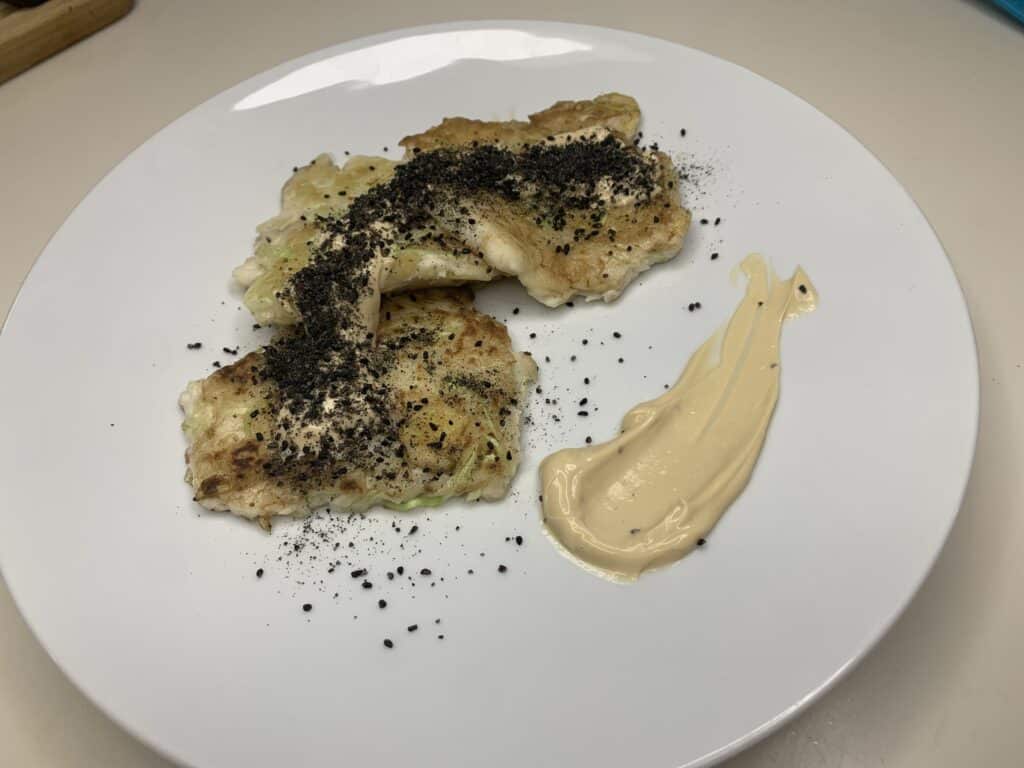
Three things distinguish okonomiyaki from other savory pancakes: the shredded cabbage bulking up the batter (nearly half the volume), the topping trio of okonomiyaki sauce, kewpie mayo, and dried bonito flakes, and the aonori seaweed sprinkled on top. Skip any of those and you’re eating something else. For a keto-appropriate okonomiyaki sauce, we use sugar-free ketchup, tamari, Worcestershire, and a pinch of erythritol – close enough to the real Otafuku brand that most eaters won’t notice.
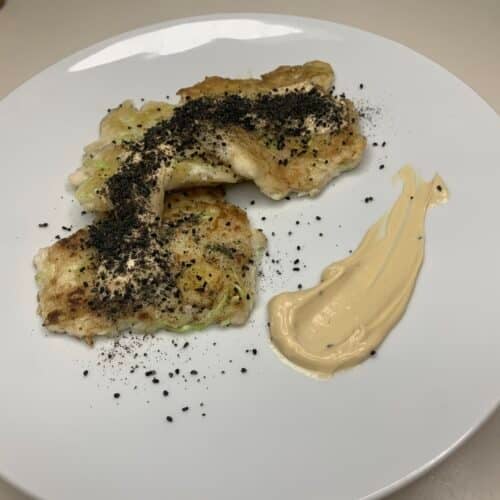
Keto Okonomiyaki Recipe
Ingredients
For the Pancake
- 1/2 tbsp. of coconut oil
- 1/4 medium size cabbage
- 1 tbsp. psyllium husk powder
- 5 cups of soy flour
- 1 tsp grated fresh ginger
- 1/2 cup water
- 1/2 tsp. of salt
Shoyu Mayo
- 1 tbsp soy sauce
- 1 tbsp vegan mayo for topping
- 1 tsp keto sweetener
For The Top
- 1 avocado
- Nori sprinkle for garnish
Instructions
- Cut the ginger into thin slices, resembling matchsticks in thickness and size.
- Slice the cabbage and put it in a bowl.
- In a deep mixing bowl, put the soy flour, 1 tablespoon of psyllium, and salt.
- Add sliced cabbage and ginger to the powder mixture.
- Gradually add water, checking the consistency by mixing with your hand until you get a sticky consistency.
- Test the consistency by shaping a fist-sized piece of the mixture into a ball.
- In a small bowl, mix about 2 tablespoons of mayonnaise with 1 tablespoon of soy sauce. Adjust to taste, adding more mayonnaise if desired.
- Optionally, add a pinch of sweetener to the mayonnaise mixture and mix well.
- Divide the dough into 3 equal parts and shape them into round patties.
- Preheat a pan and add coconut oil.
- Place one portion of the pancake dough in the pan and spread it round using a spatula or the back of a spoon.
- Fry on medium heat, pressing lightly with a spatula to flatten and cook evenly.
- Flip the pancake using a plate and cook the other side until golden brown.
- Repeat the process for the remaining pancake dough.
- Once cooked, place the pancakes on a flat surface.
- Spread 2 tablespoons of the mayonnaise mixture over each pancake.
- Place a tablespoon of crushed ripe avocado in the center of each pancake and sprinkle with nori.
- Optionally, decorate further by piping the mayonnaise mixture over the pancakes.
- Cut into slices and serve. Enjoy!
Video
Nutrition
Ingredient Notes
- Cabbage – green or Napa. Shred finely – long strands make the pancake collapse. Salt lightly and squeeze out water before mixing.
- Almond flour + coconut flour blend – do not use only almond flour or the pancake won’t hold together. The coconut flour absorbs the cabbage moisture.
- Pork belly or bacon – traditional. Vegetarian option: sliced shiitake mushrooms plus 1 extra egg.
- Bonito flakes and aonori – available at any Asian grocery or online. Do not skip – they are the flavor signature.
Tips and Variations
For the classic Hiroshima-style layered okonomiyaki, cook a thin crepe first, layer with cabbage and pork, then add the batter mixture and flip once. The Osaka-style (used in this recipe) mixes everything together and cooks as a single pancake – faster and more forgiving for beginners.
Seafood okonomiyaki: substitute 3 oz peeled shrimp and 2 oz squid for the pork belly. Kimchi version: add 1/4 cup chopped kimchi to the batter for a Korean-Japanese fusion. Add 1 tablespoon of pickled red ginger (beni shoga) inside the pancake for a traditional Kansai touch.
Storage and Reheating
Best fresh. Leftovers keep 2 days refrigerated in an airtight container – reheat in a dry non-stick skillet over medium-low, 3 minutes per side. Do not microwave; the cabbage will steam and the pancake turns soggy. The batter (without cabbage) keeps 24 hours refrigerated, then mix in freshly shredded cabbage just before cooking.