Medical Disclaimer: This article is for informational purposes only and is not a substitute for professional medical advice. Intermittent fasting is not appropriate for everyone.
Do not begin a fasting protocol if you are pregnant or nursing, have a personal or family history of eating disorders, are underweight, take insulin or sulfonylureas for diabetes (hypoglycemia risk requires medical adjustment), are under 18, or are managing a chronic illness without your care team’s involvement.
Nutrition figures are estimates based on standard USDA values. Individual results vary.
Intermittent fasting recipes have to do the heavy lifting during a compressed eating window.
The 7 meals below are engineered for time-restricted eating (typically an 8-hour window, often called 16:8): each delivers at least 25 g of protein and at least 6 g of fiber for satiety, uses whole-food ingredients that hold well when cooked ahead, and lands between 400 and 650 kcal.
The evidence anchor here is the de Cabo and Mattson NEJM review (2019, PMID 31881139) plus the Templeman 2021 randomized trial in Cell Metabolism (PMID 34038744).
Jump to a Recipe
What Intermittent Fasting Actually Does
de Cabo and Mattson (NEJM 2019, PMID 31881139) synthesized the metabolic-switching literature and concluded that intermittent fasting patterns can improve insulin sensitivity, reduce oxidative stress, and support modest weight loss in adults with overweight.
Templeman et al. (2021, PMID 34038744), a 6-week randomized trial of 36 adults, compared time-restricted eating with an equivalent calorie-restricted control and found that most of the weight-loss benefit was driven by calorie deficit rather than by the timing itself.
Practical takeaway: fasting can be a useful tool for creating a deficit and improving eating discipline, but it is not magic. What you eat during the window still matters.
Comparison Table
| Recipe | Calories | Protein | Fiber | Total time | Best for |
|---|---|---|---|---|---|
| Break-Fast Bowl (Chicken and Quinoa) | 525 kcal | 38 g | 7 g | 25 min | First meal at noon |
| Grilled Turkey Breast with Herb Salad | 420 kcal | 36 g | 5 g | 45 min | Second meal, lean |
| Perch Fillet en Papillote | 445 kcal | 32 g | 7 g | 35 min | Elegant window closer |
| Mediterranean Bean Salad | 410 kcal | 16 g | 12 g | 15 min | Vegetarian window meal |
| Celery, Carrot, and Chickpea Stew | 385 kcal | 14 g | 10 g | 50 min | Batch cook |
| Sunchoke Bake with Cheese Sauce | 465 kcal | 18 g | 8 g | 55 min | Weekend, prebiotic-rich |
| Salmon Poke Bowl | 560 kcal | 34 g | 7 g | 20 min | Second meal, no cooking |
The Recipes
1. Break-Fast Bowl with Chicken and Quinoa (525 kcal)
The first meal in your window is not the moment to eat 200 kcal of coffee-shop pastry. This bowl anchors 38 g of protein, complex carbs, and vegetables in a portable format.
Ingredients
- 4 oz (115 g) grilled chicken breast
- 1/2 cup cooked quinoa
- 1 cup baby spinach
- 1/4 cup shredded carrot
- 1/4 cup canned chickpeas (rinsed)
- 1/4 avocado sliced
- 1 tablespoon olive oil
- 1 tablespoon lemon juice
- 1/2 teaspoon Dijon mustard
- salt and pepper
- 1 tablespoon pumpkin seeds
Instructions
- Slice chicken.
- Whisk oil, lemon juice, mustard, salt, pepper.
- Layer quinoa, spinach, carrot, chickpeas, chicken, and avocado in a bowl.
- Drizzle dressing; top with pumpkin seeds.
Nutrition (1 serving): 525 kcal, 38 g protein, 45 g carbs, 22 g fat, 7 g fiber.
2. Grilled Turkey Breast with Herb Salad (420 kcal)
A lean protein second meal. Marinating in yogurt keeps the breast tender and adds 3 to 4 g protein per serving without meaningful calories.
Ingredients
- 5 oz (140 g) turkey breast
- 2 tablespoons plain Greek yogurt (for marinade)
- 1 teaspoon olive oil
- 1/2 teaspoon ground garlic
- salt and pepper
- 2 cups mixed greens
- 1/2 cup halved cherry tomatoes
- 1/4 sliced red onion
- 1 tablespoon extra-virgin olive oil
- 1 teaspoon red wine vinegar
Instructions
- Marinate turkey with yogurt, garlic, salt, pepper 30 minutes.
- Sear in oil over medium 5 minutes per side or bake at 375 F for 15 to 18 minutes until 165 F internal.
- Toss greens, tomatoes, onion with olive oil and vinegar.
- Slice turkey; serve on salad.
Nutrition (1 serving): 420 kcal, 36 g protein, 12 g carbs, 24 g fat, 5 g fiber.
3. Perch (Sea Bass) en Papillote with Vegetables (445 kcal)
Parchment-baked fish is the highest flavor-to-effort ratio in the list. Vegetables steam alongside the fish in the pouch; no extra pan required.
Ingredients
- 5 oz (140 g) perch or sea bass fillet
- 1/2 sliced carrot
- 3 broccoli florets
- 3 cauliflower florets
- 3 cherry tomatoes
- 1/4 red bell pepper sliced
- 1/4 small red onion sliced
- 1 minced garlic clove
- 1 teaspoon butter
- 2 tablespoons olive oil
- 1 tablespoon dry white wine
- 1/2 teaspoon coriander
- 1/2 teaspoon fennel seeds
- salt and pepper
Instructions
- Heat oven to 400 F (200 C).
- Blanch carrot 2 minutes.
- Cut a large parchment square.
- Layer onion, carrot, broccoli, cauliflower, tomatoes, pepper in the center; top with butter and fish.
- Whisk garlic, olive oil, wine, spices; drizzle over.
- Fold parchment airtight; bake 18 to 20 minutes until fish flakes easily.
Nutrition (1 serving): 445 kcal, 32 g protein, 18 g carbs, 27 g fat, 7 g fiber.
4. Mediterranean Bean Salad (410 kcal per serving, from 4)
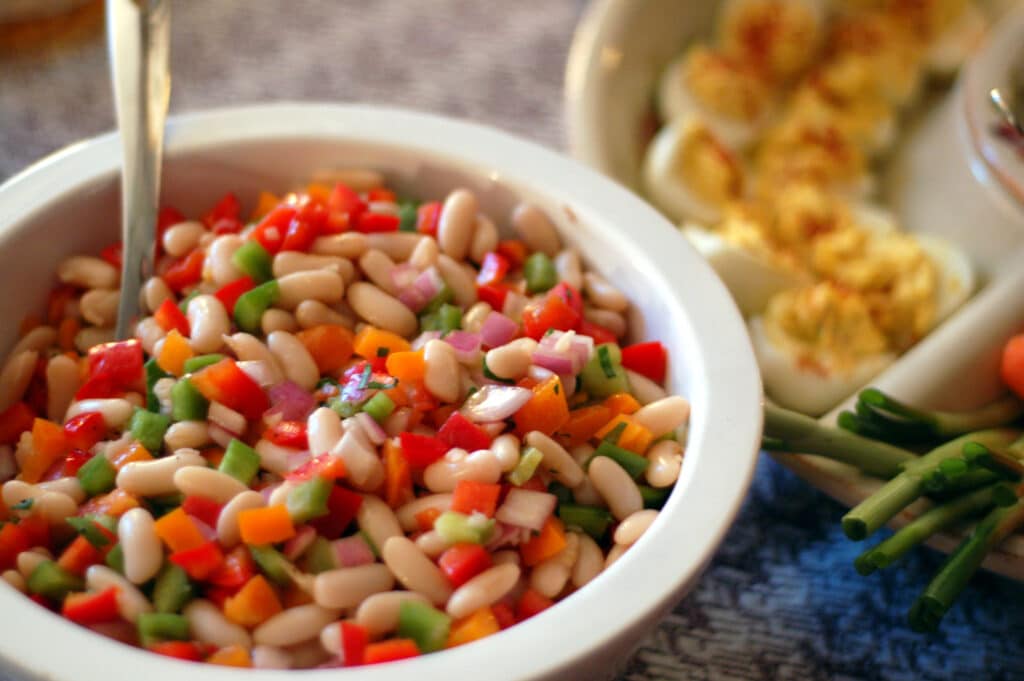
A vegetarian meal that holds beautifully in the fridge for 3 days, so a Sunday batch covers three lunches. Three-bean combo delivers 12 g fiber and 16 g protein.
Ingredients
- 1 cup canned chickpeas
- 1 cup canned cannellini beans
- 1 cup canned kidney beans (all rinsed)
- 1 medium red onion diced
- 2 chopped scallions
- 2 chopped green peppers
- 1 large tomato diced
- 2 minced garlic cloves
- 1 handful chopped parsley
- juice of 1 lemon
- 4 tablespoons extra-virgin olive oil
- 1 tablespoon red wine vinegar
- 1 teaspoon sumac
- salt and pepper
Instructions
- Combine beans in a large bowl.
- Rub diced onion with salt, rinse, add.
- Add scallions, peppers, tomato, garlic, parsley.
- Whisk olive oil, lemon, vinegar, sumac, salt, pepper; toss.
Nutrition (1 serving of 4): 410 kcal, 16 g protein, 45 g carbs, 20 g fat, 12 g fiber.
5. Celery, Carrot, and Chickpea Stew (385 kcal, batch of 4)
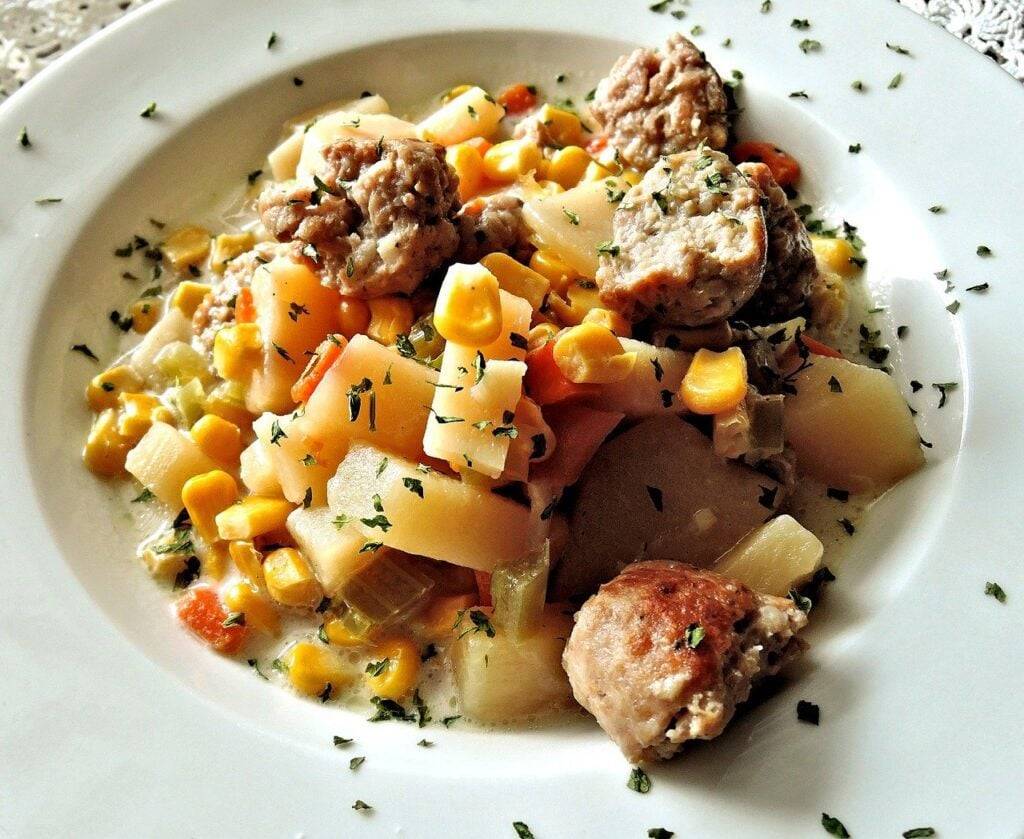
An olive-oil-braised vegetable dish adapted from the original page’s celery recipe with chickpeas added for protein. Holds in the fridge for 4 days.
Ingredients
- 2 medium celeriac roots (peeled and cubed)
- 1 potato cubed
- 1 medium onion diced
- 1 medium carrot cubed
- 1 can (15 oz) chickpeas rinsed
- juice of 1/2 lemon
- 1/5 cup extra-virgin olive oil
- 1 cup fresh orange juice
- 4 celery leaves
- salt
Instructions
- Sweat onion in 3 tablespoons olive oil over medium heat 5 minutes.
- Add carrot and potato; cook 5 minutes.
- Add celeriac, chickpeas, lemon juice; stir 3 minutes.
- Add remaining oil, orange juice, and salt; bring to a simmer; cover; cook 25 minutes on low until celeriac is tender.
- Rest to room temperature; garnish with celery leaves.
Nutrition (1 serving of 4): 385 kcal, 14 g protein, 48 g carbs, 16 g fat, 10 g fiber.
6. Sunchoke Bake with Light Cheese Sauce (465 kcal)
Sunchokes (Jerusalem artichokes) are one of the highest natural sources of inulin, a fermentable fiber that feeds gut bacteria. Introduce them gradually; too much too fast can cause bloating.
Ingredients
- 8 sunchokes (about 400 g total)
- 3 tablespoons olive oil (divided)
- 3 large garlic cloves
- 2 bay leaves
- 1/2 teaspoon grated nutmeg
- 1 teaspoon butter
- 2 tablespoons labneh or thick Greek yogurt
- 1 tablespoon whole milk
- 1/2 teaspoon white pepper
- 4 sprigs chives chopped
- salt
Instructions
- Heat oven to 400 F (200 C).
- Toss whole sunchokes with 2 tablespoons oil, garlic cloves, bay leaves on a sheet pan; roast 25 minutes.
- Cool; peel; slice thin.
- Melt butter and remaining oil; saute sunchokes and garlic; add nutmeg and salt; cook until golden.
- Warm labneh with milk over low heat; add white pepper.
- Plate sunchokes; drizzle with cheese sauce; scatter chives.
Nutrition (1 serving of 2): 465 kcal, 18 g protein, 36 g carbs, 30 g fat, 8 g fiber.
7. Salmon Poke Bowl (560 kcal)
A no-cook second-meal option using sushi-grade salmon. Rice provides carbs; edamame adds plant protein and 6 g of fiber.
Ingredients
- 4 oz (115 g) sushi-grade salmon cubed
- 1/2 cup cooked short-grain brown rice
- 1/3 cup shelled edamame
- 1/4 cup shredded carrot
- 1/4 sliced cucumber
- 1/4 avocado sliced
- 1 tablespoon low-sodium soy sauce or tamari
- 1 teaspoon rice vinegar
- 1/2 teaspoon toasted sesame oil
- 1 chopped scallion
- 1/2 teaspoon sesame seeds
- optional pickled ginger
Instructions
- Whisk soy, vinegar, sesame oil; toss with salmon.
- Layer rice, edamame, carrot, cucumber, avocado, salmon in a bowl.
- Top with scallion, sesame seeds, and pickled ginger if using.
Nutrition (1 serving): 560 kcal, 34 g protein, 45 g carbs, 26 g fat, 7 g fiber.
How to Plan Meals for a 16:8 Window
Most 16:8 windows run noon to 8 pm.
A workable pattern for a weight-stable adult targeting ~1,900 kcal: 12:00 pm break-fast bowl (525 kcal), 3:30 pm snack of Greek yogurt and berries (200 kcal), 7:30 pm perch en papillote or salmon poke (445 to 560 kcal), plus 300 to 400 kcal in cooked grains, olive oil, and fruit spread across the window.
If your target is fat loss, keep the window meals at the leaner end of the table (turkey breast at 420, bean salad at 410) and skip the snack. If you are athletic, expand portions but stay within your daily calorie ceiling.
What to Drink During the Fasting Window
Water, black coffee, plain tea, and mineral water are all zero-calorie and generally accepted as fasting-compatible. Adding cream, sugar, or milk breaks the fast in the strict sense (any calorie triggers insulin release).
Small amounts of milk in coffee (under 30 kcal) are a personal choice; some practitioners consider this acceptable for the metabolic goals of time-restricted eating. Avoid alcohol during the fast per de Cabo and Mattson’s guidance on maintaining metabolic stability.
Common Intermittent Fasting Mistakes
- Breaking the fast with sugar. A pastry or a big glass of juice spikes glucose sharply after a fast. Anchor the first meal with protein and vegetables.
- Underhydrating during the fast. Two to three liters of water plus mineral electrolytes prevents headaches that get blamed on the fast itself.
- Overeating during the window. Templeman 2021 (PMID 34038744) found that most of the weight-loss benefit came from the calorie deficit, not the timing. If you compensate with a 2,500 kcal window, you will not lose weight.
- Skipping protein. A compressed window makes it harder to hit 1.2 to 1.6 g/kg of protein. Anchor every meal with 25 to 35 g.
- Extreme protocols. 20:4 (OMAD) and alternate-day fasting are more restrictive and have not shown consistent benefit over 16:8 in head-to-head trials. Start with 16:8.
Frequently Asked Questions
Do I have to eat these recipes at specific times?
They are timing-agnostic. Use them at the start, middle, or end of your window based on hunger and schedule. A pattern that works for many adults on 16:8 is a substantial break-fast, a moderate second meal, and a small snack in between.
How many meals should I eat in an 8-hour window?
Two meals plus one snack is the most common pattern and lets you hit protein and calorie targets without discomfort. Three full meals in 8 hours is possible but requires an early start.
Does intermittent fasting work better than regular calorie restriction?
Not clearly. Templeman 2021 (PMID 34038744) compared time-restricted eating with calorie-matched controls and found similar weight loss. The value of IF is often adherence: some people find it easier to skip breakfast than to portion three meals.
Can I drink coffee during the fast?
Yes. Black coffee is generally accepted as fasting-compatible. Adding cream or sugar technically breaks the fast in the strict metabolic sense.
Is intermittent fasting safe for women?
For most non-pregnant, non-nursing women without a history of disordered eating, 12:12 or 14:10 is well tolerated. Aggressive protocols (18:6, 20:4) can disrupt menstrual cycles in some women; monitor cycle regularity and consult a clinician if changes occur.
What breaks a fast?
Any food or drink with calories technically ends the fasted state. Water, black coffee, plain tea, and mineral water do not. Even a splash of cream (~30 kcal) triggers a small insulin response.
Can I combine IF with keto or low-carb?
Yes, and many people do. If you are on a low-carb pattern, the recipes here that fit both include the perch en papillote (18 g carbs), turkey breast salad (12 g), and sunchoke bake without rice (36 g of mostly fiber).
Coordinate with a clinician if you take diabetes medication; the combination can lower blood glucose meaningfully.