Read this first. There is no clinical evidence that a 3-day cleanse clears acne. Acne is caused by hormones, sebum, keratin plugging, and Cutibacterium acnes, not by “toxins” you need to flush.
The evidence-based treatments are topical retinoids, benzoyl peroxide, salicylic acid, and, for more severe cases, prescription options (oral antibiotics, hormonal therapy, isotretinoin).
Diet plays a supporting role for some people (mainly high-glycemic foods and dairy), which we cover honestly below. This article is not medical advice. If your acne is moderate to severe, painful, cystic, or leaving scars, see a board-certified dermatologist.
Do not use this plan in place of real treatment.
The Honest Version: Cleanses Don’t Clear Acne
A 3-day acne cleanse won’t fix your skin. That’s the piece the wellness content usually skips. Acne is a chronic inflammatory condition of the hair follicle. It has four drivers: excess sebum, plugged follicles, bacteria, and inflammation. Hormones (androgens, insulin, IGF-1) push all four. A short “cleanse” doesn’t change any of them in any lasting way.
What does affect acne? Prescription and over-the-counter topicals with actual mechanisms. And, in some people, dietary factors that raise insulin and IGF-1: high-glycemic foods and dairy. That’s the section of the evidence that’s real, and it’s the section this rewrite focuses on.
Below you’ll find the original 3-day meal plan (kept per the site’s editorial preservation policy) alongside honest labels: which parts might genuinely help, which parts are wellness theater, and what real dermatology looks like.
What’s on This Page
- What actually causes acne
- The real role of diet (Bhate & Mahmood evidence)
- Actual evidence-based acne treatments
- The 3-day meal plan (with honest labels)
- Parsley-lemon tea recipe (as a beverage, not a cure)
- Beet salad recipe
- When to see a dermatologist
- FAQ
What Actually Causes Acne
The American Academy of Dermatology summarizes acne pathogenesis this way:
- Excess sebum production driven by androgens.
- Follicular hyperkeratinization (dead skin cells not shedding properly), plugging pores.
- Cutibacterium acnes (previously P. acnes) overgrowth in the plugged follicle.
- Inflammation from the immune response to that bacteria and to lipid oxidation in the follicle.
None of those are “toxins.” A cleanse that “removes toxins” is treating a problem you don’t have. That’s why cleanses don’t reliably fix acne.
The Real Role of Diet
Diet is not the main cause of acne, but the evidence has firmed up on two dietary factors that can matter:
High-glycemic-index foods
Bhate and Neal-Perry’s 2013 review in the British Journal of Dermatology reviewed the evidence linking high-glycemic-load diets with acne. Several controlled trials showed that low-glycemic-load diets can reduce acne lesion counts modestly (usually 20 to 50 percent over 10 to 12 weeks) compared with high-glycemic-load diets. Mechanism: elevated insulin and IGF-1 stimulate sebum production and follicular hyperkeratinization.
Dairy
Mahmood and Bowe’s 2014 Journal of Clinical and Aesthetic Dermatology review summarized the observational evidence: skim milk shows the strongest association with acne, followed by other dairy. Whey and casein in dairy raise insulin/IGF-1 similarly to high-glycemic foods.
What this means practically
- Trying a 12-week low-glycemic-load and/or low-dairy trial is reasonable if you struggle with acne.
- 3 days won’t tell you anything. Skin cell turnover is roughly 28 days.
- Diet is a supporting player, not the star. If your acne is more than mild, see a dermatologist.
Actual Evidence-Based Acne Treatments
| Treatment | How it works | Best for |
|---|---|---|
| Topical retinoid (adapalene, tretinoin) | Normalizes keratinization, unclogs pores, reduces inflammation | Almost all acne types (first-line) |
| Benzoyl peroxide | Kills C. acnes, reduces resistance to antibiotics | Inflammatory + comedonal acne |
| Salicylic acid | Exfoliates inside the pore | Comedonal (blackheads/whiteheads) |
| Azelaic acid | Anti-inflammatory + antibacterial | Sensitive skin, rosacea overlap |
| Topical antibiotic + BP combo | Kills bacteria + reduces resistance | Inflammatory acne |
| Oral antibiotic (short course) | Reduces bacteria + inflammation | Moderate inflammatory acne |
| Combined oral contraceptive | Lowers androgen effect on sebum | Hormonal adult female acne |
| Spironolactone | Blocks androgen receptors | Persistent adult female acne |
| Isotretinoin | Shrinks sebaceous glands | Severe or scarring acne |
These have real mechanisms and decades of clinical trial evidence. Choose them with a dermatologist. A meal plan is not a substitute.
The 3-Day Meal Plan (With Honest Labels)
The original plan is kept below because it’s a reasonable low-glycemic Mediterranean-leaning template. It’s not “detoxing” anything. It’s just a decent day of eating that happens to include foods (fish, olive oil, greens) associated with lower acne severity in observational studies. Repeat this pattern for 12 weeks, not 3 days, if you want to see any dietary effect.
Breakfast
- 1 boiled egg with 1 tablespoon olive oil and a pinch of chili pepper
- 1 slice of cheese
- 1 slice of whole-wheat bread
- Sliced tomatoes, cucumbers, and parsley
- 1 cup of green tea with a slice of lemon and cinnamon
Honest label: A protein-anchored, low-glycemic breakfast. The cheese is dairy, so if you’re testing a dairy trial, swap it for a small handful of walnuts.
Lunch
- Small serving of vegetables cooked in olive oil (celery, artichoke, chard, or spinach)
- 2 tablespoons cooked bulgur
- 2 tablespoons yogurt or 1 cup buttermilk
- 1 bowl of beet salad (recipe below)
Honest label: Mediterranean-style, high-fiber, moderate-glycemic. The yogurt or buttermilk is dairy again. For a dairy-elimination trial, swap for a soy or coconut yogurt.
Snack
- 1 cup of kefir
- 1 teaspoon of turmeric
- 1 teaspoon of flax seeds
Blend and drink.
Honest label: A perfectly fine fermented dairy snack. It won’t “cleanse toxins from your skin,” but kefir does contain live probiotic cultures. Same dairy caveat as above.
Dinner
- 150 g fatty fish, steamed or baked
- Arugula-parsley salad with lemon and olive oil
Honest label: Solid. Fatty fish delivers omega-3s, which some studies link to modestly less inflammatory acne.
Night
- 1 cup of cinnamon-stick green tea with lemon
- 12 unsalted raw hazelnuts or almonds
Honest label: Fine bedtime combo. No skin claims apply.
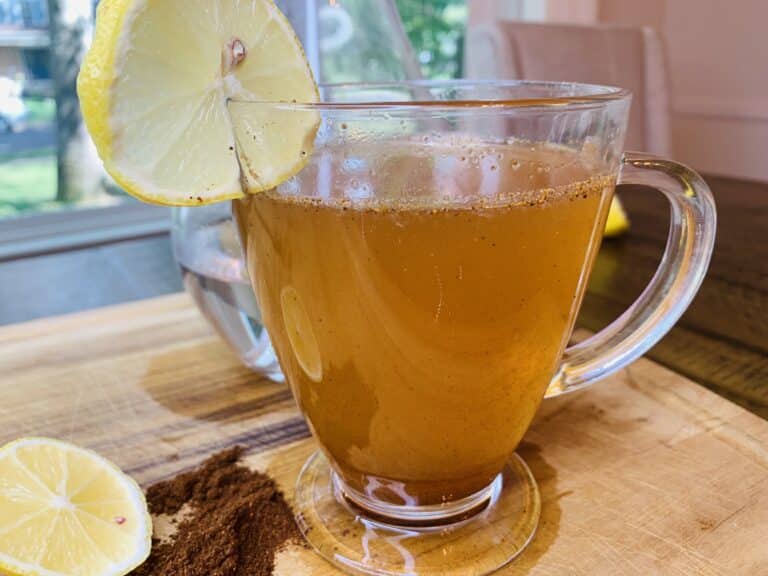
Parsley-Lemon Tea (Beverage, Not a Cure)
Ingredients (1 serving)
- 1 handful of fresh parsley
- Juice of 1/2 lemon
- 1 cup of water
Method
- Finely chop the parsley and simmer with water for 5 minutes.
- Turn off the heat and let it steep 2 more minutes.
- Strain, add lemon juice, and drink warm.
Nutrition (approx.): 32 kcal, 7 g carbs, 1 g fat, 2 g protein
Honest label: A pleasant, low-calorie beverage. Parsley and lemon are not antibacterial acne treatments. The original claim that this tea “helps cleanse the pores and remove acne” is not supported by clinical evidence. Enjoy it as a hydrating tea, not as therapy. If your acne is persistent, see a dermatologist.
Beet Salad Recipe
Ingredients (1 serving)
- 1 medium beet, roasted or boiled, then grated
- 1 cup finely chopped dill
- 1 cup finely chopped parsley
- 3 whole walnuts, chopped
- 1 tablespoon olive oil
- 1 teaspoon apple cider vinegar
- Juice of 1/2 lemon
- Ground black pepper
Method
- Whisk lemon juice, olive oil, vinegar, and pepper into a dressing.
- Combine grated beet, dill, parsley, and walnuts in a bowl.
- Toss with dressing and serve.
Nutrition (approx.): 259 kcal, 15 g net carbs, 22 g fat, 5 g protein
When to See a Dermatologist
Skip the “3-day cleanse” narrative and book an appointment if you have:
- Cystic or nodular acne (deep, painful bumps)
- Scarring or dark marks that persist for months
- Acne that hasn’t improved after 12 weeks of OTC benzoyl peroxide or adapalene
- Acne with signs of hormonal imbalance (irregular periods, sudden hair growth, hair thinning)
- Acne on antibiotics that keeps coming back (drug-resistant strains are common)
- Adult-onset acne after 25 (often hormonal, benefits from spironolactone or COC evaluation)
FAQ
Does a 3-day cleanse actually clear acne?
No. Skin cell turnover takes about 28 days. Acne pathogenesis is driven by hormones, sebum, follicular plugging, and inflammation, none of which reset in 3 days. Any short-term brightness you notice is more likely from hydration, less alcohol, or better sleep.
What foods actually trigger acne?
The strongest evidence is for high-glycemic-load foods (white bread, sweets, sugary drinks) and dairy, especially skim milk. Chocolate is inconsistent in the data. Trying a 12-week low-glycemic and low-dairy trial is reasonable.
What actually treats acne?
Topical retinoids, benzoyl peroxide, salicylic acid, and, for tougher cases, prescription options like oral antibiotics, hormonal therapy, and isotretinoin. Choose with a dermatologist.
Can drinking parsley tea remove acne?
No. Parsley tea is a pleasant beverage. It has no proven effect on C. acnes or the hormonal drivers of acne.
Do “skin detoxes” work?
Your skin doesn’t detox. Your liver and kidneys do. Skin health responds to sleep, sun protection, hydration, and evidence-based topicals, not to cleanses.
Does drinking more water clear my skin?
Adequate hydration helps skin look plumper and less flaky, but there is no strong evidence that drinking extra water clears acne.
What about zinc supplements?
Some evidence supports oral zinc (30 to 45 mg/day of elemental zinc) as a modest add-on for mild to moderate acne. It’s not a stand-alone treatment. Talk to your doctor before starting supplements, and don’t exceed 40 mg/day without supervision (risk of copper deficiency).
Related Reading
- Red tea recipe (with realistic framing)
- Foods that support your body’s own detox systems
- Low glycemic foods list
- Anti-inflammatory diet plan