Short answer: A 1,300-calorie day is a moderate-to-aggressive deficit for most adult women. It is appropriate for sedentary or lightly active women whose estimated maintenance is roughly 1,700 to 2,000 calories and who are targeting about one pound of fat loss per week.
It is too low for active women, pregnant or breastfeeding women, adolescents, and most women taller than about 5 feet 6 inches or over 175 pounds who exercise.
Before using any specific calorie target, calculate your own estimated needs(1) and speak with a clinician or registered dietitian, especially if you have a medical condition or history of disordered eating.
This guide covers who a 1,300-calorie plan fits, how to structure the day so it stays nutrient-adequate, a balanced seven-day menu, and the warning signs that you are eating too little.
Is 1,300 calories right for you?
The Dietary Guidelines for Americans estimate that adult women need roughly 1,600 to 2,400 calories per day depending on age and activity level(1). To lose about one pound of body fat per week, you need a deficit of approximately 3,500 calories over the week, or 500 per day. Working backward:
- Maintenance 1,800/day (sedentary, small frame): 1,300 = a 500-calorie deficit. Appropriate.
- Maintenance 2,000/day (moderately active or larger frame): 1,300 = a 700-calorie deficit. Aggressive; energy and adherence often suffer.
- Maintenance 2,200 or more (active, tall, or younger): 1,300 is too low. Use 1,500 to 1,700 instead.
Do not use 1,300 if you are pregnant or breastfeeding, an adolescent, recovering from illness or surgery, an endurance athlete, or have a history of restrictive eating. See a registered dietitian for personalized targets.
General guidelines for a 1,300-calorie day
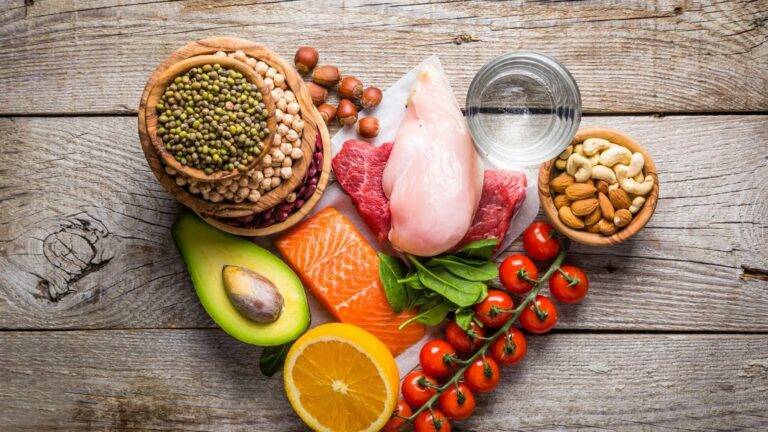
- Protein: aim for at least 80 to 100 grams per day to preserve lean mass during weight loss.
- Fiber: at least 25 grams per day from whole grains, legumes, fruit, and vegetables.
- Non-starchy vegetables: fill half the plate at lunch and dinner.
- Healthy fats: include olive oil, avocado, nuts, seeds, and fatty fish for satiety and essential fatty acids.
- Water: drink to thirst; a large glass with each meal is a good default.
- Limit: sugary drinks, alcohol, ultra-processed snack foods, and refined grain-only meals.
- Consider a daily multivitamin at this calorie level, particularly for iron, vitamin D, and B12; discuss with your clinician(2).
Seven-day 1,300-calorie meal plan for women
Each day totals roughly 1,290 to 1,310 calories, at least 80 g protein, and at least 25 g fiber. Adjust portions if the calorie totals do not match your actual needs.
Day 1
- Breakfast (~330 kcal): Rolled oats (1/2 cup dry) cooked with skim milk, topped with 1/2 banana, 1 tablespoon almond butter, and cinnamon.
- Lunch (~380 kcal): Grilled chicken breast (4 oz) over mixed greens with cherry tomatoes, cucumber, 1/4 avocado, and vinaigrette; small whole-grain roll.
- Snack (~150 kcal): Greek yogurt (nonfat, 6 oz) with 1/4 cup blueberries.
- Dinner (~430 kcal): Baked salmon (4 oz), 1/2 cup quinoa, roasted broccoli and bell pepper with 1 tsp olive oil.
Day 2
- Breakfast (~320 kcal): Two-egg omelet with spinach and 1 oz feta; one slice whole-grain toast.
- Lunch (~390 kcal): Turkey and hummus wrap (3 oz turkey, whole-wheat tortilla, spinach, cucumber, 2 tbsp hummus); a pear.
- Snack (~140 kcal): A small apple with 1 tbsp peanut butter.
- Dinner (~450 kcal): Lentil and vegetable soup (1.5 cups), mixed green salad with olive oil and lemon, one small whole-grain roll.
Day 3
- Breakfast (~310 kcal): Greek yogurt parfait: 1 cup nonfat Greek yogurt, 1/2 cup berries, 2 tbsp granola.
- Lunch (~400 kcal): Tuna salad (canned in water, 4 oz) with 1 tbsp light mayo and celery on two slices whole-grain bread; carrot sticks.
- Snack (~150 kcal): Cottage cheese (1/2 cup low-fat) with 1/2 cup pineapple.
- Dinner (~440 kcal): Chicken stir-fry (4 oz chicken, mixed vegetables, 1 tsp sesame oil, low-sodium soy sauce) with 1/2 cup brown rice.
Day 4
- Breakfast (~330 kcal): Whole-grain toast (2 slices) topped with 1/4 avocado and one poached egg; a small orange.
- Lunch (~380 kcal): Quinoa bowl with black beans (1/2 cup), corn, salsa, chopped romaine, and a lime-yogurt drizzle.
- Snack (~140 kcal): 15 almonds and a small apple.
- Dinner (~450 kcal): Baked cod (5 oz), roasted sweet potato (1 small), steamed green beans with olive oil.
Day 5
- Breakfast (~320 kcal): Smoothie with 1 cup soy milk, 1 scoop whey protein, 1/2 banana, 1/2 cup frozen berries, and a handful of spinach.
- Lunch (~400 kcal): Mediterranean salad: mixed greens, 3 oz grilled chicken, chickpeas (1/4 cup), tomato, cucumber, olives, feta, olive oil, lemon.
- Snack (~140 kcal): A pear and a stick of low-fat mozzarella.
- Dinner (~440 kcal): Turkey chili (1.5 cups) with a small mixed-green salad and a slice of whole-grain bread.
Day 6
- Breakfast (~330 kcal): Overnight oats (1/2 cup rolled oats, 1 cup skim milk, 1 tbsp chia seeds, 1/2 cup berries, cinnamon).
- Lunch (~390 kcal): Whole-grain wrap with 3 oz sliced turkey, spinach, tomato, 1 slice Swiss, 1 tsp mustard; carrot sticks and hummus (2 tbsp).
- Snack (~140 kcal): Nonfat Greek yogurt with 1/2 cup strawberries.
- Dinner (~440 kcal): Baked chicken thigh (skinless, 4 oz), 1/2 cup wild rice, roasted Brussels sprouts with olive oil.
Day 7
- Breakfast (~320 kcal): Two scrambled eggs with sauteed mushrooms and tomato; one slice whole-grain toast.
- Lunch (~390 kcal): Chickpea and vegetable salad (1 cup chickpeas, cucumber, tomato, red onion, parsley, olive oil, lemon) with 1 oz feta.
- Snack (~150 kcal): A small apple with 1 tbsp almond butter.
- Dinner (~440 kcal): Shrimp (5 oz) sauteed with garlic and vegetables, served over 1/2 cup whole-wheat pasta with olive oil.
Printable weekly summary
Save as PDF| Day | Breakfast | Lunch | Snack | Dinner | Total kcal |
|---|---|---|---|---|---|
| 1 | Oats with milk, banana, almond butter | Grilled chicken salad; roll | Greek yogurt with berries | Salmon, quinoa, roasted vegetables | ~1,290 |
| 2 | Spinach-feta omelet; toast | Turkey-hummus wrap; pear | Apple with peanut butter | Lentil soup; salad; roll | ~1,300 |
| 3 | Greek yogurt parfait | Tuna sandwich; carrots | Cottage cheese with pineapple | Chicken stir-fry with brown rice | ~1,300 |
| 4 | Avocado toast with egg; orange | Quinoa black-bean bowl | Almonds and apple | Baked cod, sweet potato, green beans | ~1,300 |
| 5 | Protein-berry smoothie | Mediterranean chicken salad | Pear and mozzarella | Turkey chili with salad | ~1,300 |
| 6 | Overnight oats with chia | Turkey wrap; carrots and hummus | Greek yogurt with strawberries | Chicken thigh, wild rice, sprouts | ~1,300 |
| 7 | Eggs with mushrooms; toast | Chickpea Mediterranean salad | Apple with almond butter | Shrimp pasta with vegetables | ~1,300 |
How to make 1,300 calories more sustainable
- Anchor every meal with protein. Aim for 20 to 30 g per meal. Protein keeps you satiated and preserves muscle.
- Prioritize volume-heavy, low-calorie foods. Non-starchy vegetables, broth-based soups, and fruit add bulk and fiber without pushing calories.
- Cook most meals at home. Restaurant portions and hidden fats make 1,300 calories very hard to hit accurately.
- Track loosely for one to two weeks. Weigh out oats, oil, nut butter, and grains. Once you know the portions by sight, you can stop tracking.
- Weigh yourself no more than once a week. Daily fluctuations from fluid and food weight will not represent fat loss.
Warning signs you are eating too little
Cut the deficit and consult a clinician if you notice:
- Fatigue that is worse, not better, after two weeks.
- Loss of menstrual period or cycle irregularity.
- Hair thinning, brittle nails, cold intolerance.
- Persistent lightheadedness, low mood, or trouble sleeping.
- Weight loss of more than 2 pounds per week (except in the first week, which usually reflects water).
- Compulsive food thoughts, binge episodes, or fear of eating.
Frequently asked questions
Is 1,300 calories too low for a woman?
It depends on your maintenance needs. For a small, sedentary woman it can be a moderate deficit; for a taller or active woman it is often too low and slows adherence and metabolism.
How much weight will I lose on a 1,300-calorie plan?
About 1 to 2 pounds per week if 1,300 is 500 to 1,000 calories below your maintenance. The first week may show more due to water loss.
Do I need to exercise on this plan?
Yes, ideally. Two strength sessions per week plus regular walking preserves muscle and improves adherence. Do not layer heavy training on top of a very low calorie level without a dietitian’s input.
Can I drink coffee and tea on 1,300 calories?
Yes. Keep milk and sugar modest so they do not eat into your calorie budget.
What if I feel hungry all the time?
Shift calories toward protein and non-starchy vegetables, drink more water with meals, and move a snack later in the day. If hunger persists after a week, raise calories to 1,500.
Is 1,300 calories safe long term?
For most women, no. Use it as a short-term deficit phase (8 to 12 weeks), then move to a maintenance intake around your new weight and reassess with a professional.
Can I follow this plan while breastfeeding?
No. Breastfeeding raises calorie needs by roughly 330 to 400 kcal per day. Speak with your OB-GYN and a registered dietitian before restricting calories.
Medical disclaimer: This article is for general information only and is not a substitute for professional medical advice, diagnosis, or treatment. A 1,300-calorie intake is a significant restriction for many adults and is not appropriate for everyone.
Do not use this plan if you are pregnant, breastfeeding, an adolescent, an athlete in heavy training, or have a history of disordered eating, and do not use it long term.
Consult a registered dietitian nutritionist or physician before starting any calorie-restricted diet, especially if you have diabetes, kidney disease, cardiovascular disease, take prescription medications, or manage any chronic illness.
Individual calorie and nutrient needs vary; results are not guaranteed.