Editorial note: This roundup is for general nutrition guidance and is not a substitute for individualized medical or dietary advice. Nutrition values are calculated estimates using USDA FoodData Central for the ingredients and portions listed and will shift with brands.
If you manage diabetes, chronic kidney disease, or take medications that require dose-titration with meals, work with a registered dietitian or your physician before increasing protein intake substantially. Recipes with dairy, eggs, nuts, or soy are labeled; swap or skip if you are allergic.
Jump to a Recipe
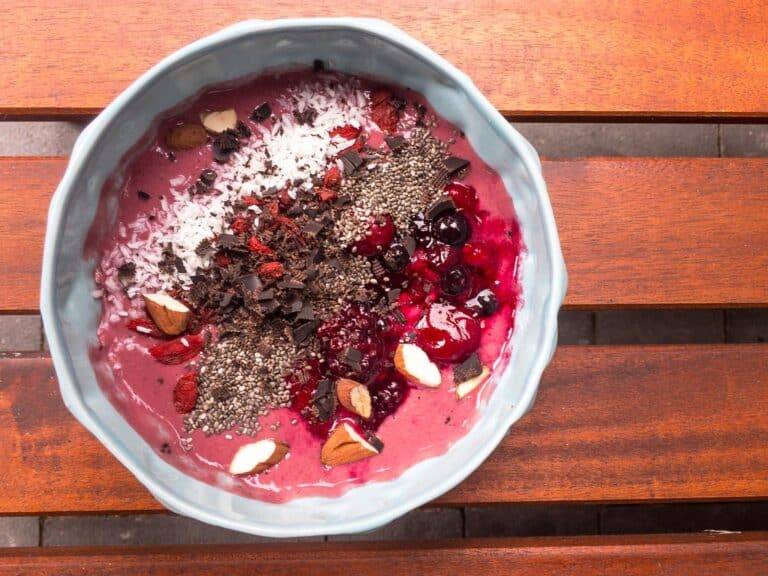
- Cottage Cheese & Berry Bowl
- Greek Yogurt Protein Parfait
- Three-Egg Veggie Scramble with Feta
- Overnight Protein Oats
- Smoked Salmon Avocado Toast
- Tofu Scramble with Nutritional Yeast
- Protein Pancakes (Banana Oat)
- Egg White Frittata Muffins
- Steak & Eggs Skillet
- Turkey & Sweet Potato Hash
- Chocolate Peanut Butter Protein Smoothie
- Chia Pudding with Whey
These twelve high-protein breakfast recipes each deliver at least 20 grams of protein per serving using ordinary supermarket ingredients: eggs, Greek yogurt, cottage cheese, oats, tofu, and canned fish.
Front-loading protein at breakfast has been linked to improved satiety across the morning and reduced snacking later in the day in a review by Leidy and colleagues (2015, PMID 25926512).
The International Society of Sports Nutrition position paper (Jager et al. 2017, PMID 28642676) recommends 1.4 to 2.0 grams of protein per kilogram of body weight per day for active adults, spread across meals of 20 to 40 grams to maximize muscle protein synthesis.
Why 20 to 40 Grams of Protein at Breakfast Matters
Leidy’s 2015 review (PMID 25926512) synthesized 14 studies on higher-protein breakfasts (30 or more grams) and found consistent improvements in appetite ratings, reductions in evening snacking, and better appetite hormone responses (ghrelin down, PYY up) compared with typical carbohydrate-heavy breakfasts.
Effects on body weight over months were more modest, but the acute satiety data are robust.
The Jager 2017 ISSN position statement (PMID 28642676) makes two practical points: (1) total daily protein matters most and should sit around 1.4 to 2.0 g/kg for people who train; (2) distributing protein across three or four meals of 20 to 40 grams appears more effective for muscle protein synthesis than eating most protein at one meal.
Breakfast is the one meal most people underdo on protein, so it is the easiest lever to move.
A 155 lb (70 kg) recreational lifter targeting 1.6 g/kg lands at about 112 g protein per day. Split across four meals, that is 28 g per meal. Any recipe in this list clears that bar.
Comparison Table
| Recipe | Calories | Protein | Total time | Best for |
|---|---|---|---|---|
| 1. Cottage Cheese & Berry Bowl | 320 kcal | 28 g | 3 min | Zero-cook mornings |
| 2. Greek Yogurt Protein Parfait | 385 kcal | 32 g | 5 min | Meal prep in jars |
| 3. Three-Egg Veggie Scramble with Feta | 410 kcal | 29 g | 10 min | Classic hot breakfast |
| 4. Overnight Protein Oats | 445 kcal | 34 g | 5 min + rest | Grab-and-go |
| 5. Smoked Salmon Avocado Toast | 395 kcal | 24 g | 7 min | Weekend brunch |
| 6. Tofu Scramble with Nutritional Yeast | 340 kcal | 25 g | 12 min | Vegan option |
| 7. Protein Pancakes (banana oat) | 430 kcal | 30 g | 15 min | Family breakfast |
| 8. Egg White Frittata Muffins | 190 kcal | 22 g | 30 min (batch) | Low-cal high-protein |
| 9. Steak & Eggs Skillet | 520 kcal | 42 g | 15 min | Post-lift breakfast |
| 10. Turkey & Sweet Potato Hash | 475 kcal | 36 g | 25 min | Filling all-in-one |
| 11. Chocolate Peanut Butter Protein Smoothie | 410 kcal | 38 g | 3 min | Fast, portable |
| 12. Chia Pudding with Whey | 380 kcal | 28 g | 5 min + rest | Overnight, no cooking |
The Recipes
1. Cottage Cheese & Berry Bowl (320 kcal, 28 g protein)
The fastest high-protein breakfast that exists. Choose 2 percent or 4 percent cottage cheese for better satiety; fat-free tastes flat.
Ingredients
- 1 cup 2 percent cottage cheese
- 3/4 cup mixed berries
- 1 tbsp chopped walnuts
- 1 tsp honey
- dash of cinnamon
Instructions
- Spoon cottage cheese into a bowl.
- Top with berries, walnuts, honey, and cinnamon.
- Eat.
Nutrition: 320 kcal, 28 g protein, 25 g carbs, 12 g fat.
2. Greek Yogurt Protein Parfait (385 kcal, 32 g protein)
Layered in a mason jar and refrigerated up to 2 days. Add granola only right before eating so it stays crunchy.
Ingredients
- 1 cup nonfat Greek yogurt
- 1 scoop vanilla whey protein
- 1/2 cup diced strawberries
- 1/4 cup blueberries
- 1/4 cup low-sugar granola
- 1 tbsp chia seeds
Instructions
- Whisk protein powder into yogurt.
- Layer half the yogurt mix, then fruit, then remaining yogurt in a jar.
- Top with granola and chia.
- Refrigerate up to 48 hours; add granola day-of.
Nutrition: 385 kcal, 32 g protein, 42 g carbs, 8 g fat.
3. Three-Egg Veggie Scramble with Feta (410 kcal, 29 g protein)
Diced pepper, spinach, and feta boost protein and volume without adding much fat.
Ingredients
- 3 large eggs
- 2 cups baby spinach
- 1/2 diced bell pepper
- 1 oz feta cheese (crumbled)
- 1 tsp olive oil
- salt and pepper
Instructions
- Heat oil in nonstick pan over medium.
- Saute pepper 3 minutes.
- Add spinach, cook 1 minute until wilted.
- Whisk eggs, salt, and pepper.
- Pour into pan, stir gently as they set, about 2 minutes.
- Fold in feta off heat.
Nutrition: 410 kcal, 29 g protein, 8 g carbs, 28 g fat.
4. Overnight Protein Oats (445 kcal, 34 g protein)
Rolled oats soften overnight in the fridge with milk, yogurt, and protein powder. Grab and go.
Ingredients
- 1/2 cup rolled oats
- 3/4 cup unsweetened almond milk
- 1/2 cup nonfat Greek yogurt
- 1 scoop chocolate whey (30 g protein)
- 1 tbsp chia seeds
- 1 tbsp cocoa nibs
- 1/2 sliced banana
Instructions
- Combine oats, almond milk, yogurt, protein powder, and chia in a jar.
- Stir well.
- Refrigerate at least 4 hours or overnight.
- Top with cocoa nibs and banana before eating.
Nutrition: 445 kcal, 34 g protein, 52 g carbs, 10 g fat.
5. Smoked Salmon Avocado Toast (395 kcal, 24 g protein)
Whole-grain toast, mashed avocado, cold-smoked salmon, capers, and a squeeze of lemon. The salmon supplies omega-3s and 22 g protein per 3 oz portion.
Ingredients
- 2 slices whole-grain bread (toasted)
- 1/2 avocado (mashed)
- 3 oz cold-smoked salmon
- 1 tsp capers
- red onion slivers
- lemon wedge
- cracked pepper
Instructions
- Toast bread.
- Mash avocado with lemon juice and pepper.
- Spread on toast.
- Layer salmon, capers, and red onion.
- Squeeze lemon over.
Nutrition: 395 kcal, 24 g protein, 32 g carbs, 20 g fat.
6. Tofu Scramble with Nutritional Yeast (340 kcal, 25 g protein)
Extra-firm tofu crumbled and cooked with turmeric mimics scrambled eggs in look and texture. Nutritional yeast adds cheesy depth and B vitamins.
Ingredients
- 7 oz extra-firm tofu (drained, crumbled)
- 1/4 tsp turmeric
- 1/2 tsp black salt (kala namak) or regular salt
- 2 tbsp nutritional yeast
- 1 tsp olive oil
- 1 cup chopped kale
- 2 tbsp diced tomato
Instructions
- Heat oil in pan.
- Add crumbled tofu, turmeric, and salt.
- Cook 5 minutes stirring.
- Add kale, cook 2 minutes until wilted.
- Stir in nutritional yeast and tomato.
- Serve.
Nutrition: 340 kcal, 25 g protein, 15 g carbs, 20 g fat.
7. Protein Pancakes (Banana Oat) (430 kcal, 30 g protein)
Blend, pour, cook. Naturally gluten-free with oats. Fluffier if you separate eggs and fold in whipped whites.
Ingredients
- 1 ripe banana
- 2 large eggs
- 1/3 cup rolled oats
- 1 scoop vanilla whey (25 g protein)
- 1/2 tsp baking powder
- 1/2 tsp cinnamon
- cooking spray
- 1 tbsp maple syrup
Instructions
- Blend all ingredients (except syrup) 30 seconds until smooth.
- Heat nonstick skillet over medium.
- Pour 1/4 cup portions.
- Cook 2 minutes per side.
- Serve with maple syrup.
Nutrition: 430 kcal, 30 g protein, 55 g carbs, 12 g fat.
8. Egg White Frittata Muffins (190 kcal, 22 g protein per 3 muffins)
Batch cook a dozen on Sunday, eat three per morning. Lowest-calorie high-protein option in this list.
Ingredients
- 3 cups egg whites
- 3 whole eggs
- 1 cup diced turkey ham
- 1 cup chopped spinach
- 1/2 cup diced red pepper
- 1/3 cup grated cheddar
- salt
- pepper
- cooking spray
Instructions
- Heat oven to 375 F.
- Spray a 12-cup muffin tin.
- Whisk eggs, whites, salt, and pepper.
- Divide turkey, spinach, and pepper across cups.
- Pour egg mixture to fill.
- Top with cheddar.
- Bake 20 to 22 minutes until set.
- Store 4 days refrigerated or 2 months frozen.
Nutrition (3 muffins): 190 kcal, 22 g protein, 4 g carbs, 9 g fat.
9. Steak & Eggs Skillet (520 kcal, 42 g protein)
A classic bodybuilder breakfast. Best after a heavy morning lift when you want dense calories with elite protein.
Ingredients
- 4 oz sirloin steak
- 2 large eggs
- 1 cup sliced mushrooms
- 1 tsp olive oil
- salt
- pepper
- chopped chives
Instructions
- Season steak.
- Heat oil in cast-iron pan over medium-high.
- Sear steak 3 minutes per side for medium-rare (internal 130 F); rest under foil 5 minutes.
- In same pan, cook mushrooms 3 minutes.
- Push aside, crack eggs, cook to preference.
- Slice steak, plate with eggs and mushrooms.
- Top with chives.
Nutrition: 520 kcal, 42 g protein, 5 g carbs, 35 g fat.
10. Turkey & Sweet Potato Hash (475 kcal, 36 g protein)
Ground turkey and sweet potato in one skillet with a fried egg on top.
Ingredients
- 4 oz 93 percent lean ground turkey
- 1 small sweet potato (diced 1/2 inch)
- 1/2 diced onion
- 1/2 diced bell pepper
- 1 large egg
- 1 tbsp olive oil
- 1 tsp smoked paprika
- 1/2 tsp cumin
- salt
Instructions
- Heat oil in skillet.
- Add sweet potato, cook 8 minutes covered until fork-tender.
- Add onion and pepper, cook 3 minutes.
- Push aside, add turkey and spices, cook 5 minutes breaking up.
- Combine everything.
- Fry egg in a separate small pan.
- Top hash with egg.
Nutrition: 475 kcal, 36 g protein, 32 g carbs, 22 g fat.
11. Chocolate Peanut Butter Protein Smoothie (410 kcal, 38 g protein)
The fastest 40 grams of protein you can put in a cup. Great for early-morning training.
Ingredients
- 1 cup unsweetened almond milk
- 1/2 cup Greek yogurt
- 1 scoop chocolate whey (30 g protein)
- 1 tbsp natural peanut butter
- 1/2 frozen banana
- 1 tbsp cocoa powder
- 4 ice cubes
Instructions
- Blend on high 60 seconds until smooth.
- Add water if too thick.
Nutrition: 410 kcal, 38 g protein, 30 g carbs, 15 g fat.
12. Chia Pudding with Whey (380 kcal, 28 g protein)
Chia expands overnight into a pudding-like set. Whey pushes the protein into breakfast territory.
Ingredients
- 3 tbsp chia seeds
- 1 cup unsweetened vanilla almond milk
- 1 scoop vanilla whey (25 g protein)
- 1/4 cup blueberries
- 1 tbsp sliced almonds
- 1 tsp maple syrup
Instructions
- Whisk chia, almond milk, protein powder, and maple syrup in a jar until no clumps.
- Refrigerate at least 4 hours or overnight.
- Top with blueberries and almonds.
- Stir before eating.
Nutrition: 380 kcal, 28 g protein, 30 g carbs, 18 g fat.
Building a Breakfast Rotation That Hits Your Daily Protein Target
- Cycle three or four favorites through the week: Rotating prevents boredom, which is the number-one reason people drift back to a bagel by week two.
- Do at least one batch cook on Sunday: Egg white muffins, overnight oats, and chia pudding all keep 3 to 4 days.
- Pair one high-protein breakfast with a training block: The steak-and-eggs or the smoothie sits well 60 to 90 minutes before or after morning training.
- If you cannot stomach solid food early, use a smoothie: Fluid protein absorbs quickly and does not require chewing on a still-groggy stomach.
- Read labels on whey powders: Choose one with at least 22 g protein per 30 g scoop and third-party certification (Informed Sport, NSF Certified for Sport, or USP).
Frequently Asked Questions
Do I really need 30 grams of protein at breakfast?
The Leidy 2015 review (PMID 25926512) found the strongest satiety and hormonal responses at 30 g or more of protein at breakfast. If you eat three meals plus one snack, 25 to 30 g per meal is a reasonable target for most adults.
Older adults and heavy trainers may benefit from the higher end (35 to 40 g) per Jager 2017 (PMID 28642676).
Is high-protein breakfast safe for people with kidney disease?
Not always. Chronic kidney disease patients often require protein restriction based on stage. If you have any kidney condition, work with your nephrologist and registered dietitian before increasing daily protein intake. These recipes are written for otherwise-healthy adults.
Can I hit 20 to 30 g protein without whey powder?
Yes. The cottage cheese bowl, egg scramble, steak and eggs, turkey hash, smoked salmon toast, and egg-white muffins reach the target from whole foods alone. Whey powder is a convenient way to hit the number in yogurt bowls, oats, and smoothies but is not required.
Are these breakfasts good for weight loss?
Higher-protein breakfasts tend to reduce mid-morning hunger and evening snacking per Leidy 2015. Weight loss ultimately depends on total daily energy balance, not any single meal.
The lower-calorie options here (egg-white muffins at 190 kcal, cottage cheese bowl at 320 kcal) fit weight-loss calorie targets. The steak and eggs at 520 kcal fits gain or maintenance better.
How much protein do I actually need per day?
The Institute of Medicine RDA is 0.8 g/kg body weight. That is a minimum to prevent deficiency, not an optimum for performance.
The ISSN 2017 position (PMID 28642676) recommends 1.4 to 2.0 g/kg for active adults. A 165 lb (75 kg) recreational lifter at 1.6 g/kg needs 120 g/day, easily hit with 30 g each at four meals.
Which recipes are meal-prep friendly?
Egg-white muffins (4 days refrigerated or 2 months frozen), overnight oats (3 days), chia pudding (5 days), yogurt parfaits without granola (2 days), turkey hash (3 days reheated). Fried and scrambled eggs are best day-of.
Is a protein-heavy breakfast safe long-term for otherwise healthy adults?
Yes. Long-term higher-protein diets in healthy adults have not shown adverse effects on kidney function or bone health at intakes up to 2.0 g/kg per multiple systematic reviews. If you have any diagnosed medical condition, individualize with your clinician.