Read this first. Hypothyroidism is a medical condition that requires medical treatment. Diet alone will not correct low thyroid hormone levels. If you’re taking levothyroxine or another thyroid medication, do not change your prescription, timing, or dose based on anything you read here.
Talk to your endocrinologist or primary care physician before starting a new diet, taking iodine or selenium supplements, or making big changes to how much soy, cruciferous vegetables, or high-fiber food you eat, since all of these can affect either the disease itself or how well your medication absorbs.
This article is nutrition education, not medical advice.
Hypothyroidism Diet: What Actually Helps (and What Doesn’t)
Hypothyroidism is a reduced-function state of the thyroid gland. The gland doesn’t make enough thyroxine (T4) and triiodothyronine (T3), and your metabolism slows down. Common symptoms include fatigue, weight gain, cold intolerance, constipation, dry skin, hair thinning, and low mood.
The primary treatment is thyroid hormone replacement, usually levothyroxine. That’s the anchor. Diet is a supporting player. It can help you feel better, protect your bone and heart health, and support weight management, but it doesn’t replace medication.
This guide walks through the nutrients that matter (iodine, selenium, zinc), which foods to be careful with, how food affects your levothyroxine absorption, and a 7-day sample plan you can adapt.
What’s on This Page
- How the thyroid gland works
- Symptoms of hypothyroidism
- Key nutrients: iodine, selenium, zinc
- Goitrogenic foods and cruciferous vegetables
- Soy and levothyroxine
- Levothyroxine timing rules
- Foods to prioritize
- Foods to limit or plan around
- 7-day sample meal plan
- FAQ
How the Thyroid Gland Works
The thyroid is a butterfly-shaped gland at the front of the neck, just below the larynx. It pulls iodine out of the blood and uses it to build T4 and T3. Those hormones set the pace of your metabolism, body temperature, heart rate, and how efficiently your organs use energy.
When the gland underproduces (hypothyroidism), everything slows. When it overproduces (hyperthyroidism), everything speeds up. In hypothyroidism, doctors measure TSH (thyroid-stimulating hormone) and free T4 to confirm the diagnosis and dial in medication.
Hypothyroidism affects roughly 5 percent of the general population, with higher prevalence in women, adults over 60, and people with autoimmune conditions. The most common cause worldwide is iodine deficiency; in iodine-sufficient countries (like the US), the most common cause is Hashimoto’s thyroiditis, an autoimmune attack on the gland.
Symptoms of Hypothyroidism
Symptoms creep in gradually. People often blame them on aging or stress before they get tested. Common signs include:
- Persistent fatigue and low energy
- Unexplained weight gain
- Cold intolerance and cold hands or feet
- Constipation
- Dry skin, brittle nails, hair thinning
- Muscle aches and joint stiffness
- Low mood or depression
- Heavier or irregular menstrual periods
- Puffiness in the face
- Slower heart rate
If several of these apply to you, ask your doctor for a TSH test. It’s a simple blood draw and takes minutes.
Key Nutrients: Iodine, Selenium, Zinc
Three nutrients play direct roles in thyroid function. All three are best sourced from food unless a clinician has told you otherwise, because too much of any of them can also cause problems.
Iodine
Iodine is the raw material for thyroid hormone. Adults need about 150 mcg per day; pregnant women need 220 mcg. Sources include iodized salt, seaweed, dairy, eggs, and saltwater fish.
Here’s the catch: extra iodine doesn’t fix hypothyroidism, and in Hashimoto’s it can actually make things worse. The American Thyroid Association advises against high-dose iodine or kelp supplements for most people with hypothyroidism unless a physician has identified deficiency.
Selenium
Selenium supports the enzymes that convert T4 into the active T3. It also has an antioxidant role that may reduce autoimmune activity in Hashimoto’s. Adults need about 55 mcg per day.
For more on this topic, check out our guide on sugar detox food list.
Two Brazil nuts a day cover it easily. Also good: tuna, sardines, eggs, sunflower seeds. Don’t megadose; more than 400 mcg per day long-term can cause selenium toxicity (hair loss, nail brittleness, nausea).
Zinc
Zinc supports TSH signaling and T4-to-T3 conversion. Adults need 8 to 11 mg per day. Best sources are oysters, beef, pumpkin seeds, lentils, chickpeas, and cashews.
Goitrogenic Foods and Cruciferous Vegetables
You’ll see scary lists online telling you to avoid all cruciferous vegetables (broccoli, cauliflower, cabbage, kale, Brussels sprouts, bok choy). The truth is more nuanced.
These foods contain compounds called goitrogens that can, in theory, block iodine uptake by the thyroid. In practice, that only becomes a real problem if you eat enormous amounts of raw cruciferous vegetables in a setting of iodine deficiency. Cooking deactivates most of the goitrogenic compounds.
The practical guidance: eat cruciferous vegetables. They’re excellent for you. Just cook them (steam, roast, saute) rather than eating them raw by the bowlful, and make sure you’re getting enough iodine from other sources.
Soy and Levothyroxine
Soy foods (tofu, tempeh, soy milk, edamame) don’t have to be avoided, but they can reduce how much levothyroxine your gut absorbs. If you eat soy regularly, keep it away from your morning pill by at least 4 hours, and make sure your doctor knows so they can monitor your TSH.
Levothyroxine Timing Rules (Don’t Skip This)
How and when you take your medication matters more than most food choices you’ll make. Levothyroxine absorption is finicky.
- Take on an empty stomach. First thing in the morning, at least 30 to 60 minutes before food, coffee, or juice.
- Water only. Coffee, milk, and even black tea can reduce absorption.
- Separate from calcium and iron by at least 4 hours. This includes calcium-fortified orange juice, dairy, calcium or iron supplements, and multivitamins that contain either mineral.
- Separate from antacids and PPIs (like omeprazole). Space by at least 4 hours if possible.
- Same time every day. Consistency matters more than the specific time.
If mornings don’t work, bedtime dosing is also acceptable, as long as your last meal was at least 3 to 4 hours earlier and you take no calcium or iron in that window. Talk to your prescriber about the right routine for you.
Foods to Prioritize
A hypothyroidism-supportive plate looks a lot like a generally healthy plate: whole foods, plenty of vegetables, good protein, healthy fats. A few specifics that help:
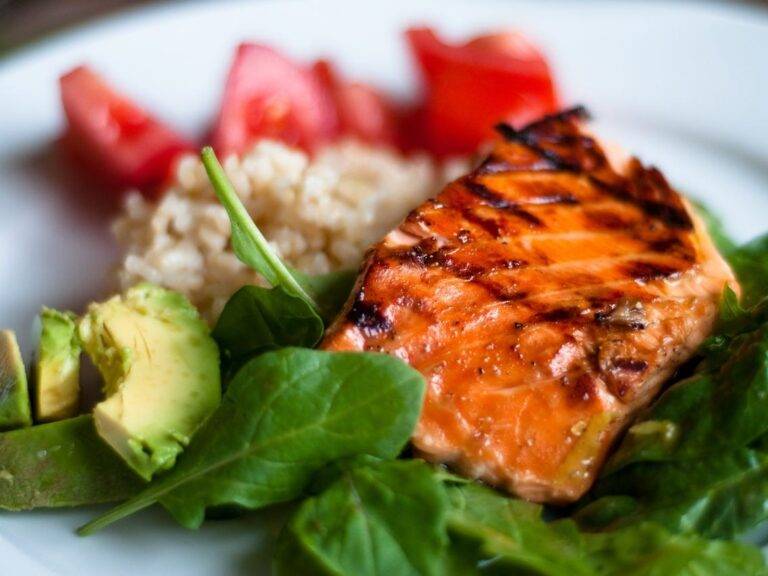
- Seafood: salmon, sardines, cod, shrimp, tuna (moderate mercury varieties). Good for iodine, selenium, and omega-3s.
- Eggs: whole eggs deliver iodine, selenium, and protein in one package.
- Brazil nuts: just 1 to 2 per day covers selenium needs.
- Yogurt and dairy: good iodine source (in iodine-sufficient countries), plus protein and calcium (take 4+ hours from your pill).
- Legumes: lentils, chickpeas, black beans for zinc and fiber.
- Cooked cruciferous vegetables: broccoli, cauliflower, kale, Brussels sprouts. Fine when cooked.
- Colorful vegetables and fruit: berries, apricots, cherries, carrots, beets, leafy greens.
- Whole grains: oatmeal, quinoa, brown rice, whole wheat bread.
- Healthy fats: olive oil, avocado, nuts (walnuts, almonds), seeds (chia, pumpkin).
Foods to Limit or Plan Around
| Food or group | Concern | What to do |
|---|---|---|
| Raw cruciferous vegetables (large amounts) | Goitrogens (theoretical) | Cook them; enjoy normal portions |
| Soy foods | Can reduce levothyroxine absorption | Separate from morning pill by 4+ hours |
| Millet | Contains flavonoids that may inhibit thyroid enzymes | Limit as a staple grain |
| Kelp and high-dose iodine supplements | Can worsen Hashimoto’s; excessive intake | Avoid unless a doctor prescribes |
| Ultra-processed food | Adds calories, sodium, refined sugar; crowds out nutrients | Limit; not a thyroid issue but a general health one |
| Alcohol | Can affect thyroid function and interact with fatigue | Moderate |
7-Day Sample Meal Plan (Printable)
This is a template, not a prescription. Portions depend on your body size, activity, and calorie targets. Take your levothyroxine 30 to 60 minutes before breakfast, with plain water.
| Meals / Snacks | Day 1 | Day 2 | Day 3 | Day 4 | Day 5 | Day 6 | Day 7 |
|---|---|---|---|---|---|---|---|
| Breakfast | Smoothie: 1/2 cup frozen berries, 1 banana, 1 scoop protein powder, 1 cup unsweetened almond milk | 2 boiled eggs, 1 oz cheese, 1 slice whole wheat toast, parsley | Overnight oats: 1/2 cup oats, 1 tsp chia seeds, 1/2 cup oat milk, 1 apricot | 2 slices whole wheat bread, 1/4 cup cheese spread, 3 slices smoked salmon | Scrambled eggs: 2 eggs, 1 slice whole wheat toast, 1/4 cup walnuts | Protein shake: 2 scoops protein, 1 tbsp cocoa, 1 banana, 1 cup unsweetened oat milk | 5 oz hummus, 2 carrots, 1 slice whole wheat bread |
| Snack I | 1/4 cup avocado on whole wheat toast | Chia pudding: 1/4 cup yogurt, 1 tbsp chia, 1 scoop protein, 1/4 cup berries | Chlorella smoothie: 1 banana, 1 cup almond milk, 1/2 cup berries, 1 tbsp chlorella powder | Oatmeal: 1/4 cup oats, 1 scoop protein powder, 1/4 cup berries, 5 almonds | Tuna spread: 3 oz light tuna, 1 oz cheese spread, 1 grated carrot, 1 slice whole wheat bread | Overnight oats: 1/4 cup oats, 1 tbsp chia, 1/2 cup oat milk, 1/2 cup cherries | 1 slice whole wheat bread, 2 slices ham, raw veggies |
| Lunch | Salad: 1 baked beetroot, 1 cup leafy greens, 2 hard-boiled eggs, pumpkin seeds | 5 oz roasted mackerel, 2 baked carrots, 1 baked potato | Chicken salad: 2 cups leafy greens, 1 cup black beans, 5 oz chicken breast | Beef meatballs: 5 oz lean ground beef, 1 egg, 1/3 cup spaghetti, 2 oz melted cheese | Tortilla wrap: 1 tortilla, 5 oz pulled chicken, 2 tbsp corn, 2 slices cheddar | 5 oz salmon filet, 1/4 cup brown rice, 1/2 zucchini | Poke bowl: 5 oz salmon, 1/4 cup rice, 1/4 avocado, 1/4 cup mango, 1/4 cup seaweed, sesame seeds |
| Snack II | 1 hard-boiled egg, 1 slice whole wheat bread, cucumber | 3 oz hummus, 2 carrots, 1 slice whole wheat bread | Chia pudding: 1/4 cup yogurt, 1 tbsp chia, 1 scoop protein, 1/4 cup berries | Protein shake + 1 apple | Guacamole: 1/4 cup avocado, 1 tomato, 1 slice whole wheat bread | 5 oz full-fat yogurt, 1 handful of nuts | 1/3 cup dates, 1/4 cup nuts |
| Dinner | 4 oz salmon, 2 potatoes, 1/4 cup asparagus | Almond salad: 1/3 cup sliced almonds, 1/3 cup green beans, olive oil, lemon, feta | Tuna salad: 4 oz tuna, red bell pepper, 2 lettuce leaves, yogurt-garlic dressing, 2 tbsp corn | Shrimp salad: 5 oz roasted shrimp, 1 cup greens, 1/2 avocado, olive oil, almonds | 6 oz roasted chicken, 1/4 cup asparagus, 2 potatoes | Quinoa salad: 1 cup cooked quinoa, 1/2 cup chickpeas, cucumber, parsley, bell pepper, olive oil, lemon | 6 oz turkey breast, 1/4 cup peas, 1 carrot, 1/2 baked sweet potato |
Beyond Food: What Else Moves the Needle
Diet is one piece. The others matter too:
- Sleep. Aim for 7 to 9 hours. Poor sleep worsens fatigue and cravings.
- Exercise. A mix of cardio (walking, cycling, swimming) and resistance training helps with weight, mood, and insulin sensitivity.
- Stress. Chronic stress raises cortisol and can affect thyroid function; find something that works for you (walks, breathing, therapy).
- Regular labs. TSH monitoring every 6 to 12 months (or more often when adjusting dose) is standard care.
FAQ
Can I eat broccoli and kale with hypothyroidism?
Yes. Cooked cruciferous vegetables are fine and healthful. The goitrogen concern only applies to enormous amounts of raw cruciferous vegetables combined with iodine deficiency, which is not a realistic scenario for most people. Cook them and enjoy normal portions.
Should I take an iodine supplement?
Not without a doctor’s guidance. In iodine-sufficient countries, extra iodine can worsen autoimmune hypothyroidism (Hashimoto’s). The American Thyroid Association discourages iodine supplements above 150 to 200 mcg per day for most adults with thyroid disease.
Can I have coffee with my thyroid medication?
Not at the same time. Coffee reduces levothyroxine absorption significantly. Wait at least 30 to 60 minutes after taking your pill before drinking coffee, tea, or eating anything.
Do I have to avoid soy?
No. Soy foods are fine in normal amounts. Just separate them from your levothyroxine by at least 4 hours, and tell your doctor if you eat soy regularly so they can watch your TSH.
Will this diet make me lose weight?
Weight loss with hypothyroidism is real work. Getting your medication dose right is step one; without adequate hormone, metabolism stays slow no matter what you eat. Once TSH is in range, a modest calorie deficit combined with protein, fiber, and strength training gets results at a normal pace.
Should I take selenium supplements?
Talk to your doctor first. Some clinicians recommend 100 to 200 mcg per day for Hashimoto’s under supervision. Two Brazil nuts daily deliver a similar amount from food, safely.
Can diet cure hypothyroidism?
No. Hypothyroidism from Hashimoto’s or gland damage doesn’t reverse with diet. Mild subclinical hypothyroidism sometimes normalizes when a specific trigger is removed, but that’s a medical judgment your endocrinologist makes with lab data, not something to self-manage.